Tile adhesive looks workable in the bucket, but starts skinning before installers can finish tile adjustment.
Gypsum plaster spreads smoothly during mixing, then suddenly tightens after contacting an absorbent wall.
Render mortar performs well in morning application, yet loses consistency completely once afternoon temperatures rise.
On many construction sites, mortar problems do not begin after curing.
They begin during the first few minutes of application.
In practice, a large percentage of dry mix mortar failures are connected to unstable water retention.
This is especially common in:
When mortar loses water too quickly:
Many manufacturers initially focus only on increasing viscosity or adding more cellulose ether products. In reality, water retention is rarely an isolated issue.
Stable mortar performance depends on balancing:
This is why experienced formulators do not simply pursue maximum retention values.
They focus on maintaining stable site performance under real construction conditions.
Laboratory retention values alone rarely reflect what actually happens on construction sites.
On real projects, water loss is influenced by:
In many cases, mortar may appear stable during laboratory testing while still losing workable consistency too quickly during actual installation.
AAC blocks, porous concrete, old masonry walls, and cement boards can absorb water much faster than many formulations expect.
On these substrates, moisture loss is not caused only by evaporation.
Capillary suction becomes the main problem.
Installers often notice:
Some manufacturers only discover this issue after large-scale project application because laboratory retention values may still appear acceptable.
Under high-suction conditions, cellulose ether stability becomes far more important than simply increasing dosage.
Suggested related pages:
Summer construction conditions can dramatically reduce mortar working time.
Strong airflow combined with high substrate temperature often causes:
On some tile adhesive projects, installers may start adding extra water on site just to recover workability. This usually creates additional problems later, including inconsistent strength and unstable curing behavior.
For this reason, many dry mix mortar manufacturers use different seasonal formulations for summer and winter production.
In practice, maintaining stable open time under hot-weather conditions is often more difficult than achieving laboratory retention targets.
Suggested related pages:
Water is not only lost externally.
Cement itself continuously consumes moisture during hydration.
If water migration becomes too fast:
This imbalance becomes especially visible in thin-layer systems such as tile adhesives and skim coats.
On some fast-drying substrates, mortar may appear dry on the surface while internal hydration remains incomplete.
This often leads to:
Not all water retention problems are caused by insufficient cellulose ether dosage.
In many formulations, instability comes from poor compatibility between:
Some low-stability cellulose ether systems may initially produce acceptable viscosity while still creating:
For industrial mortar manufacturers, batch-to-batch consistency is often just as important as peak laboratory performance.
When mortar cannot maintain sufficient internal moisture balance, performance problems usually appear very quickly on site.
Experienced contractors often recognize retention instability through application feel long before visible defects appear.
Premature skinning is one of the most common complaints in tile adhesive applications.
The adhesive surface may dry before installers complete tile positioning.
Typical symptoms include:
In practice, higher viscosity alone does not always solve this problem.
Excessive thickening may improve retention values while reducing wetting speed and smooth spreading behavior.
This is why professional tile adhesive formulation guides focus on balancing:
rather than maximizing a single parameter.
Suggested related pages:
Gypsum plaster and skim coat systems are highly sensitive to substrate absorption.
On dry AAC walls, installers may notice the mortar tightening within minutes even though laboratory retention results appear stable.
Typical field complaints include:
In many cases, this issue becomes more severe during hot-weather application or under strong airflow conditions.
For contractors, stable water retention directly affects labor efficiency and finishing consistency.
Fast drying also creates uneven moisture distribution inside cement-based systems.
As surface evaporation accelerates:
This problem is especially common in:
On some projects, cracking issues are incorrectly blamed on cement quality when the real problem is uncontrolled moisture loss during the early curing stage.
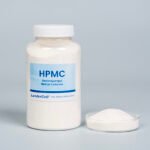
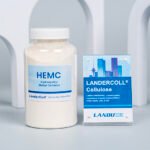
Cellulose ethers such as HPMC and HEMC are the primary water retention agents used in modern dry mix mortar systems.
Their role extends beyond simple thickening.
A well-designed cellulose ether system helps stabilize:
under changing construction conditions.
Fresh mortar naturally transports moisture through capillary channels toward dry substrates and exposed surfaces.
Cellulose ether helps slow this movement by forming a hydrated polymer structure throughout the mortar system.
This helps maintain:
In tile adhesive systems, this directly affects tile bonding reliability.
In gypsum systems, it helps prevent premature stiffening on absorbent walls.
Some manufacturers solve summer open-time instability by switching to more temperature-stable cellulose ether systems such as modified LANDU HPMC grades.
On real job sites, installers usually notice retention quality through application behavior rather than laboratory data.
Well-balanced mortar typically feels:
Poor retention balance often creates:
This is one reason why experienced formulators optimize retention together with rheology instead of treating them separately.
One of the most common formulation mistakes is assuming maximum water retention automatically creates better mortar.
In reality, excessive retention can create new construction problems.
Possible side effects include:
This becomes especially critical in:
Increasing viscosity may improve retention values while reducing actual site efficiency.
Many manufacturers discover this only after contractors complain that mortar feels heavy or difficult to spread.
Professional formulation design therefore focuses on balancing:
rather than maximizing a single technical parameter.
Different mortar systems require completely different retention strategies.
A cellulose ether grade optimized for gypsum plaster may not perform properly in self-leveling compounds or EIFS adhesives.
This is why industrial formulations are usually application-specific rather than universally optimized.
Tile adhesive systems usually prioritize:
In Europe, open time performance is commonly evaluated according to EN 1346:2012, which defines open time testing requirements for cement-based tile adhesives.
However, laboratory open time alone does not fully reflect:
For many manufacturers, maintaining stable tile adjustment time under changing site conditions is more important than achieving extreme retention values.
Suggested related pages:
EIFS adhesive and base coat systems depend heavily on stable curing behavior.
Poor moisture balance may contribute to:
At the same time, excessive retention may slow curing speed and reduce construction efficiency.
This balance becomes particularly important on large exterior wall projects exposed to wind and sunlight.
Suggested related pages:
Gypsum systems usually focus more on:
On highly absorbent walls, unstable retention often causes plaster to lose consistency almost immediately after application.
For contractors, this directly affects:
Self-leveling compounds require more carefully balanced retention systems.
Excessive viscosity may improve water retention while negatively affecting:
This is why self-leveling formulations usually rely on balanced additive interaction rather than simply increasing cellulose ether dosage.
Suggested related pages:
Experienced dry mix mortar manufacturers rarely optimize retention through a single adjustment.
Stable site performance usually comes from balancing multiple formulation variables together.
Different cellulose ether grades produce very different construction behavior.
Selection usually depends on:
For example, some modified cellulose ether systems from HPMC manufacturer are designed specifically for improving open time stability under high-temperature tile adhesive applications.
Others may prioritize smoother spreading or improved anti-burning performance for gypsum systems via professional HEMC manufacturer solutions.
Increasing dosage alone does not always improve mortar performance.
Overdosing may create:
In practice, experienced formulators usually optimize dosage according to full system balance rather than targeting the highest possible retention number.
Water retention behavior is strongly influenced by interaction with:
Some formulations perform well in laboratory testing but become unstable during production or real-site application because additive compatibility was not fully optimized.
For large-scale mortar manufacturers, production repeatability is often one of the most important performance indicators.
Regional climate differences strongly influence mortar behavior.
Formulations developed for Northern Europe may behave very differently under:
This is why climate adaptability has become increasingly important for industrial dry mix mortar production.
Some manufacturers now develop separate retention strategies for:
rather than relying on a single universal formulation.
LANDU cellulose ethers are developed for stable performance across a wide range of dry mix mortar systems, including:
Rather than focusing only on high laboratory retention values, LANDU formulations are designed to help manufacturers maintain:
For many mortar producers, long-term formulation stability and production consistency are just as important as achieving target technical specifications.
This becomes especially important when supplying projects across multiple climate regions or working with varying cement and substrate conditions.
High temperature, airflow, and absorbent substrates accelerate moisture loss from the adhesive surface, reducing open time and tile wetting performance.
AAC blocks create strong capillary suction that rapidly pulls water from fresh plaster. Poor retention balance often causes premature stiffening and difficult finishing.
Not always. Higher viscosity may improve retention values while reducing spreading smoothness, wetting efficiency, or leveling behavior.
High substrate temperature, airflow, and rapid surface evaporation can shorten the tile adjustment window significantly, especially on absorbent substrates.
This usually happens when mortar loses moisture too quickly after contacting absorbent walls or under high-temperature conditions.
Yes. Overdosing cellulose ether may improve retention while negatively affecting spreading smoothness, leveling behavior, and work efficiency.
Laboratory conditions are often more stable than real construction environments. Temperature, airflow, substrate suction, and installation speed can all affect actual site performance.
Open time stability usually requires balanced optimization of cellulose ether type, viscosity, rheology, additive compatibility, and cement interaction rather than simply increasing thickening performance.
Open time optimization usually requires balancing cellulose ether type, viscosity, dosage, rheology, and additive compatibility instead of simply increasing thickening performance.