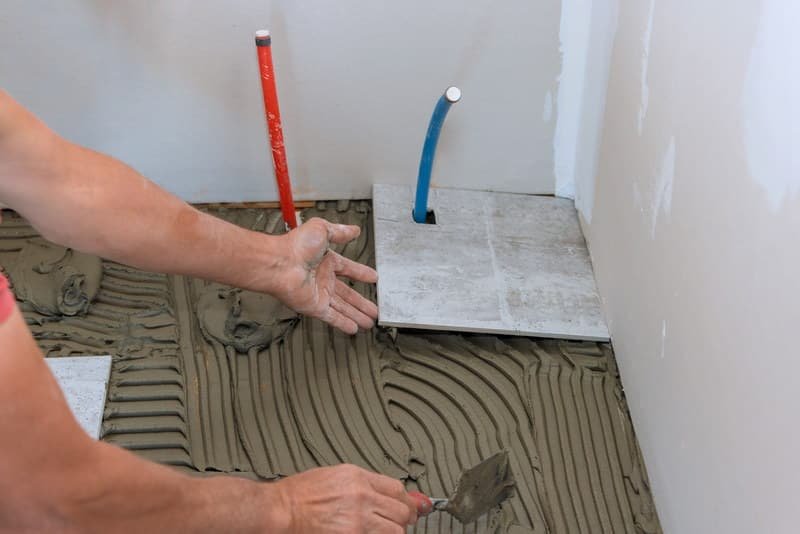
Cement, sand and filler make up more than 95 % of a tile adhesive, but the 1–5 % of additives decide whether it passes EN 12004. This page shows which Landercoll® cellulose ether, Accurate® redispersible polymer powder and NOVASTAR® starch ether grades to combine for each adhesive class, the dosage ranges to start from, and how to fix the defects that appear in testing or on site.
A cementitious tile adhesive is classified by test results, not by recipe. The additive package is responsible for most of the properties that EN 12004-1 and its test methods measure:
| Property | Test | Typical requirement | Additive that controls it |
|---|---|---|---|
| Tensile adhesion (initial, after water immersion, heat ageing, freeze–thaw) | EN 12004-2 (formerly EN 1348) | C1 ≥ 0.5 N/mm², C2 ≥ 1.0 N/mm² | RDP type and dosage; cellulose ether water retention |
| Open time | EN 12004-2 (formerly EN 1346) | ≥ 20 min standard, ≥ 30 min for class E | Cellulose ether grade and dosage |
| Slip | EN 12004-2 (formerly EN 1308) | ≤ 0.5 mm for class T | Sag-resistant cellulose ether grade, starch ether |
| Deformability | EN 12004-2 (formerly EN 12002) | S1 ≥ 2.5 mm, S2 ≥ 5 mm | Flexible RDP at 3–5 % and above |
| Workability, wet-out, pot life | Site practice | Creamy, non-sticky, full back-coverage | Balance of cellulose ether, starch ether and air content |
Water retention is the hidden variable behind every line in this table. If the substrate or a dry tile pulls water out of the bed before the cement hydrates, adhesion, open time and strength all drop together. That is why the cellulose ether grade is chosen first and the polymer powder second.
The Landercoll® grades below are the HPMC (K series) and HEMC (EM series) types whose technical data sheets list tile adhesive as a recommended application. “H” grades (K40H, K100H, K200H, EM100H) are modified for adhesive mortars — higher water retention, longer open time and better sag resistance at the same viscosity; EM40HT is a highly modified HEMC with excellent water retention and excellent heat resistance. Viscosities are Brookfield RV, 2 % solution, 20 °C, as stated on the TDS (NDJ-1 readings are roughly twice as high).
| Grade | Viscosity (Brookfield, 2 %) | TDS positioning | Sag resistance / open time (TDS) |
|---|---|---|---|
| K100H | 45,000–60,000 mPa·s | EIFS and standard tile adhesives | Good water retention and open time |
| K150 | 55,000–65,000 mPa·s | EIFS/ETICS, tile adhesives, skim coat | Sag resistance good; water retention very high |
| K200 | 65,000–80,000 mPa·s | Tile adhesives (highly recommended), EIFS | Sag resistance excellent; open time long |
| K200H | 65,000–80,000 mPa·s | Tile adhesives (highly recommended); especially high water retention to extend open time | Sag resistance excellent; open time long |
| K40H | 20,000–24,000 mPa·s | Premium tile adhesives and EIFS | Increased sag resistance, optimised open time |
| MP0675-T | 4,500–7,500 mPa·s | C2 tile adhesive (low-viscosity type) | Sag resistance moderate; workability excellent |
| MPE4090-T | 35,000–45,000 mPa·s | Tile adhesive, tile grout / crack filler, masonry mortar | Sag resistance moderate |
| EM40HT | 18,000–23,000 mPa·s | Tile adhesive, EIFS, repair mortar (HEMC) | Water retention excellent; heat resistance excellent |
| EM100H | 45,000–60,000 mPa·s | Cement-based tile adhesives and EIFS (HEMC) | Sag resistance excellent; water retention high |
| EM200 | 65,000–80,000 mPa·s | Tile adhesives, EIFS/ETICS, skim coat (HEMC) | Sag resistance excellent; open time long |
| Target class | Typical use | Landercoll® cellulose ether | Starting dosage | Accurate® RDP | Starting dosage |
|---|---|---|---|---|---|
| C1 | Interior walls and floors, absorbent ceramic tiles | K100H, K150 / EM100H | 0.20–0.30 % (2.0–3.0 kg/t) | Rigid 4012N or 5011N (optional) | 0–1 % |
| C1T / C1TE | Wall tiles, longer open time in warm conditions | K200, K200H / EM200 | 0.25–0.35 % | Rigid 4012N, 5011N | 1–2 % |
| C2TE | Porcelain and low-absorption tiles, interior and exterior | K200H, K40H / EM40HT, EM100H | 0.30–0.40 % (3.0–4.0 kg/t) | Semi-flexible 4025N or acrylic–silane 9028E | 2–3 % |
| C2TE S1 | Large-format tiles, façades, heated floors, balconies | K40H, K200H / EM40HT | 0.30–0.40 % | Flexible 5045N or 9055E | 3–5 % |
| C2TE S1, water-exposed | Pools, wet rooms, exterior floors | as above | as above | Hydrophobic 8048H, 8032H (with 5045N) | 3–5 % total |
| C2, creamy low-viscosity system | Machine-mixed or high-dosage recipes | MP0675-T | 0.35–0.50 % | 4025N | 2–3 % |
Accurate® RDP at a glance (TDS values): 4012N and 5011N — rigid VAE, Tg 10 ± 5 °C, MFFT 4 °C; 4025N — semi-flexible VAE, Tg 0 °C, MFFT 1 °C; 5045N — flexible VAE, Tg −10 ± 5 °C, MFFT 0 °C; 8032H — flexible VA/VV/VC with medium hydrophobic effect, Tg −10 ± 5 °C; 8048H — instant-dissolving, very strongly hydrophobic grade listed for ceramic tile adhesive and waterproof mortar; 9028E (Tg 5 °C) and 9055E (Tg −15 °C) — acrylic–silane powders with a hydrophobic, weather-resistant film. All grades: solid content ≥ 98–99 %, bulk density 400–600 g/L, 90 % through 100 mesh, polyvinyl alcohol protective colloid.
Optional components: NOVASTAR® starch ether — ST3009 (low-viscosity grade for initial adhesion and anti-sag), ST3411A (C2 tile adhesive: workability, anti-sag, extended open time) or ST3411H (initial adhesion, anti-sag, open time) at 0.03–0.10 %; calcium formate at about 0.5 % for early strength in cold weather; NOVASTAR® powder defoamer P805 at 0.1–0.2 % if a high-shear mixer entrains air (P806 is the alkali-resistant version, P807 the low-temperature version).
Dosages are percentages of the total dry mix and are starting points for laboratory trials; the technical data sheets do not prescribe dosages. Local cement, sand grading and climate shift the optimum; LANDU’s application laboratory can run the EN 12004 series on your blend.
Porcelain absorbs less than 0.5 % water, so the adhesive cannot gain strength by mechanical keying into the tile. Bonding relies on the polymer film that RDP forms as the mortar dries, which is why C2 systems carry 2–5 % polymer powder while C1 systems may carry none.
Large formats add two more problems. A 60 × 120 cm tile placed on a bed that has started to skin loses contact area; open time, not strength, becomes the limiting property, so the cellulose ether moves to K200H or EM40HT, the grades with the highest water retention. And the tile itself does not flex, so thermal and substrate movement must be absorbed by the adhesive — the S1 deformability requirement that needs a flexible polymer with a low glass transition temperature (5045N at −10 ± 5 °C or 9055E at −15 °C).
Most tile adhesive failures trace back to one of eight symptoms. The table below lists the most common cause of each and the additive adjustment to try first. For the mineral side of the recipe, see our tile adhesive composition guide.
Change one additive at a time and re-run the EN 12004 test that failed. Changing dosage without a clear test objective rarely solves the problem.
Find the cause. Adjust one additive. Verify with the test that failed.
Tiles slip on walls
Skinning and short open time
Adhesion fails after water immersion
Heat-ageing or freeze–thaw failure
| Symptom | Most common cause | Adjustment |
|---|---|---|
| Tiles slip on walls | Cellulose ether with low sag resistance; mortar too fluid | Move to K200 / K200H / EM100H (sag resistance “excellent” on the TDS); add 0.05 % ST3411H; reduce water by 1–2 % |
| Skinning within 10–15 min, low open time | Insufficient water retention; hot, windy conditions; fine cement | Raise cellulose ether by 0.05 %; switch to K200H or EM40HT; check cement fineness |
| Adhesion passes dry but fails after water immersion | Polymer dosage too low for the cement; wrong RDP type | Increase RDP by 1 %; use hydrophobic 8048H or 8032H for wet areas |
| Adhesion drops after heat ageing | Rigid polymer (Tg 10 °C) at the limit; too much cellulose ether | Move to 4025N (Tg 0 °C) or 5045N; keep cellulose ether ≤ 0.40 % |
| Freeze–thaw failure | Low polymer content, high air content | ≥ 3 % flexible RDP; add P805 defoamer; check air with a pressure meter |
| Sticky, hard to spread, pulls on the trowel | Cellulose ether viscosity too high for the recipe | Step down one viscosity level (K200 → K150 → K100H) or switch to the low-viscosity MP0675-T at a higher dosage |
| Low back-coverage, voids under tile | Mortar too stiff, short pot life | Lower-viscosity grade (K40H / EM40HT); add ST3411A for creamy consistency without extra water |
| Adhesive loses consistency in hot weather or warm mixing water | HPMC heat resistance “standard” (TDS) | Switch to an EM grade (heat resistance “excellent” on the TDS): EM40HT, EM100H, EM200 |
| Efflorescence on grout lines and tile edges | High water, no hydrophobic component | Reduce water; add hydrophobic RDP or NOVASTAR® SHP75/SHP80 at 0.2–0.5 % |
Detailed diagnosis of each failure is covered in our guides on tile slip on walls, extending open time, 28-day strength after water immersion and RDP in freeze–thaw testing. A broader overview is in common tile adhesive problems, causes and additive solutions.
Each additive has a different, complementary role: cellulose ether secures hydration and open time, polymer powder builds adhesion and flexibility, and starch ether or specialty additives fine-tune rheology. Background reading: tile adhesive composition and ingredients · HPMC dosage in tile adhesive · the full Landercoll® cellulose ether range.
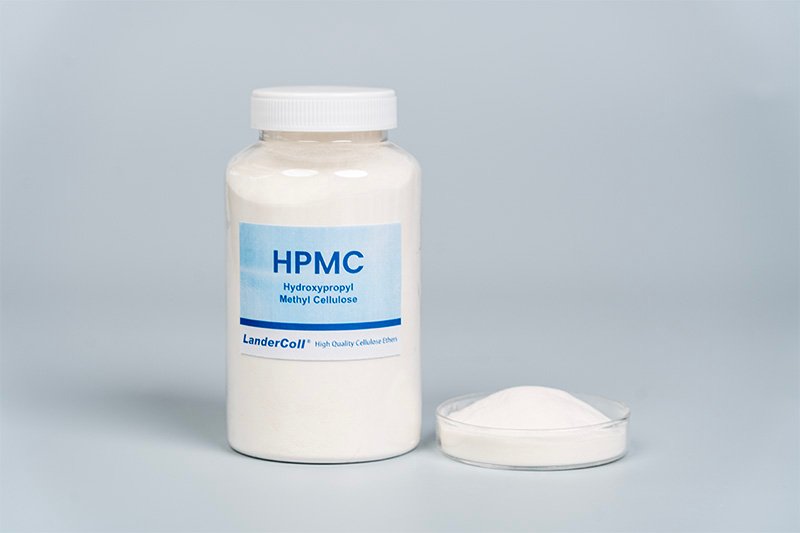
Water Retention & Open Time
The Landercoll® HPMC K series runs from K04 to K200H — 300–500 up to 65,000–80,000 mPa·s (Brookfield RV, 2 %; NDJ-1 up to 185,000–215,000 mPa·s), methoxy 19–24 %, hydroxypropyl 4–12 %, moisture ≤ 6 %, ash ≤ 5 %. K100H and K150 cover C1 adhesives, K200 and K200H extend open time for C1TE and C2TE, K40H serves premium C2TE S1 systems and MP0675-T is the low-viscosity C2 grade.
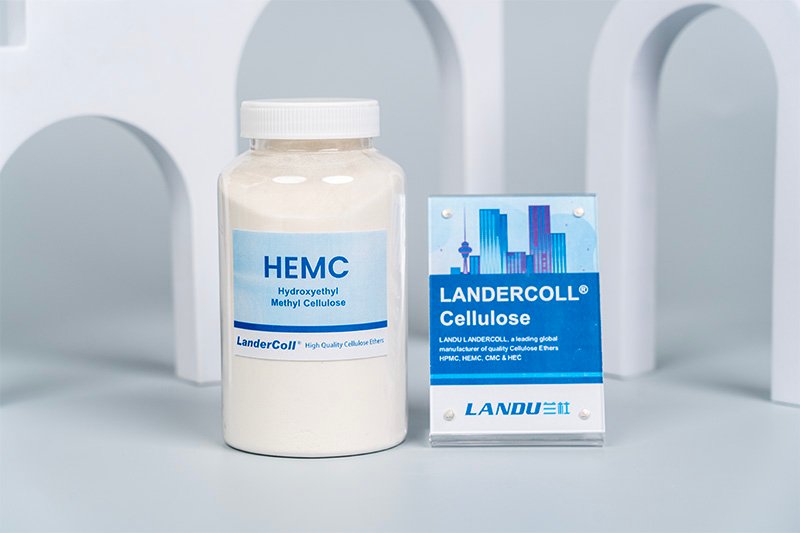
Thermal Stability & Machine Application
Landercoll® HEMC (MHEC) EM series covers the same viscosity steps, from EM40HT (18,000–23,000 mPa·s) to EM200 (65,000–80,000 mPa·s), and every EM technical data sheet rates heat resistance “excellent” against “standard” for HPMC. It is the preferred cellulose ether for Southern Europe, warm mixing water, machine-mixed adhesives and premium C2 systems.
Adhesion, Deformability & Water Resistance
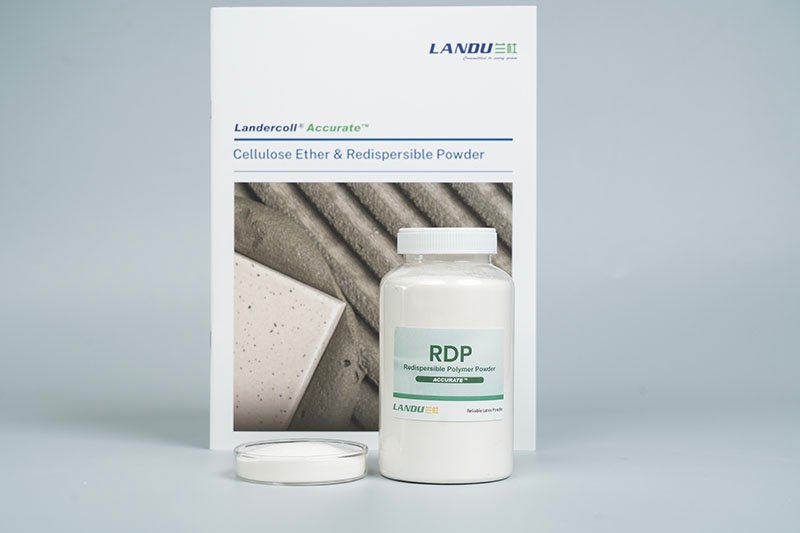
Accurate® redispersible polymer powders form the film that bonds low-absorption porcelain and carries S1 deformability. Rigid VAE grades (Tg 10 ± 5 °C) suit C1/C1T, the semi-flexible 4025N (Tg 0 °C) and acrylic–silane 9028E suit C2TE, flexible grades (5045N Tg −10 ± 5 °C, 9055E Tg −15 °C) carry C2TE S1, and the hydrophobic 8048H / 8032H serve pools, wet rooms and exterior floors.
Rheology, Defoaming & Hydrophobing
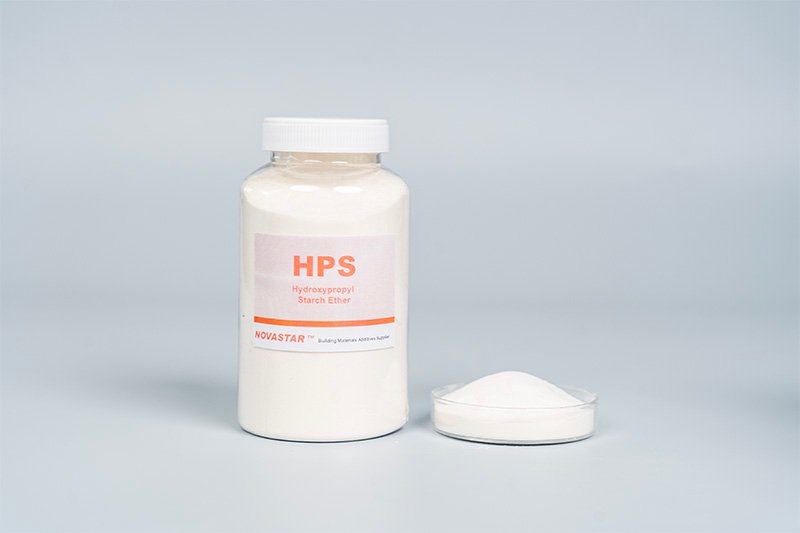
NOVASTAR® starch ether ST3009, ST3411A or ST3411H at 0.03–0.10 % gives initial adhesion, anti-sag and a creamier consistency without extra water. NOVASTAR® powder defoamer P805 at 0.1–0.2 % controls air from high-shear mixers (P806 alkali-resistant, P807 low-temperature), and NOVASTAR® SHP75 / SHP80 at 0.2–0.5 % reduces water uptake and efflorescence. Calcium formate at about 0.5 % adds early strength in cold weather.
Open time, slip, tensile adhesion and deformability are tested to EN 12004-2:2017, which consolidates the former EN 1346, EN 1308, EN 1348 and EN 12002 methods. Run the series in this order so that each adjustment is tested against the property it controls:
LANDU’s laboratory in Jinan runs this sequence on customer blends and returns a report with the complete EN 12004 designation. Sample quantities of 200–600 g of each additive are shipped free of charge.
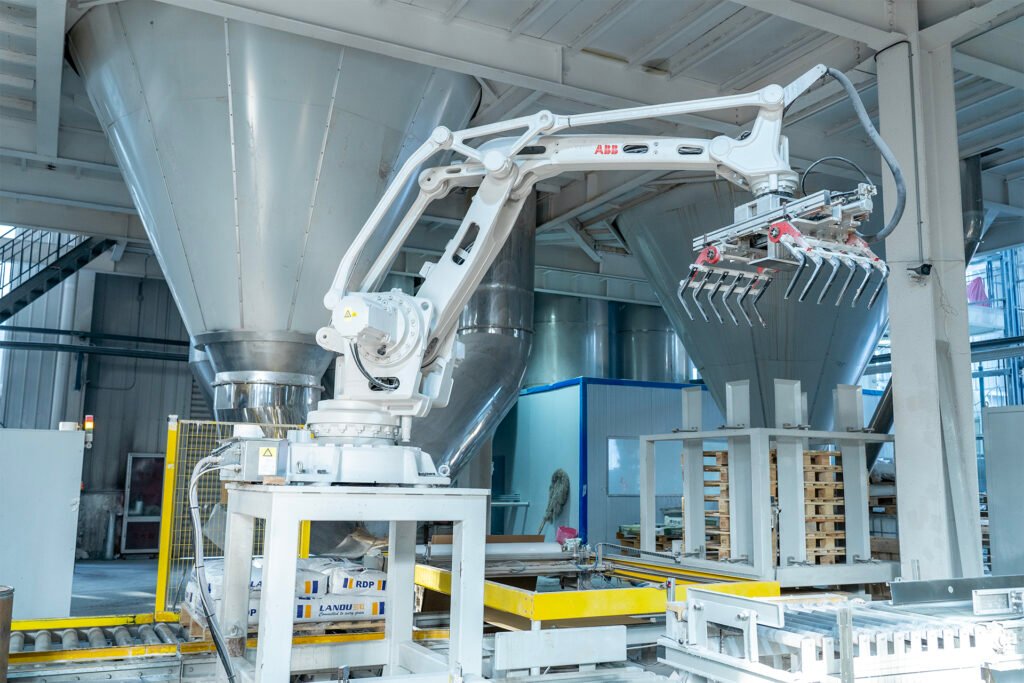
Three production bases in Shandong with 75,000 t/year of cellulose ether, redispersible polymer powder and specialty additives. Founded in 2008; first cellulose ether plant commissioned in 2011.
ISO 9001 quality system, REACH-compliant portfolio and EcoVadis rating. Raw-material inspection, process control, batch tracking and finished-product testing on every lot.
A Technical Data Sheet (TDS) describes the specifications and technical characteristics of a product grade. A Certificate of Analysis (COA) reports measured results for an identified production batch. Both documents support raw-material evaluation alongside application testing.
Contact LANDU about technical documents and batch-specific COA information for your selected material.
Start at 0.35 % (3.5 kg per tonne of dry mix) with Landercoll® K200H or EM40HT, then adjust in 0.05 % steps against the EN 12004-2 open time and slip tests. C1 adhesives usually settle between 0.20 and 0.30 % with K100H or K150.
Rarely. Cellulose ether secures hydration and open time, but the 1.0 N/mm² adhesion after water immersion and heat ageing almost always needs 2–3 % of a polymer powder, and S1 deformability needs 3–5 % of a flexible grade such as 5045N or 9055E.
Both are used at comparable viscosity steps. The HEMC technical data sheets (EM40HT, EM100H, EM200) rate heat resistance "excellent", against "standard" for the HPMC K grades, so HEMC is preferred for Southern Europe, warm mixing water, machine mixing and premium C2 systems. HPMC (K100H, K150, K200, K200H) is the cost-effective choice for standard C1/C2 adhesives in temperate climates.
A flexible grade — Accurate® 5045N (Tg −10 ± 5 °C) or 9055E (Tg −15 °C) — at 3–5 %, combined with a hydrophobic grade (8048H or 8032H) or 0.2–0.5 % NOVASTAR® SHP where standing water or efflorescence is a concern.
No. Starch ether (ST3009, ST3411A, ST3411H) gives initial adhesion, anti-sag and a creamier consistency at 0.03–0.10 %, but it does not retain water the way cellulose ether does. Use it on top of the cellulose ether, not instead of it.
Up to three cellulose ether grades and two RDP grades per project, 200–600 g each, shipped free by courier with technical data sheets. If the first combination misses your target, our laboratory proposes the next iteration at no charge.
Developing a C1 or C2 adhesive, moving to large-format tiles, fixing a slip or open-time problem, or qualifying a second additive supplier? Send us the details below and our application laboratory proposes the grades and dosages to test.

Up to three cellulose ether grades and two RDP grades per project, 200–600 g each, shipped free by courier with technical data sheets.
Talk to a formulation engineer
LANDU — Committed to Every Gram.