
LANDU · Local-formula failure analysis
Why Tile Adhesive Passes 28-Day Standard Curing but Fails Water-Immersion Strength
A tile adhesive can meet its tensile adhesion target after 28 days of standard curing and still fail the water-immersion requirement. This is not an unusual contradiction. The two results expose different parts of the formulation.
The standard-cured result shows that the adhesive can develop a load-bearing cement-polymer structure under controlled conditions. The immersed result asks a harder question: can that structure preserve cohesion and interfacial bonding after water enters its pores and reaches the tile and substrate interfaces?
For customers, the practical problem is clear: the dry result is acceptable, but the water-conditioned result is too low. The correct response is not to replace one additive or increase RDP dosage immediately. The failure must be analysed against the customer's local cement, sand and fillers, water demand, climate, tile and substrate, and the actual HPMC and RDP grades used.
A grade that performs well in one country or reference formula may underperform in another when local cement chemistry, mineral quality, curing temperature or water demand changes.
The sections below show how to separate a wet-interface problem from a porous-matrix problem, then identify whether the first trial should change HPMC, RDP, water demand, air control or another part of the local formula.
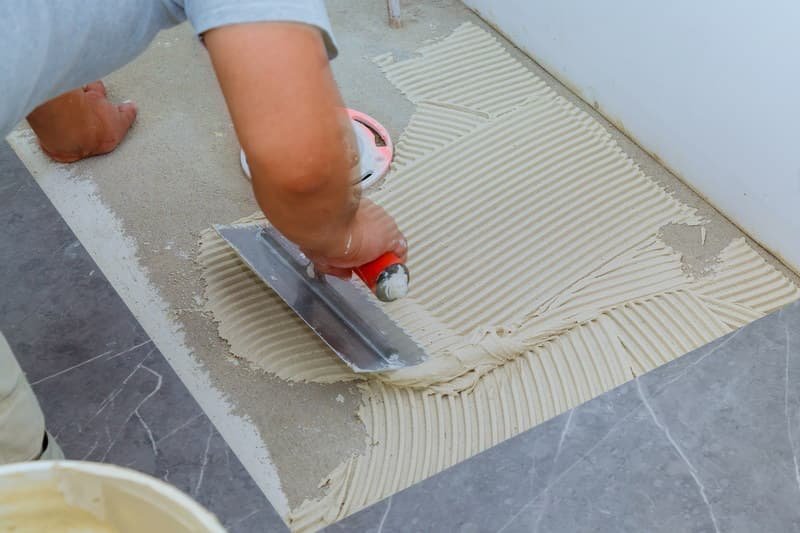
Separate wet-interface, cohesive-matrix and substrate-side failure before reformulating.
Match HPMC and RDP to the customer’s cement, minerals, water demand and climate.
Use controlled comparisons to identify the smallest effective correction.
First Confirm What the Two Test Results Represent
The first step is to compare like with like. A 28-day standard-cured adhesion result and a water-immersion adhesion result normally come from separate specimen sets that follow different conditioning routes. Passing the standard-cured series does not mean that the same specimens were proven water-resistant before immersion.
Record the test method, specimen preparation, tile type, substrate, curing temperature, relative humidity, immersion schedule and test age. If either series used a different adhesive thickness, mixing time, open time or pull-head procedure, preparation variability may be mistaken for a formulation problem.
Also record the failure mode for every specimen:
- a clean tile back indicates adhesive failure at the tile interface;
- mortar remaining on both surfaces indicates cohesive failure within the adhesive;
- separation from the base indicates a substrate-side limitation;
- mixed failure suggests that more than one mechanism may be controlling the result.
This evidence determines which formulation variable should be tested next.
Why the 28-Day Standard-Cured Result Can Pass
Under standard curing, cement hydration advances and the dry matrix becomes capable of carrying tensile load. Even a formulation with connected pores, a water-sensitive interface or an unsuitable polymer phase can produce an acceptable dry result if the mineral skeleton is sufficiently strong.
That result confirms useful development, but only under the reference environment. It does not prove that:
- the pore network limits water transport;
- the tile interface remains stable after saturation;
- the polymer phase retains wet cohesion;
- the cellulose ether is compatible with the local cement;
- the adhesive has controlled air content and water demand.
The full tile adhesive formulation must therefore be assessed as a system. A passing dry value can coexist with a weakness that becomes active only after water reaches the matrix or interface.
What Water Immersion Exposes
Water enters through edges, pores and connected capillaries. It changes the moisture condition of the cement matrix and can reduce friction, soften a vulnerable polymer phase, or weaken an interface that was only marginally bonded under dry conditions.
The immersed result is especially sensitive to four conditions:
- Interface quality. Dense tiles, premature skin formation, poor wetting or contamination can leave a bond that passes dry testing but becomes limiting when wet.
- Matrix porosity. Excess mixing water, uncontrolled air or poor particle packing can create an easy path for water.
- Polymer wet stability. RDP chemistry and film continuity influence wet cohesion and adhesion retention.
- Hydration balance. Early water loss, excessive retardation or cement-additive incompatibility can leave an uneven structure even when later dry strength appears acceptable.
The purpose of diagnosis is to find which condition matches the customer's failure surface and local materials.
Local Cement Chemistry Can Change the Additive Response
Two cements with the same nominal strength class can behave differently in tile adhesive. Mineral composition, alkali level, sulfate balance, fineness and supplementary cementitious materials influence water demand, hydration rate, setting behaviour and interaction with cellulose ether and polymer powder.
An HPMC/RDP package selected with one reference cement may therefore produce different open time, air content, retardation and film development with the customer's cement. Increasing dosage without checking compatibility can make the wet result less predictable.
For a localisation trial, request at least:
- cement type, source and current batch;
- setting behaviour and water demand observed in the mortar;
- whether fly ash, slag, limestone powder or another blended component is present;
- any recent change in cement supplier or seasonal production;
- standard-cured and immersed failure modes, not only average values.
If the problem began after a cement change, repeat the original and current cement in the same controlled formula before changing the additive package.
Sand, Fillers and Mixing Water Control the Pore Network
Local sand grading and filler mineralogy affect packing, consistency and the amount of water required for application. A gap-graded or highly absorbent aggregate may demand more water. Clay contamination or excessive fines can alter rheology and reduce effective additive performance.
When excess water later leaves the mortar, it can create connected capillary pores. The dry mineral skeleton may still pass at 28 days, while immersion allows water to reach critical interfaces more easily.
Before changing RDP, compare:
- aggregate grading and maximum particle size;
- filler type, fineness and moisture;
- clay or dust contamination;
- actual water-to-dry-mix ratio used by the laboratory and customer;
- fresh density as a practical indicator of uncontrolled air;
- consistency and trowelability at the same measured water level.
A formulation comparison is not controlled if each sample receives enough water to “feel the same” without recording the final water addition.
HPMC Selection Must Match the Local Formula and Climate
HPMC helps retain water, regulate rheology and maintain workable tile contact. However, viscosity alone is not a complete selection rule. Substitution pattern, modification, dissolution behaviour, gel temperature, retardation and air entrainment can change how a grade performs with local cement and at local temperatures.
A suitable HPMC for tile adhesive should provide enough water retention for hydration and contact without creating excessive retardation, air or water demand.
The likely HPMC mismatch depends on the local condition:
- Hot, dry or windy application: insufficient effective water retention or rapid skin formation may weaken tile contact.
- Cool or humid curing: excessive retardation can delay structure development and polymer-film consolidation.
- Highly absorbent substrate: water may be drawn from the adhesive before uniform hydration and wetting are established.
- High-viscosity but high-water-demand mortar: the extra mixing water may increase later porosity.
- Low fresh density: excessive entrained air may reduce cohesive strength after immersion.
Compare HPMC grades at the same measured consistency, and record water demand, density, open time and both conditioned adhesion results. A higher nominal viscosity should not automatically be treated as the upgrade.
RDP Grade Matters More Than Dosage Alone
RDP supports adhesion, cohesion, deformability and stress distribution through the polymer phase formed during curing. For water-conditioned performance, the important question is whether the selected polymer forms a continuous and compatible phase that retains useful cohesion at the interface and within the wet mortar.
The guide to RDP in advanced tile adhesive systems explains the wider cement-polymer interaction. In a local failure analysis, compare the following grade characteristics:
- polymer chemistry and intended wet-adhesion behaviour;
- minimum film-forming conditions relative to the customer's curing temperature;
- relative flexibility and hardness;
- redispersion in the local cement pore solution;
- compatibility with HPMC, defoamer and the mineral system;
- effect on water demand and fresh density.
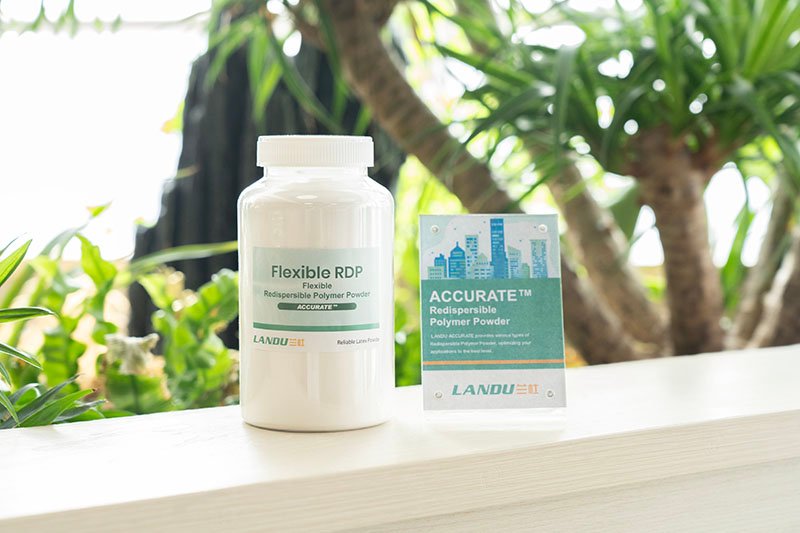
Two RDP grades can deliver similar 28-day standard-cured strength and very different immersed results. The RDP for tile adhesive application page can support initial grade screening, but the final choice must be validated in the customer's local formula.
Adding more of an unsuitable grade may raise cost and change workability without correcting the wet failure. Compare grade character first at a controlled dosage; adjust dosage only after a compatible grade has been identified.
Diagnose the Failure Pattern Before Reformulating
| Customer result pattern | Most likely limitation | First checks | Suitable first trial |
|---|---|---|---|
| 28-day standard strength passes; immersed specimens fail cleanly at the tile | Wet interface, incomplete wetting, premature skin or unsuitable polymer-interface behaviour | Tile absorption, surface condition, open time, coverage and failure surface | Compare RDP grade and effective open-time control while holding water constant |
| Standard strength passes; immersed specimens fail cohesively through porous mortar | High water demand, uncontrolled air, poor packing or low wet cohesion | Fresh density, water ratio, sand grading, filler and fracture texture | Reduce uncontrolled air/water demand, then compare wet-performing RDP grades |
| Both results show high scatter | Specimen preparation or raw-material variability | Mixing, resting time, thickness, pull-head alignment and batch consistency | Correct the test process before ranking additives |
| Dry result passes only after a long cure; immersed strength remains low | Retardation or slow local cement-additive development | Cement source, HPMC compatibility, temperature and setting behaviour | Screen HPMC compatibility before increasing polymer |
| Immersed strength improves after changing cement, with additives unchanged | Local cement compatibility was limiting the system | Cement chemistry, water demand and hydration profile | Re-optimise HPMC/RDP around the customer's production cement |
| Failure occurs at the substrate | Base strength, preparation or moisture condition | Dust, laitance, absorption, primer and substrate tensile strength | Correct the substrate system; an additive change alone is unlikely to solve it |
Site symptoms such as hollow tiles, incomplete transfer or slippage can be reviewed in the guide to common tile adhesive problems, but site observations and controlled laboratory conditioning should be recorded as separate evidence.
A Practical Localisation Test Plan
The purpose of localisation is to identify the smallest effective change, not to redesign every raw material at once.
1. Freeze the customer's current formula
Record every component by exact supplier and grade, including cement, sand fractions, filler, HPMC, RDP, starch ether, defoamer, fibre and mixing water. Keep a retained sample of the current dry mix when possible.
2. Reproduce both conditioning routes
Confirm the standard-cured pass and immersed failure using the same raw materials and preparation method. Record individual results and failure modes.
3. Check water demand and fresh density
These two measurements often reveal whether a grade change has altered porosity or air content. Do not compare formulas only at subjective workability.
4. Run a small compatibility matrix
Hold the mineral formula constant and compare a limited set of HPMC and RDP combinations. Begin at controlled dosages so grade effects remain visible.
5. Change one supporting variable only when indicated
If the fracture is porous and cohesive, review defoamer, water demand or particle packing. If the tile back is clean, review wetting, open time and RDP-interface behaviour. If the result changes with cement batch, prioritise cement-additive compatibility.
6. Confirm the complete performance profile
After improving immersed strength, recheck standard-cured adhesion, open time, slip resistance, workability and any other performance required by the intended product classification. Exterior systems may also need heat-aging or cycling evaluation; the article on tile adhesive freeze-thaw resistance explains why one water-conditioned result cannot represent every durability exposure.

Information the Customer Should Provide
A technically useful recommendation requires more than the words “water strength failed.” Ask the customer to send:
- the complete dry-mix formula and actual mixing-water addition;
- cement, sand and filler sources with available technical data;
- HPMC and RDP grade names and dosages;
- defoamer, starch ether, fibre and other additives;
- tile type, absorption and dimensions;
- substrate type and preparation;
- test method, conditioning route and individual results;
- photographs of both fracture surfaces;
- laboratory temperature and humidity;
- target classification and other properties that must remain unchanged.
Without this information, changing HPMC or RDP is only a general screening suggestion. With it, the failure can be narrowed to hydration, interface, porosity, polymer wet stability or test variability.
Common Reformulation Mistakes
Increasing RDP before identifying the failure mode
More polymer cannot correct a weak substrate, excessive entrained air or an uncontrolled water ratio. It may hide the original mechanism without producing a stable result.
Selecting HPMC only by viscosity
Two grades with similar viscosity can differ in water retention, retardation, air entrainment and compatibility with the local cement.
Changing HPMC, RDP and water together
When several variables move at once, the next test cannot show which change improved or damaged the immersed result.
Testing with a reference cement instead of the customer's cement
A laboratory benchmark is useful for quality control, but it cannot replace validation in the production formula and local raw-material system.
Accepting one high average without checking scatter
A few strong specimens can conceal inconsistent wetting, air content or specimen preparation. Review individual values and fracture surfaces.
Frequently Asked Questions
Why can 28-day standard-cured adhesion pass while water-immersion adhesion fails?
The dry test can be carried by a strong mineral skeleton, while immersion exposes a weak tile interface, connected pore network, water-sensitive polymer phase or uneven hydration. The tests represent different conditioning routes.
Should the customer change HPMC or RDP first?
Use the failure evidence. A clean tile back points first toward wetting, open time and RDP-interface behaviour. Porous cohesive failure points toward water demand, air control, packing and wet cohesion. Delayed development or strong cement-batch dependence points toward HPMC-cement compatibility.
Will a water-resistant RDP grade always solve the problem?
No. It can help when polymer wet stability is limiting, but it cannot correct excessive water, poor tile contact, weak substrate preparation or uncontrolled laboratory variability.
Does a higher HPMC viscosity improve immersed strength?
Not automatically. Higher viscosity may change water demand and air entrainment. Select HPMC through compatibility testing with the local cement, aggregate, climate and complete performance target.
Can the same formula be used unchanged in every market?
It may provide a starting point, but local cement, mineral fillers, sand, climate, tile and application practice can change the result. Final HPMC and RDP selection should be localised and verified.
Final Diagnostic Principle
When a tile adhesive passes 28-day standard curing but fails water immersion, the dry result has already shown that the formulation can build strength. The remaining task is to identify why that structure cannot retain bonding when wet.
Start with the failure surface and test history. Then check the customer's local cement, aggregate, filler, water demand, fresh density, climate and substrate before selecting a new HPMC or RDP grade. A controlled local comparison will provide a more reliable correction than copying a reference formula or increasing additive dosage without diagnosis.