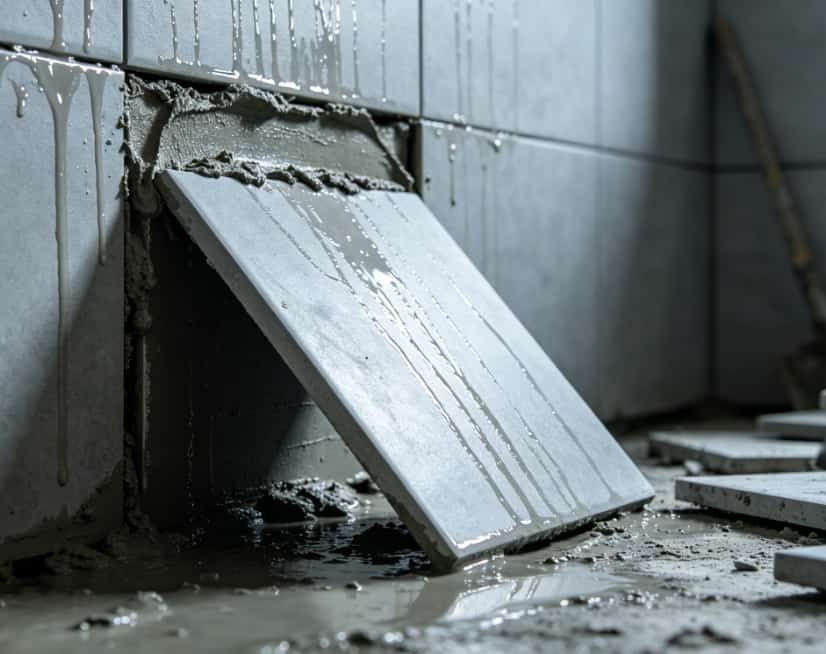
Wall tile slipping rarely starts with the tile itself.
On many job sites, installers notice the problem within minutes after application:
In many cases, adding more adhesive or switching to a higher viscosity HPMC manufacturer product does not fully solve the issue.
Tile slip is usually a rheology balance problem inside the mortar system — especially water retention stability, cohesion development, and application consistency during open time.
For dry mix mortar manufacturers, understanding why tile adhesive slips is critical for developing stable wall tile adhesive and C2 formulations under real construction conditions.
Gravity is only part of the problem.
Many tile adhesives initially appear stable during mixing but lose structural stability once applied vertically.
This usually happens when the mortar cannot maintain balanced cohesion after water distribution changes during application.
Typical causes include:
Some formulations show high viscosity during laboratory testing but still experience tile slipping on-site because viscosity alone does not guarantee anti-sag stability.
This becomes more obvious during summer installation and in large-format tile adhesive systems where mortar stress increases significantly after tile placement.
In many formulations, slip problems begin long before bonding strength failure occurs.
When moisture evaporates too quickly:
Installers often describe this as:
These problems are commonly linked to unstable water retention behavior inside the cellulose ether system.
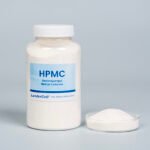
LANDU HPMC for tile adhesive grades are designed to maintain more stable hydration and rheology behavior during wall application, helping improve anti-sag performance without creating excessive heaviness during troweling.
One of the most common formulation mistakes is assuming that higher viscosity automatically improves anti-slip performance.
In practice, excessively high viscosity may create:
At the same time, the mortar may still lack sufficient structural stability after vertical application.
Good anti-sag performance usually comes from balanced rheology control rather than simply increasing viscosity numbers.
Several manufacturers replacing unstable local cellulose systems use LANDU modified HPMC grades to improve comb stability and wall application consistency without overbuilding viscosity.
Slip problems become more severe with modern porcelain and large-format tiles.
Compared with standard ceramic tiles, these systems create:
Inconsistent rheology that may appear acceptable with smaller tiles often becomes problematic once tile size and weight increase.
For this reason, large-format tile adhesive formulations usually require better balance between:
This is one reason why many modern C2TE formulations use modified cellulose ether systems instead of standard viscosity-focused approaches.
Reducing tile slip is rarely achieved through one additive alone.
Professional tile adhesive systems typically rely on balanced interaction between:
In many factories, small adjustments in rheology behavior have greater impact on wall application performance than simply increasing additive dosage.
LANDU works with dry mix mortar manufacturers to optimize cellulose ether performance according to local cement systems, climate conditions, and production requirements rather than applying one universal formulation model.
Installers usually identify unstable formulations before laboratory testing does.
Common field complaints include:
Even when standard bonding strength requirements are technically achieved, poor application feel often leads directly to customer dissatisfaction.
For manufacturers supplying professional construction markets, stable wall application behavior is often one of the most important indicators of dry mix mortar formulation quality.
Many slip-related complaints appear only after large-scale production begins.
Changes in:
can all affect anti-sag behavior during wall installation.
Several manufacturers reformulating export-grade tile adhesive systems use LANDU cellulose ether grades to improve production stability and reduce performance fluctuation between batches.
Stable rheology control becomes increasingly important in projects involving:
High viscosity alone does not guarantee good anti-sag performance. If rheology balance, cohesion development, or water retention stability are poor, tiles may still slip during wall application.
Yes. Excessive or unsuitable HPMC for tile adhesive may create overly sticky mortar with poor structural balance, negatively affecting tile wetting and application stability.
Higher temperatures accelerate moisture evaporation and shorten workable open time. If water retention becomes unstable, mortar cohesion may weaken faster during vertical application.
Stable water retention helps maintain mortar structure and hydration during installation, improving comb stability and reducing tile movement on walls.
Large-format tiles place greater load on the adhesive layer and usually require longer adjustment time, making rheology stability much more important during installation.
Yes. Improper aggregate grading may affect mortar cohesion, water demand, and structural stability, increasing the risk of tile movement after application.
Bonding strength measures final adhesion after curing, while anti-sag performance relates to how well the adhesive holds tiles in place during wall installation before curing occurs.