
When a water-based paint thickened with hydroxyethyl cellulose fails, the first response is often to add more thickener or change to a higher-viscosity HEC grade. That can hide the symptom without correcting the cause.
Most HEC paint problems begin in one of four places: incomplete dispersion or hydration, an uncontrolled manufacturing process, incompatibility within the formulation, or a mismatch between the rheology profile and the application method. The same measured can viscosity can therefore produce very different results during storage, rolling, spraying or drying.
This guide uses a symptom-first method. Start with what you can observe, check the lowest-cost causes first, change one variable at a time, and verify the correction under the same test conditions.
For grade specifications and product families, refer to the hydroxyethyl cellulose product range. For choosing a grade before troubleshooting begins, use the separate HEC paint selection guide.
Quick Diagnostic Table for Common HEC Paint Problems
| Observed symptom | Check first | Likely formulation or process cause | Practical next test |
|---|---|---|---|
| Final viscosity is lower than expected | Hydration time, addition point and measurement temperature | Incomplete hydration, poor dispersion, excessive process severity or wrong comparison method | Prepare a controlled HEC solution and compare it with the production batch at the same temperature |
| Small gel particles or fish-eyes remain | Powder wetting and addition rate | The outer surface hydrated before the centre dispersed | Compare dry addition with a supplier-approved pre-slurry or delayed-hydration procedure |
| Viscosity changes between batches | Water quality, pH, order of addition and shear history | Process variation or interaction with surfactants, electrolytes and other thickeners | Reproduce both batches with a recorded addition sequence and fixed mixing energy |
| Paint loses viscosity during storage | Microbial condition, pH drift and storage temperature | Biological degradation, incomplete initial hydration or formulation incompatibility | Compare fresh and aged samples for pH, odour, appearance and viscosity at the same temperature |
| Pigment or filler settles | Low-shear structure and dispersion quality | Insufficient suspension, weak structure recovery or poor pigment dispersion | Run a storage-settling test and compare low-shear viscosity, not KU alone |
| Paint sags on a wall | Wet-film thickness and structure recovery | Slow recovery after shear, weak low-shear structure or excessive application build | Apply controlled vertical drawdowns at several film thicknesses |
| Roller spatter is excessive | Mid- and high-shear rheology | Insufficient extensional resistance or an unbalanced thickener package | Compare HEC alone with an HEC/associative-thickener blend at equal application viscosity |
| Brush or roller marks remain | Open time, mid-shear viscosity and recovery rate | Excessive structure or recovery that is too fast | Reduce one rheology component and compare levelling at equal solids and film thickness |
| Spray pattern is unstable | Pump pressure, nozzle, high-shear viscosity and lumps | Grade is too high in viscosity, hydration is incomplete or filtration is blocked | Filter a sample, document pressure and compare a lower-viscosity grade |
The table is a screening tool. A single symptom can have several causes, so the final diagnosis should come from controlled comparisons rather than one viscosity reading.
Why Does HEC Fail to Build the Expected Paint Viscosity?
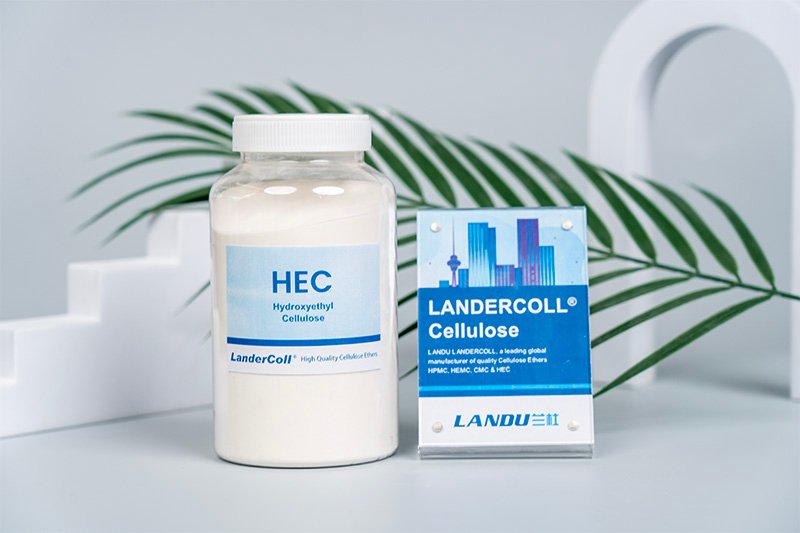
Check whether the HEC has fully hydrated
An HEC thickener does not build its final viscosity as soon as the powder disappears from view. The particles must first disperse, wet and hydrate. If the paint is measured too early, the result may appear low and then rise later during storage. If the particles hydrate on the outside before dispersing, the batch can contain fish-eyes with dry powder trapped inside.
The correct incorporation method depends on the grade. Some coating grades are surface treated for delayed hydration and can be dispersed before the pH is adjusted. Other grades may perform better when introduced through a supplier-approved pre-slurry. Follow the TDS for the actual grade rather than applying one mixing procedure to every HEC for paint product.
Check the addition sequence
HEC added directly into a high-solids or electrolyte-rich phase may hydrate unevenly. Surfactants, dispersants, alkaline materials, salts and other rheology modifiers can change wetting and viscosity development.
A two-stage addition can be useful in formulations that need viscosity during both grinding and let-down:
- add a controlled portion during the grind stage to support pigment and filler dispersion;
- add the balance during let-down to adjust final viscosity and storage stability.
This is a process option, not a universal rule. If early viscosity makes the grind too heavy or reduces dispersion efficiency, move more of the HEC to the let-down stage. If the selected grade needs delayed hydration, follow its specified pH sequence.
Check whether the comparison method is valid
Do not compare a supplier's HEC solution viscosity directly with finished-paint viscosity. Confirm solution concentration, water quality, temperature, hydration time, instrument, spindle and speed. Even two suppliers using the same mPa·s unit may report results under different conditions.
Can High-Speed Dispersion Reduce HEC Thickening Efficiency?
Severe or prolonged mechanical treatment can reduce the final viscosity of some polymer solutions, but high mixer speed should not be treated as the automatic cause of every low-viscosity batch.
Before blaming polymer-chain damage, check:
- whether the HEC was completely hydrated before the reading;
- whether the batch temperature increased during dispersion;
- whether water, pigment or additive quantities changed;
- whether the pH and electrolyte level match the reference batch;
- whether another thickener or surfactant changed the rheology response;
- whether both viscosity readings were made at the same temperature and shear condition.
If these variables are controlled, compare a gently hydrated laboratory solution with a sample exposed to the production shear history. A meaningful difference then supports a process-shear diagnosis.
Why Does Paint Viscosity Change from Batch to Batch?
Batch variation is often a process-control problem before it is a raw-material problem. Record the actual addition time, mixer speed, temperature and pH at each stage. “Same formula” does not mean “same process” when the hydration window or shear history changes.
Common causes include:
- HEC added at different points in the batch;
- variable water temperature or hardness;
- inconsistent pH before and after hydration;
- different pigment or filler moisture;
- incomplete cleaning that introduces microorganisms or residual additives;
- inconsistent order of HEC, dispersant, surfactant and associative thickener;
- final viscosity adjusted before hydration has reached equilibrium.
Use a manufacturing record that links each viscosity result to temperature, spindle, speed and time after production. This separates true HEC viscosity stability from measurement noise.
Why Does Water-Based Paint Lose Viscosity During Storage?
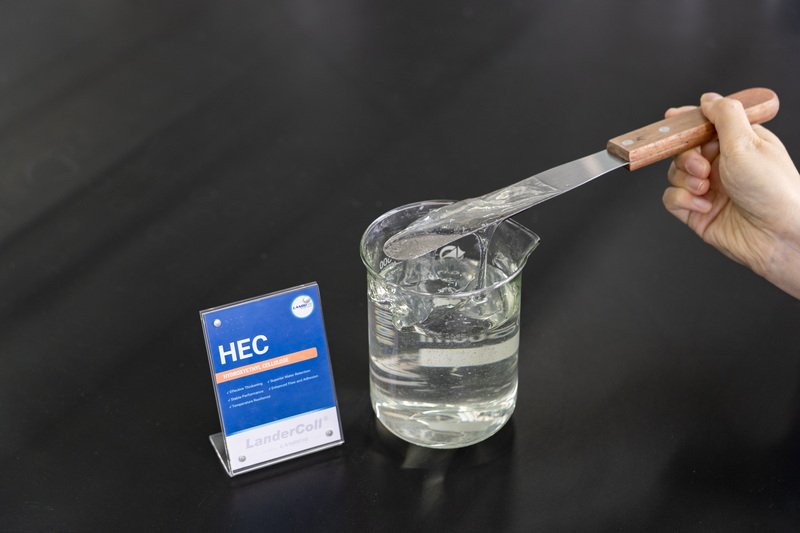
Paint viscosity loss during storage should be investigated in a fixed order because several mechanisms can look similar.
1. Rule out measurement temperature
Measure the retained sample and the aged sample at the same temperature. A warm sample can appear thinner even when the formulation has not changed permanently. Allow both samples to equilibrate before comparing them.
2. Check for incomplete initial hydration
If HEC continued to hydrate after the release test, viscosity may first rise and later appear to drift. Establish a defined hydration and resting time before the initial QC result is recorded.
3. Review pH and formulation compatibility
HEC is nonionic and generally compatible with many water-based coating ingredients, but the complete formulation still matters. Changes in pH, electrolyte level, surfactant package or associative thickener can alter the measured rheology and the way the polymer interacts with the continuous phase.
4. Investigate microbial degradation
Microorganisms and enzymes can reduce the viscosity of cellulose-thickened systems. Warning signs can include odour, gas, surface growth, colour change or progressive thinning, although absence of a visible sign does not rule out contamination.
Use an appropriate in-can preservation system according to the preservative supplier's instructions and applicable regulations. A biostable HEC grade can improve resistance to viscosity loss, but it does not replace plant hygiene or a validated preservative programme.
5. Recheck storage conditions
Temperature cycling, freezing, prolonged heat exposure and poorly sealed packaging can change the coating. Compare normal storage with an accelerated ageing test, but do not assume accelerated ageing predicts every long-term failure mechanism.
Why Do Pigments and Fillers Settle Even When KU Viscosity Passes?
Settling occurs mainly under low-shear storage conditions. A Stormer KU result reflects a different shear range and cannot by itself prove that the paint has enough structure to suspend dense particles.
Check low-shear viscosity, yield-like behaviour, particle-size distribution and dispersion quality. Raising HEC dosage may slow settling, but it can also increase brush drag, reduce levelling or create an overly elastic texture. A better correction may be to improve pigment dispersion or rebalance the water-based paint thickener package.
The HEC for coatings page explains how hydroxyethyl cellulose contributes to viscosity, suspension and controlled flow across water-based coating systems.
Why Does HEC-Thickened Paint Sag on Vertical Surfaces?
Paint can pass its can-viscosity target and still sag because vertical stability depends on what happens after application shear stops. If structure rebuilds too slowly, gravity moves the wet film before it can stabilise.
Check:
- applied wet-film thickness;
- low-shear structure;
- recovery after rolling or spraying;
- binder and rheology-modifier interaction;
- pigment and filler suspension;
- open time and drying rate.
Increasing HEC may improve sag resistance, but too much can worsen levelling and application feel. Test several controlled wet-film thicknesses and compare both sag and surface appearance. The dedicated paint sagging problems guide explains the recovery mechanism in more detail.
Why Does Roller Spatter Increase?
Roller spatter is not controlled by low-shear viscosity alone. During rolling, the paint experiences rapidly changing shear and extensional forces. A formula can have sufficient can viscosity yet form strings or droplets when the roller leaves the surface.
Review the balance between cellulose thickening and associative thickening. HEC often supplies low- to mid-shear structure, while an HMHEC, HEUR or HASE component may be used to adjust the higher-shear response and recovery. The best combination depends on latex type, surfactants, pigment volume concentration and application speed.
Compare candidates at equal application viscosity and use the same roller, loading and stroke rate. Otherwise, a change in technique can be mistaken for a change in formulation.
Why Does Paint Show Poor Leveling or Heavy Brush Marks?

Poor paint leveling often appears when the wet film retains too much structure after application or rebuilds too quickly. Increasing HEC to solve sagging can therefore create a second problem: the film stops moving before brush or roller marks can smooth out.
Before lowering HEC, also check:
- coalescent level and drying speed;
- substrate absorption;
- surface tension and wetting;
- pigment dispersion;
- wet-film thickness;
- interaction with HEUR, HASE or other rheology modifiers.
A balanced formula must flow during application, recover after application and retain enough low-shear structure during storage. The broader cellulose ether for paints and coatings overview connects these stages of rheology control.
Why Does HEC Form Lumps or Fish-Eyes?
Lumps form when the outside of an HEC particle hydrates before the particle has dispersed. The hydrated shell slows water penetration and traps dry powder in the centre.
Practical corrections include:
- reduce the powder addition rate;
- create a stronger but controlled vortex before addition;
- avoid dropping a large quantity onto the same point;
- use the supplier's recommended pre-slurry method when suitable;
- use a delayed-hydration grade when the manufacturing sequence supports it;
- allow enough hydration time before judging viscosity;
- verify that pH adjustment occurs at the correct stage for the selected grade.
Do not solve fish-eyes by simply extending high-speed mixing indefinitely. That can raise temperature, entrain air and make the process less repeatable.
Why Is the Spray Pattern Uneven or the Pump Pressure Too High?
For spray-applied coatings, the HEC grade may be too viscous for the equipment even when sag resistance looks good. Incomplete hydration or gel particles can also obstruct filters and nozzles.
Check the filtered paint for gel particles, document nozzle size and pump pressure, and compare a lower-viscosity HEC grade at the same solids content. Evaluate atomisation, fan pattern, overspray, wet-film build and post-application sagging together. A lower viscosity number is useful only if the coating still maintains suspension and vertical stability.
HEC vs HPMC in Paint: Why Is HEC Often Selected?
HEC is frequently used as hydroxyethyl cellulose for coatings because many coating grades disperse or hydrate under ambient-water processing conditions, provide nonionic compatibility and build useful low- to mid-shear viscosity. These properties support pigment suspension, storage stability and application control in many latex and emulsion paints.
HPMC can also thicken water-based coatings. It should not be described as always requiring hot water or as inherently incompatible with latex and pigments. Surface-treated and application-specific HPMC grades can have different dispersion behaviour. However, their water-retention, thermal-response and rheology profiles may not match a process developed around HEC.
Choose between them through controlled formula testing rather than a universal rule. Compare hydration, viscosity development, storage stability, levelling, sagging, spatter, water resistance and film appearance. See HEC vs HPMC in paint for the dedicated comparison.
When Changing the HEC Grade Will Not Solve the Problem
Changing HEC alone is unlikely to solve a defect caused mainly by:
- poor pigment wetting or dispersion;
- an unsuitable latex or surfactant package;
- incorrect coalescent or drying conditions;
- substrate contamination or excessive absorption;
- an unvalidated preservative system;
- uncontrolled film thickness;
- spray or roller equipment outside the intended operating range.
Use HEC as one part of the rheology system. A higher-viscosity grade cannot compensate for every formulation or application error.
A Practical HEC Paint Troubleshooting Sequence
- Define the symptom precisely. Record whether it occurs during manufacture, immediately after production, during storage or during application.
- Lock the test method. Use the same temperature, instrument, spindle, speed, sample-rest time and film thickness.
- Check dispersion and hydration. Look for fish-eyes, delayed viscosity rise and sensitivity to the addition sequence.
- Compare pH, temperature and water quality. Confirm these values against a good reference batch.
- Review the shear history. Record mixer speed, duration, temperature rise and the point at which HEC was introduced.
- Screen storage stability. Monitor viscosity, pH, odour, separation and appearance under normal and selected accelerated conditions.
- Test the actual application. Use the production roller, brush or spray equipment instead of relying only on a beaker viscosity result.
- Change one variable at a time. Adjust grade, dosage, addition point or thickener combination separately so the result can be interpreted.
- Confirm the correction after ageing. A successful immediate result is incomplete if the paint later loses viscosity or separates.
What Should You Send to an HEC Supplier for Technical Support?

To receive a useful recommendation, provide:
- paint type, binder chemistry and solids;
- pigment and main filler system;
- current HEC grade and dosage;
- order of addition and mixing conditions;
- pH and water quality;
- viscosity method, temperature and results;
- application method and equipment;
- storage conditions and ageing results;
- photographs or samples showing lumps, settling, sagging, spatter or poor levelling;
- every recent raw-material or process change.
LANDU can then screen the relevant HEC, biostable or hydrophobically modified grades and propose a controlled comparison. For formulation-specific applications, review HEC for emulsion paint before requesting samples.
Diagnose the Failure Before Increasing HEC
The most reliable correction begins with a repeatable test, not an immediate dosage increase. Confirm hydration, process history, measurement conditions and storage effects before changing the HEC grade. Then evaluate the correction in the real application and after ageing.
If you send LANDU the current formula, manufacturing sequence, viscosity method and failed sample condition, the technical team can help narrow the cause and define a smaller, more useful HEC comparison set.