What’s the Difference Between HEC and HPMC in Paint Applications?

Hydroxyethyl Cellulose (HEC) and Hydroxypropyl Methylcellulose (HPMC) are essential additives in water-based paint formulations, acting as thickeners and stabilizers. Understanding the difference between HEC and HPMC in paint applications is critical for formulators aiming to optimize paint performance, including viscosity, water resistance, and film formation. This article delves into their properties, applications, and benefits, with a detailed comparison table to guide manufacturers and professionals in selecting the right cellulose ether. Backed by industry research, we’ll explore how these additives enhance paint quality.

Chemical Composition and Structure

Hydroxyethyl Cellulose (HEC)
Physical Properties

  • Appearance appears as a white, pale yellow or fibrous solid. It is odorless, non-toxic and easy to transport and use.
  • Solubility It dissolves rapidly in cold or hot water and forms a viscous, transparent solution without any obvious sedimentation.
  • Viscosity : The viscosity of ranges between 400 and 6000 mPa*s, as measured by BrookfieldLV. You can select different viscosity levels based on the paint formulation you need, whether it’s thin liquids or thick pasts.
  • Bulk density: It pours easily, and compacts during use to help reduce dust release.
  • Moisture content: The moisture content of the product does not exceed 5%, as per ASTM D1347-72, which ensures a consistent and stable product.
  • Particle size: A sieve with 80 meshes can handle at least 92% particles, which ensures that they are evenly dispersed in paint systems.

Physical Properties

  • Appearance is white, pale yellow, or fibrous. Non-toxic, odorless and easy to use.
  • Solvability It is soluble in hot or cold water, and forms a viscous transparent solution.
  • Viscosity: According to BrookfieldLV, the viscosity ranges from 400 to 6000 mPa*s. Depending on whether you want thin liquids or thick pastes, you can choose different levels of viscosity.
  • Bulk Density: It pours well and compacts when used to reduce dust release.
  • Content of moisture: According to ASTM D134772, the product’s moisture content should not exceed 5%. This ensures that it is a stable and consistent product.
  • Size of particles A sieve with a mesh size of 80 can handle 92% of the particles. This ensures they are dispersed evenly in paint systems.

Hydroxypropyl Methylcellulose (HPMC)

Physical Properties

  • Appearance: This powder is white or off-white, non-toxic and odorless. It has a good fluidity, which makes it easy to blend evenly with other raw materials.
  • It is soluble in cold water. However, it takes a while to dissolve completely. It has also thermal gelation characteristics–when temperature reaches certain levels, it becomes a gel and returns to solution upon cooling.
  • Viscosity: The typical viscosity of the paint is 200,000 mPa*s, measured in a 2% solution (at 20 degrees Celsius) according to ASTM D 2196. You can adjust this viscosity depending on your application requirements.
  • Density: The density of the powder is between 0.35 g/cm3 and 0.55 g/cm3. This makes it lightweight, easy to transport and suitable for formula matching.
  • Shelf life: Products that are not opened can be kept in dry conditions for up to 24 months. This is a good indication of their storage stability.

Chemical Properties

  • Chemical structure: This is a nonionic cellulose-ether that’s produced by modifying cellulose molecule to introduce hydroxypropyl or methyl substituents. Its structure includes both hydrophilic groups and hydrophobic ones.
  • Substitution degree: The molar substitute (MS) of the substance is 0.15-0.15. These values determine the film-forming capacity and water retention capability.
  • Stability: A 1% HPMC solution has a pH of 5.0-7.0. It is stable in acidic or alkaline environments, and compatible with most paints and binders.
  • Chemical stability: It is resistant to acids, alkalis and electrolytes. This allows it to perform well in a variety of paint systems.
  • Film Forming Property: When the paint dries it forms a continuous tough and elastic film which improves the adhesion of the paint film.
  • Reactivity works well with water-based binder like acrylic or epoxy ester and plays a part in thickening and stabilizing paint formulations, as well as modifying their rheology.
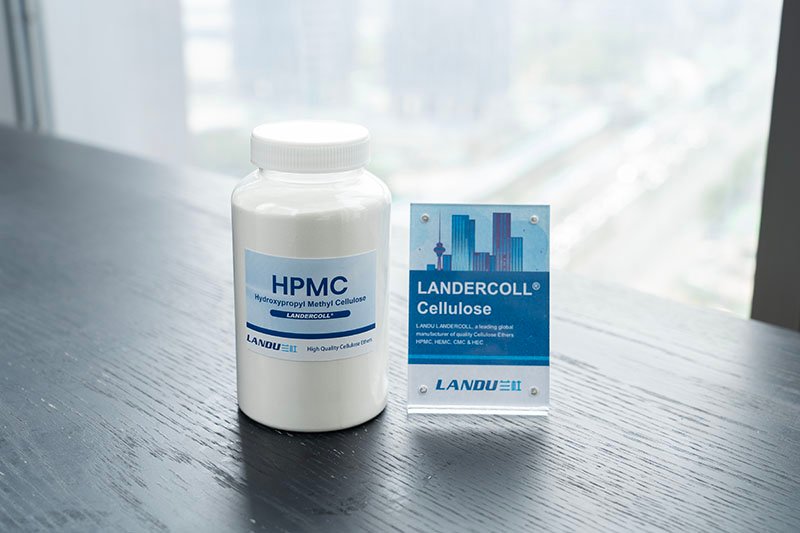
LANDU-LANDERCOLL-Hydroxypropyl-Methyl-Cellulose-Product

HEC: Hydroxyethyl Cellulose

HEC, a non-ionic cellulose ether, is produced by reacting cellulose with ethylene oxide, introducing hydroxyethyl groups. According to the Journal of Applied Polymer Science (2023), this structure ensures excellent solubility in both hot and cold water, making HEC a reliable thickener across temperatures. Its simpler substitution pattern provides consistent viscosity but limits water resistance compared to HPMC.
HPMC is formed by reacting cellulose with propylene oxide and methyl chloride, adding hydroxypropyl and methoxy groups. A Coatings International study (2024) highlights that HPMC’s dual substitution enhances thermal gelation and water retention, making it versatile for paints requiring smooth application and durability in challenging environments.

Comparison Table: HEC VS HPMC in Paint Applications

Property

HEC

HPMC

Chemical Structure

Hydroxyethyl groups, simpler substitution

Hydroxypropyl and methoxy groups, complex substitution

Viscosity Control

High viscosity at low shear, anti-sagging, may cause spattering

Shear-thinning, better flow and leveling

Water Retention

Moderate, faster drying

High, slower drying, better workability

Water Resistance

Lower, less suitable for exterior paints

Higher, ideal for outdoor coatings

Film Formation

Less continuous films, moderate durability

Stronger, continuous films, better adhesion

Color Stability

Prone to fading over time

Better color retention, ideal for aesthetic paints

Biostability

High microbial resistance, longer shelf life

Susceptible to microbial attack, needs preservatives

Cost

Generally more expensive

Varies by grade, often more cost-effective

Best Applications

Interior paints, high-viscosity formulations

Exterior paints, film-forming coatings, humid environments

Key Performance Differences in Paints-HEC VS HPMC

Rheology and Viscosity Control

  • HEC: Excels in providing high viscosity under low shear, preventing sagging in thick layers. A Paint & Coatings Industry report (2024) notes its tendency for spattering during roller application and poorer leveling, making it ideal for interior paints.

  • HPMC: Offers shear-thinning behavior, reducing viscosity during application for smoother flow and better leveling, as per Chemical Engineering Journal (2023). This suits paints requiring a uniform finish, especially in exterior applications.

woman painting the room walls with white color. Do it yourself and new home

Water Retention and Solubility

  • HEC: Soluble across a wide temperature range without gelation, ensuring formulation stability. Its lower water retention can accelerate drying, affecting workability in humid conditions.

  • HPMC: Superior water retention slows drying, improving open time and workability. Its gelation at 55–75°C influences drying behavior, as noted in Polymer Science Reviews (2024).

Girl painting walls

Water Resistance

  • HEC: Less water-resistant due to high solubility, making it less ideal for exterior paints exposed to moisture.

  • HPMC: Enhanced water resistance due to methoxy groups, suitable for outdoor coatings, per Surface Coatings Technology (2023).

landercoll-innovative-spirit

Biostability and Shelf Life

  • HEC: Resistant to microbial degradation, enhancing in-can stability and reducing preservative needs (Industrial Microbiology Reports, 2023).

  • HPMC: More susceptible to microbial attack, requiring robust preservatives, which may increase costs.

Applications in Paint Formulations

When to Use HEC

HEC is ideal for interior water-based paints where high viscosity and anti-sagging properties are critical. It’s commonly used in flat and semi-gloss paints for walls and ceilings. Its microbial resistance ensures longer shelf life, making it cost-effective for large-scale production. Celotech’s HEC grades are recommended for interior latex paints.

HPMC is preferred for exterior paints requiring smooth application, water resistance, and strong film formation. Its shear-thinning properties make it ideal for high-performance paints in humid or outdoor environments. Kemox’s HPMC grades are tailored for exterior emulsions and textured coatings.

Cost Considerations

HEC is typically more expensive due to its specialized thickening efficiency, while HPMC’s cost varies by grade. According to Coatings World (2025), HPMC’s versatility often justifies its use in premium formulations, but HEC may be preferred for budget-conscious interior paints.

Choosing the Right Cellulose Ether

Selecting between HEC and HPMC depends on the paint’s intended use, environmental conditions, and performance requirements. HEC suits interior paints prioritizing viscosity and stability, while HPMC excels in exterior paints needing water resistance and smooth application. Consider pH, resin compatibility, and preservative needs when deciding.

Conclusion: LANDERCOLL HEC for Superior Paint Solutions

Understanding the difference between HEC and HPMC in paint applications enables formulators to create high-quality paints tailored to specific needs. HEC offers unmatched viscosity for interior paints, while HPMC provides superior water resistance and leveling for exterior coatings. 

Share it :