How to Choose an HPMC Factory in China: 2026 Guide | Landercoll
Introduction:
For construction material distributors and procurement managers, sourcing Hydroxypropyl Methylcellulose (HPMC) from China offers significant cost advantages, but it comes with a complex set of challenges.
The market is flooded with suppliers claiming “pharmaceutical grade” purity or “top-tier” construction performance, yet the reality on the ground can vary drastically.
In 2026, the gap between premium manufacturers and trading companies repackaging inferior products is wider than ever.
Factors such as gel temperature stability, ash content, and dissolution speed are no longer just technical jargon—they are the critical differentiators that determine whether your tile adhesive will fail in the summer heat or your putty powder will provide the necessary workability.
This guide moves beyond simple factory lists. We will dissect the technical indicators you must verify, explain the importance of ISO and REACH certifications, and provide a transparent comparison of the current manufacturing landscape to help you secure a supply chain that is both reliable and cost-effective.
REACH Certification is Non-Negotiable:
For European buyers, prioritizing factories with valid REACH registration is the first step to ensuring market compliance and avoiding legal risks.
Technical Stability Over Price:
High-quality HPMC is defined by consistent viscosity (±5% fluctuation) and water retention rates (>97%), which directly impact the cracking resistance of construction mortars.
2026 Market Trend:
The industry is shifting from generic supply to customized solutions, with top manufacturers offering tailored viscosity grades for specific climates (e.g., high gel temperature for Southern Europe).
What Matters When Evaluating HPMC Quality?
Over the past four years helping European buyers source HPMC from China, we’ve learned that a factory’s Certificate of Analysis (CoA) is only the starting point. The real question is how the powder actually performs on site. Here are the three critical technical indicators we verify on every order.
Viscosity: Matching mPa·s to Your Application
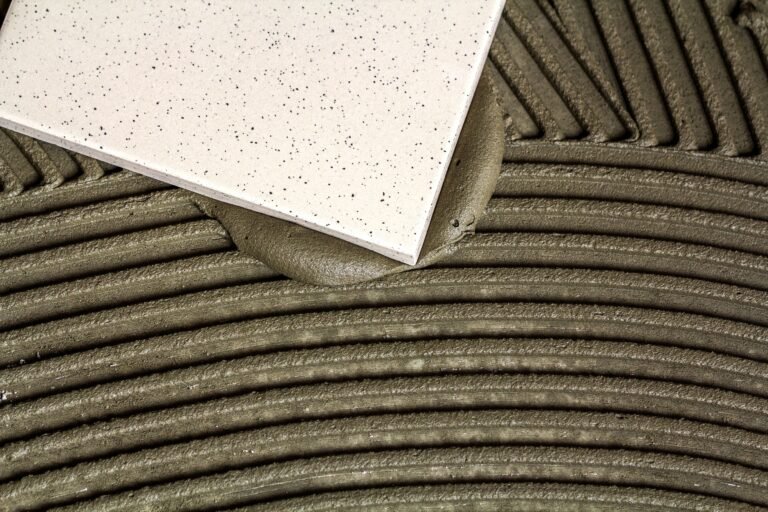
Viscosity: Matching mPa·s to Your Application Viscosity, measured in mPa·s, is the most frequently listed specification on HPMC data sheets—and also the most commonly misapplied. Higher viscosity does not equal better performance. For tile adhesives, 40,000–60,000 mPa·s supports better wetting and penetration. For wall putty, 75,000–100,000 mPa·s strikes the ideal balance between water retention and workability. For EIFS systems, 150,000–200,000 mPa·s provides enough body to hold insulation boards in place before the adhesive fully cures. One common mistake we often see: buyers specifying 150,000 mPa·s HPMC for thin-bed tile adhesives. The mix becomes overly sticky and hard to apply, and in the end, bonding strength is significantly reduced.
Water Retention: The 97% Threshold Explained
Water Retention: The 97% Threshold That Makes or Breaks Your Mortar
Viscosity gets all the attention, but water retention is what truly determines whether your cementitious system will reach its full strength. As a protective colloid, HPMC’s core job is to keep water in the mix long enough for cement to fully hydrate.
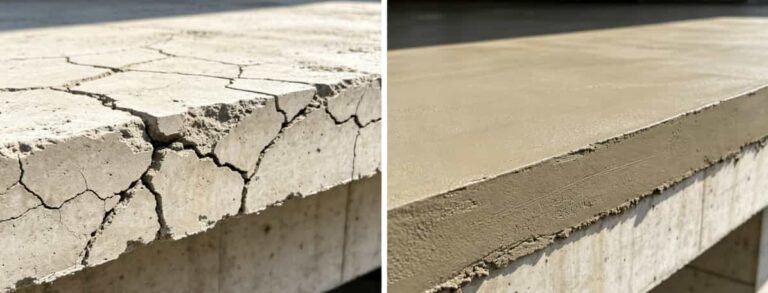
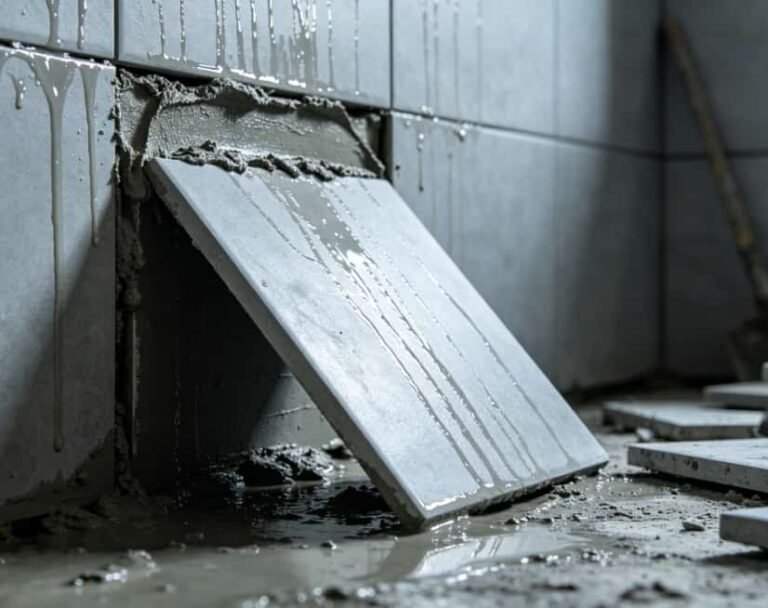
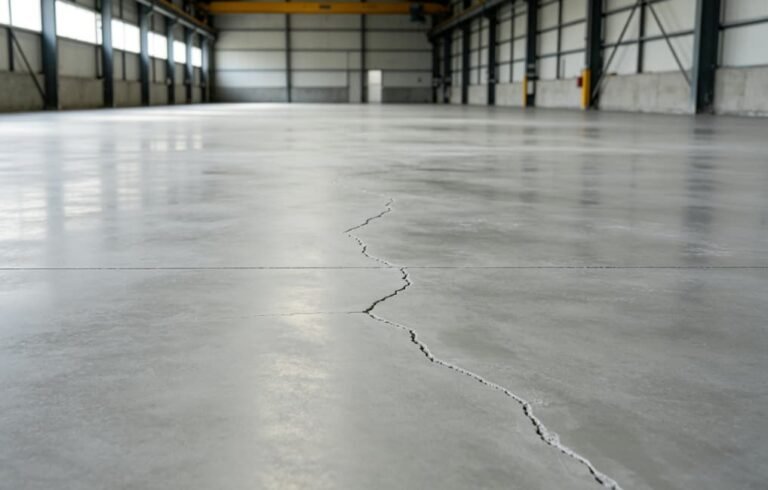
If the substrate is porous or the weather is hot, unprotected water evaporates too fast. This leads to three common failures: incomplete cement hydration, surface shrinkage cracks, and delamination from the wall.
That’s why the industry has a clear benchmark: high-quality construction-grade HPMC must deliver ≥97% water retention. Top-tier manufacturers go further, using advanced surface cross-linking or etherification processes to push this number above 98.5%—critical for keeping workability hours longer, even on highly absorbent substrates like aerated concrete blocks.
Gel Temperature: Why 70°C+ Grades Matter for Hot Climates
Gel Temperature: The Secret to Surviving Southern European Summers
This is the most overlooked parameter by novice buyers and the most valued by experienced formulators.
What is Gel Temperature?
HPMC solutions gel (turn into a semi-solid gel) when heated. The “Gel Temperature” is the specific point where this transition begins. Standard HPMC typically has a gel temperature around 50°C – 55°C.
The Problem:
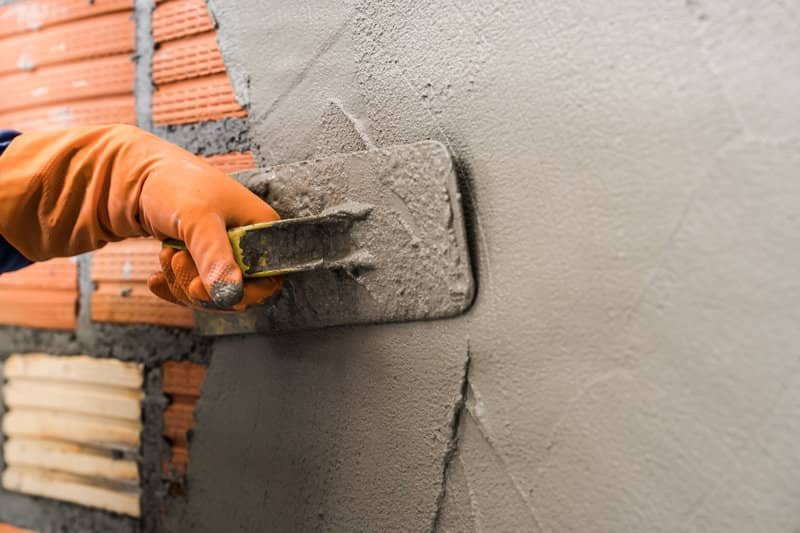
In high-temperature environments—such as applying render on a dark facade in Spain or Italy during July, where surface temperatures can easily exceed 60°C—standard HPMC will gel almost instantly. When it gels, it loses its solubility and thickening power, causing the mortar to lose strength and crumble.
The Industry Standard:
According to Chinese industry standards (e.g., JC/T 2190-2013 for Redispersible Polymer Powder and related cellulose standards), high-quality construction-grade HPMC should demonstrate a water retention rate of ≥97%.
Top-tier factories in 2026 utilize surface cross-linking technology or specialized etherification processes to push this number above 98.5%, ensuring that even on absorbent substrates like aerated concrete blocks, the mortar remains workable for hours.
HPMC Viscosity Selection: The Definitive Application Chart
| Viscosity Range (mPa·s) | Primary Application | Performance Impact |
|---|---|---|
| 40,000 – 60,000 | Tile Adhesives & Grouts | Lower viscosity ensures better wettability and penetration into the tile back, improving bonding strength without making the mix too sticky. |
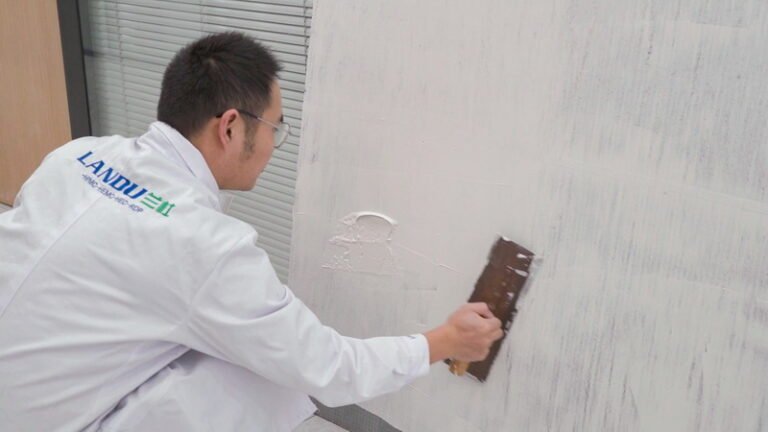
| 75,000 – 100,000 | Wall Putty & Skim Coat | This is the “sweet spot” for putty. It provides excellent water retention and lubrication, allowing the worker to smooth the wall effortlessly (high workability). |
| 150,000 – 200,000 | Exterior Insulation Systems (EIFS) | High viscosity adds structural “body” to the mix, preventing heavy insulation boards from sliding down the wall before the adhesive sets. |
Expert Note: Do not confuse “high viscosity” with “high quality.” Using 150,000 mPa·s HPMC in a tile adhesive meant for thin-bed application can actually reduce bonding strength by preventing proper mechanical interlocking.
The 2026 Solution: High Gel Temperature HPMC
Leading manufacturers now produce Modified HPMC with a gel temperature of 70°C – 75°C.
Case Study: The Valencia Project
A coating manufacturer in Valencia switched to a standard HPMC supplier to cut costs. During the summer, they received complaints that their exterior render was “powdering” and losing adhesion on south-facing walls.
Diagnosis: The wall surface temperature hit 65°C. The standard HPMC (gel point 52°C) gelled immediately upon contact, failing to retain water for the cement.
Resolution: By switching to a High Gel Temperature (70°C+) grade from a verified factory, the manufacturer eliminated the complaints entirely. The HPMC remained stable and functional despite the extreme heat.
Compliance & Certifications
While technical parameters determine performance, compliance determines market access. In 2026, the regulatory landscape in Europe is stricter than ever. A factory might offer the best price and perfect viscosity, but without the proper certifications, importing their products can lead to customs seizures or legal liabilities.
Here is how to verify the “license to sell” for your chemical supply chain.
REACH Regulation: More Than a Certificate, It’s a Responsibility
For any chemical substance or mixture imported into the EU, the REACH (Registration, Evaluation, Authorisation and Restriction of Chemicals) regulation is the primary hurdle. However, many buyers misunderstand what “REACH compliant” actually means for HPMC.
The 1-Tonne Threshold:
Under REACH, HPMC is classified as a substance (or part of a mixture). If you import more than 1 tonne per year, the substance must be registered with the European Chemicals Agency (ECHA).
The “Only Representative” (OR) Model:
Since Chinese factories are non-EU entities, they cannot register directly. They must appoint an Only Representative (OR) based in Europe to handle the registration.
Red Flag: A supplier claims “REACH Compliant” but cannot provide a valid REACH Registration Number (starting with 01-…).
Red Flag: A supplier says, “Our trading company handles it.” This is risky. If the trading company fails to update the dossier, your supply chain is broken. You need a direct link to the registrant.
Legal & Commercial Risks in 2026:
Customs Seizure: Without a valid registration number, goods can be detained at EU ports (e.g., Hamburg, Rotterdam), leading to massive demurrage charges.
SVHC Obligations: Even if HPMC itself is registered, you must ensure it does not contain Substances of Very High Concern (SVHC) above 0.1% (w/w). If it does, you have communication obligations down the supply chain.
Downstream User Liability: As the importer, you are legally responsible. Relying on a supplier’s verbal assurance is not a defense under EU law.
Pro Tip: Ask the factory for their “REACH Certificate” issued by a reputable agency (like CIRS or REACH24H) and cross-check the registration number on the ECHA website. Ensure the tonnage band covers your annual volume (e.g., 10-100 tonnes vs. 100-1000 tonnes).
Raw Material Control: HPMC is derived from refined cotton or wood pulp. ISO-certified factories have strict protocols for testing incoming cellulose. If the raw material varies, the final viscosity will vary.
Process Consistency: The production of HPMC involves etherification in reactors. ISO 9001 requires strict monitoring of temperature, pressure, and reaction time.
Non-ISO Factory: An operator might manually adjust temperatures, leading to “hot spots” and inconsistent gel times.
ISO Factory: Automated DCS (Distributed Control System) controls the reaction, ensuring every batch has the exact same substitution degree.
Traceability: If a bag of HPMC fails at a construction site, an ISO 9001 system allows the factory to trace that bag back to the specific reactor, shift, and raw material batch. This is crucial for root cause analysis and liability protection.
Modern ISO 9001 certification also emphasizes Risk Management. A certified factory will have contingency plans for equipment failure or supply chain disruptions, ensuring they can still deliver your goods even during industrial volatility.
2026 Industry Trends & Factory Comparison
The era of “one-size-fits-all” HPMC is ending. Leading construction chemical formulators are no longer satisfied with off-the-shelf products. They demand cellulose ethers tailored to their specific formulations and application environments.
2026 Industry Trends & Factory Comparison
This shift is driven by the need for performance optimization. For example:
Customized Dissolution Speed: A factory might modify the surface treatment of HPMC to create a “cold-water instant” grade that disperses without clumping, a critical feature for automated mixing plants.
Tailored Gel Temperature: As discussed, manufacturers are now producing HPMC with specific gel points (e.g., 65°C, 75°C, or even 85°C) to serve markets from the cool climates of Northern Europe to the intense heat of the Middle East.
Low-Ash & High-Purity Grades: For high-end putty and decorative plasters, factories are investing in advanced refining processes to reduce ash content below 0.3%, ensuring a purer white finish and better compatibility with other additives.
The Reshaping of Supply Chains by Environmental Policy
China’s “Dual Carbon” goals (peaking carbon emissions by 2030 and achieving carbon neutrality by 2060) are fundamentally reshaping the chemical industry. In 2026, this is no longer a future threat but a present reality.
Capacity Consolidation: Smaller, less efficient factories that rely on outdated, high-pollution processes are being phased out or forced to merge. This has led to a market where the top 10-15 manufacturers control a larger share of the total capacity, leading to more stable, albeit more regulated, supply chains.
Green Manufacturing: Leading factories are investing in closed-loop production systems to recycle solvents and reduce wastewater. This not only ensures their operational continuity but also appeals to European buyers who are increasingly scrutinizing the environmental footprint of their supply chains.
Raw Material Traceability: There is a growing emphasis on sourcing refined cotton pulp and wood pulp from sustainable, certified origins, aligning with the EU’s deforestation regulations.
A Comparison of Leading Manufacturers
| Manufacturer | Location | Production Capacity (Tons/Year) | Certifications | Export Markets | Unique Strengths |
|---|---|---|---|---|---|
| Shandong Landu New Material Co., Ltd. | Shandong (3 bases) | 75,000 (HPMC: 20,000) | ISO 9001, SGS, REACH | North America, Europe, Asia, Africa | High capacity, eco-friendly production, customizable formulations, free lab testing |
| Shandong Heda Co., Ltd. | Zibo, Shandong | 30,000 | ISO 9001, REACH, ISO 14001 | Europe, North America, Asia | Public company, advanced R&D, sustainable manufacturing |
| Shandong Yiteng New Material Co., Ltd. | Feicheng, Shandong | 20,000 | ISO 9001, REACH | Asia, Middle East, Africa | Cost-effective, OEM services via Shanghai Dakun Trade |
| Zhejiang Haishen New Material Co., Ltd. | Zhejiang | 25,000 | ISO 9001, REACH, ISO 45001 | Europe, North America, Southeast Asia | Biodegradable HPMC, high-purity grades, strong R&D |
| Henan Botai Chemical Co., Ltd. | Henan | 25,000 | ISO 9001, SGS | Africa, Latin America, Asia | Competitive pricing, wide viscosity range |
How to Interpret This Table:
- For Specialized Needs: If your business relies on high-performance formulations for specific climates or premium finishes, a partner like Shandong Landu New Material Co., Ltd. that prioritizes customization and technical service is the ideal choice.
- For Commodity Needs: If your primary requirement is a massive, steady supply of standard-grade HPMC for general-purpose applications, a large-scale producer like Shandong Head would be a strong contender.
- For Niche Applications: For industries with extreme purity requirements, such as pharmaceuticals, a manufacturer like Anhui Shanhe with a background in high-purity pharmaceutical excipients might be more suitable.
This comparison highlights that the “best” factory is the one whose strengths align with your specific business requirements.
Frequently Asked Questions (FAQ)
Top 10 FAQs: Sourcing HPMC from China in 2026
1. How do I verify a Chinese HPMC factory’s REACH certification?
Always request the official REACH registration number and cross-check it on the ECHA website. Ensure the registrant is the factory itself or their appointed Only Representative (OR), not a trading company, to avoid customs seizure risks in Europe
2. Is higher viscosity always better for HPMC?
No. Viscosity depends on the application. 100,000 mPa·s is ideal for wall putty (smoothness), while 40,000–60,000 mPa·s is better for tile adhesives (penetration). High viscosity in tile adhesive can actually reduce bonding strength.
3. What is the HPMC price trend in China for 2026?
Due to strict environmental policies, prices for low-end products fluctuate. However, REACH-certified manufacturers with stable supply chains offer more consistent pricing. Expect to pay a premium for verified quality and compliance over generic “spot” goods.
4. What is HPMC water retention and why is it critical?
Water retention measures how well the mortar holds moisture for cement curing. High-quality HPMC should have ≥97% retention. Low retention causes rapid drying, leading to cracking, powdering, and weak adhesion on the wall.
5. How can I distinguish an HPMC factory from a trading company?
Check if the ISO 9001 certificate and Production License match the supplier’s name. Ask for a third-party SGS report or a video tour of the reactor workshop. Traders often cannot provide original batch production records.
6. Why is high gel temperature HPMC needed for summer construction?
Standard HPMC gels at ~55°C, causing failure in hot weather. For Southern Europe or summer application, you need High Gel Temperature (>70°C) HPMC. This ensures the mortar remains stable and adhesive even when wall surface temperatures rise.
7. What is the typical MOQ for HPMC from China?
Most factories have a Minimum Order Quantity (MOQ) of 5–10 tons (one pallet). However, for trial orders or specific customized grades, some technical suppliers (like Landuchem) may accept smaller quantities (e.g., 25kg samples) for testing.
8. What is the best HPMC viscosity for tile adhesive?
For tile adhesives, 40,000–60,000 mPa·s is the industry standard. This lower viscosity allows the adhesive to wet the tile back effectively, ensuring strong mechanical bonding without making the mix too sticky or difficult to trowel.
9. What documents are required to import HPMC from China?
You need the Commercial Invoice, Packing List, Bill of Lading, and Certificate of Origin. Crucially, you must have the MSDS and valid REACH certificate to clear EU customs. Missing REACH docs will result in shipment rejection.
10. How do I check if HPMC ash content is too high?
High ash content (>5%) indicates impurities. You can request a TDS (Technical Data Sheet) to verify ash levels. A simple burn test can also reveal quality: high-quality HPMC leaves very little white residue (ash) after combustion.