
Cellulose Ether for Paint and Coatings | LANDU
Rheology & Formulation Control Solutions
Custom HEC solutions for latex paints, decorative coatings & industrial finishes
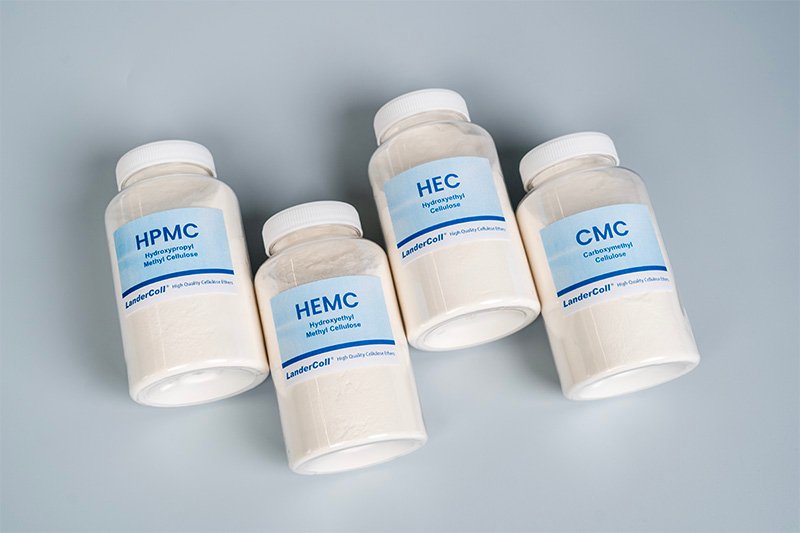
High-purity cellulose ether grade with excellent water retention & rheology control
Consistent quality ensured by automated manufacturing & strict QC systems
Introduction:
Water-based paint and coating performance is not determined by a single raw material, but by how different formulation components interact under mixing, application, and drying conditions.
Among these components, cellulose ether does not act as a conventional thickener in isolation. Instead, it functions as a rheology control element, which influences how the system behaves across different stages of use.
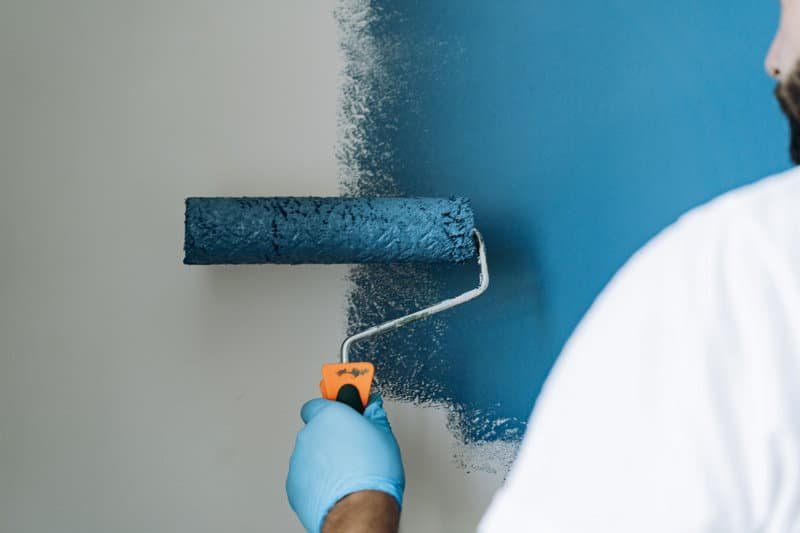
When the rheology system is not properly balanced, the coating may behave well in the container but fail during application. For example, it may flow too easily on vertical surfaces, or it may resist leveling after brushing or rolling.
This is why cellulose ether is widely used in modern water-based coatings—not to increase viscosity alone, but to stabilize the relationship between flow, structure, and recovery behavior.
How Cellulose Ether Controls Coating Behavior
In a real formulation system, a coating goes through four dynamic stages:
Dispersion during mixing
Stability during storage
Shear thinning during application
Structure recovery after application
If any one of these stages is not properly controlled, defects begin to appear in the final film.
For example, insufficient structure recovery leads to sagging.
Poor shear balance leads to roller spattering.
Weak suspension leads to pigment settling.
Cellulose ether contributes by creating a controlled viscosity profile that changes under shear and rebuilds after shear is removed.
This behavior is what makes it suitable for water-based systems where application conditions are highly variable.

- Customer-centric Services and Support
Common Coating Formulation Challenges
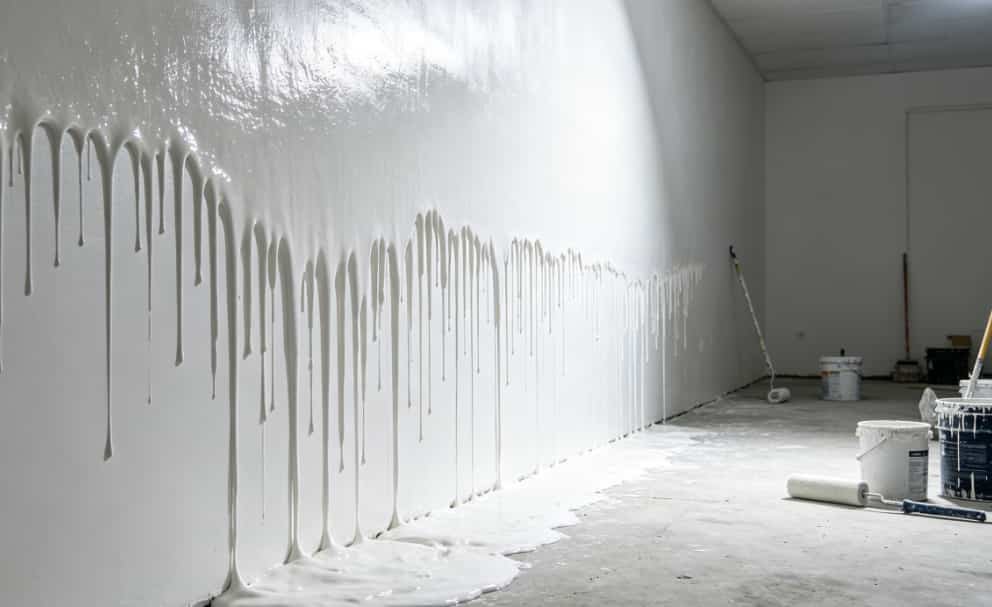
Paint Sagging
When low-shear structure is insufficient, the wet film cannot resist gravity on vertical surfaces, leading to downward flow before film formation stabilizes the coating.
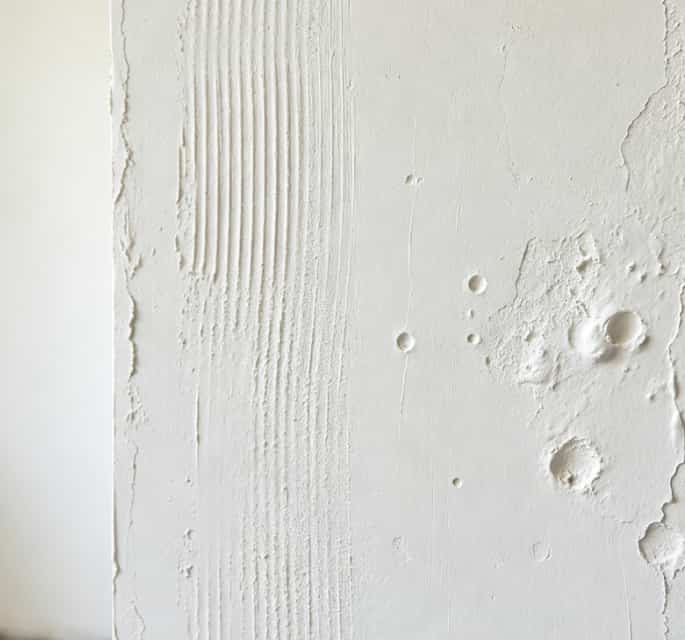
Poor Leveling
When viscosity recovery is too fast or uneven, surface irregularities remain visible instead of being naturally corrected during drying.

Roller Spattering
When shear response is not properly controlled, excess energy during rolling leads to droplet formation and material loss.

Pigment Settling
When suspension forces are insufficient, solid particles gradually separate from the liquid phase, resulting in uneven color distribution.
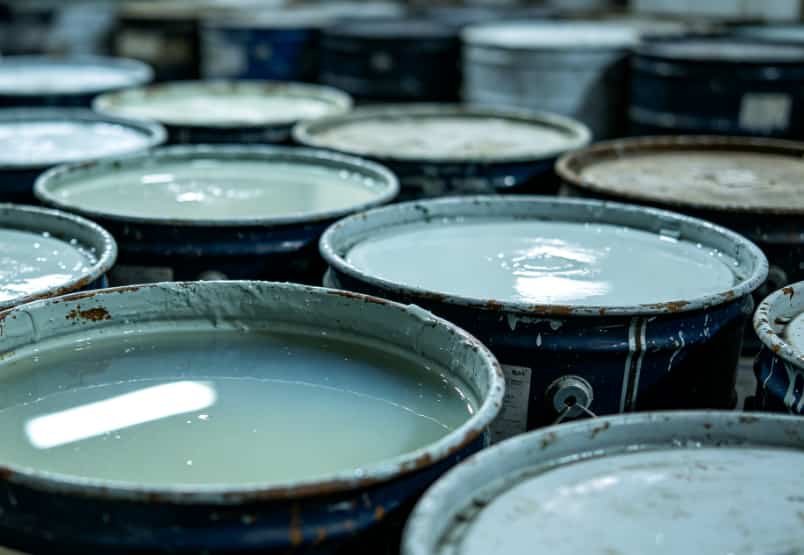
Viscosity Instability During Storage
When internal structure is not stable over time, viscosity drift occurs, affecting batch-to-batch consistency.
Choose Your Starting Point

I am facing a formulation problem
If you are troubleshooting coating defects:
→ Paint Sagging Problems
→ Poor Paint Leveling
→ Roller Spattering Issues
→ Viscosity Loss During Storage
→ Pigment Settling Problems
These pages explain failure mechanisms in real application conditions.
I want to understand how it works
If you need technical understanding behind performance:
→ How Cellulose Ether Controls Viscosity
→ How Rheology Affects Paint Application
→ How Structure Recovery Works in Coatings
These pages focus on mechanism rather than symptoms.

I am designing a coating system
If you are selecting materials for formulation development:
→ Cellulose Ether Selection Guide
→ HEC vs HPMC for Paint
→ HEC vs MHEC for Coatings
These pages support formulation decision-making.

I am looking for application systems
If you are evaluating different coating types:
→ HEC for Coatings
→ HPMC for Decorative Coatings
→ MHEC for Coatings
These pages describe system-level application behavior.
Why Cellulose Ether Is Used in Modern Coatings
In water-based systems, performance is defined by how well the formulation maintains balance between flow and structure.
A coating must flow easily during application, yet recover enough structure immediately after application to remain stable on the substrate.
Cellulose ether helps maintain this balance by influencing:
- viscosity behavior under shear
- structure rebuilding after application
- particle suspension stability
- consistency during storage
Because of this, it is used not as a single-function additive, but as a system-level rheology modifier.
Formulation Thinking: Why Problems Are Interconnected
- A formulation that shows sagging often also shows poor leveling behavior.
- A system with spattering issues often lacks proper shear balance.
- A coating with storage instability often also shows pigment separation.
- Improving one parameter without understanding the system relationship often leads to new defects elsewhere in the formulation.

Cellulose Ether in Different Coating Systems
Different coating types require different rheology priorities:
- Interior paints require smooth leveling and application comfort
- Exterior coatings require stronger sag resistance and environmental stability
- Decorative coatings require controlled surface texture behavior
- Cement-based coatings require additional water retention and structural support
This is why cellulose ether selection must always be based on system behavior, not just viscosity value.

LANDU Technical Support for Coating Formulation
Manufacturers typically require:
- stable rheology behavior across production batches
- predictable application performance under different climates
- controllable adjustment of formulation parameters
- technical support during system optimization
- Expert technical support
LANDU cellulose ether solutions are designed to support formulation stability and application consistency in water-based coating systems.
Partner with LANDU

Quality and Innovation Commitment
- 11 patents and 4 usage patents
- Standard and customized formulations
- Trusted by top-tier factories
Large Volume Order Capability
- DCS quality monitoring systems
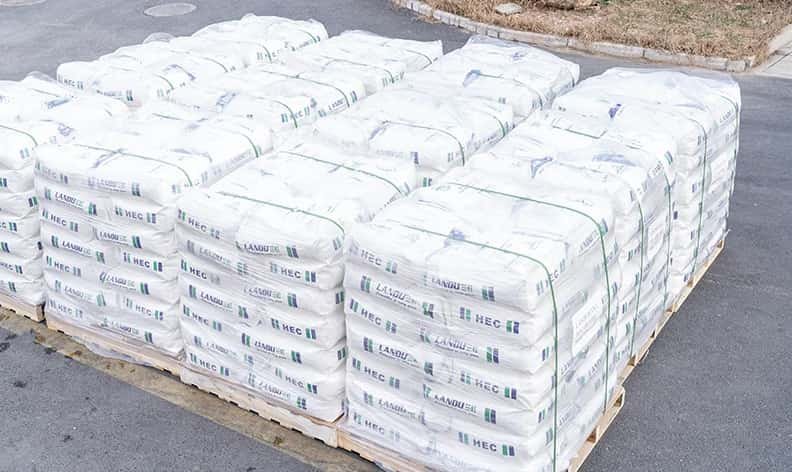
- Automated packing systems
- Automated packing systems