Home
/
Blog
/
Workability of Cement-Based Mortars
Workability of Cement-Based Mortars | LANDU
Improving Application Consistency in Real Construction Conditions
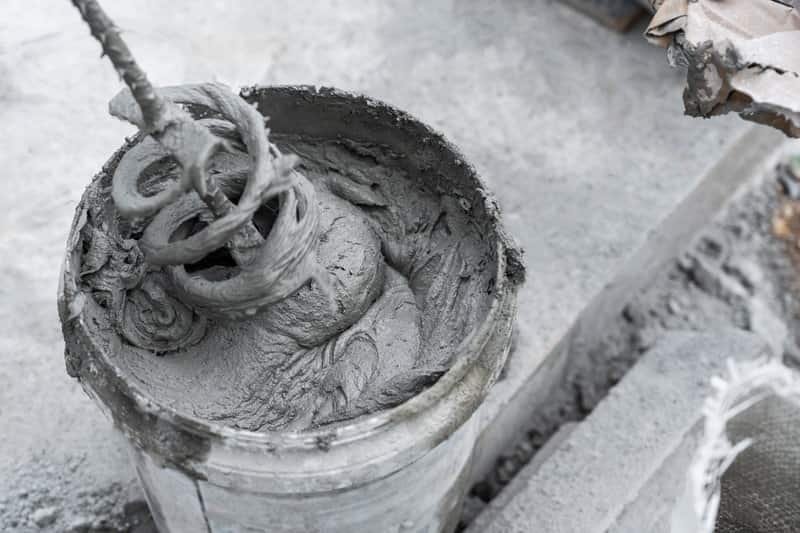
When mortar is no longer easy to spread, the issue is already present in the fresh mix.
In cement-based systems, workability is not defined by theory. It is what the applicator experiences when the material is moved, spread, and shaped during real construction.
When mortar becomes difficult to spread, the problem is already present in the fresh mix.
On site, this is usually noticed immediately:
- increased resistance during troweling
- uneven spreading behavior
- inconsistent feel between batches
- reduced control on vertical surfaces
These changes appear before any visible defects, and they directly affect installation efficiency.
What Causes Poor Workability in Cement-Based Mortars
In practice, workability loss is rarely caused by a single factor. It usually results from a combination of instability in the fresh mortar system.
1. Excessive Particle Interaction
When particle interaction increases, the mortar resists flow.
This is experienced as dragging during application and reduced spreading smoothness.
2. Inconsistent Water Distribution
Even when total water content is correct, uneven distribution creates local stiffness differences in the mix, leading to unstable application behavior.
Stable water retention in cement mortar is critical to avoid this issue.
3. Time-Dependent Consistency Loss
As hydration begins, the fresh mortar structure gradually stiffens.
If the system is not properly stabilized, workability decreases during extended working time mortar.
4. Non-Uniform Additive Dispersion
When cellulose ether for mortar formulations or other rheology modifiers for dry mix mortar are not evenly dispersed, the mortar behaves inconsistently across different batches.
How Cellulose Ether Stabilizes Workability Behavior
In cement-based systems, cellulose ether for cement systems does not simply “increase workability”.
Its function is to stabilize how the fresh mortar behaves during application.
When properly selected and fully dispersed, it helps:
- reduce internal friction between particles
- stabilize consistency during adhesive open time control
- improve smoothness during spreading
- maintain uniform application behavior across batches
In formulation practice, this stability is often more critical than initial fluidity.
LANDU cellulose ether grades are designed to support stable fresh-state performance in different cement-based systems and construction conditions.
Where Workability Issues Become Most Visible
Tile Adhesives
- higher resistance during spreading
- reduced control during tile adjustment
- inconsistent ridge formation
These issues directly affect installation speed and moisture retention in tile adhesive performance.
Wall Putty and Skim Coat
- increased drag during application
- uneven surface finishing
- reduced smoothness on vertical surfaces
Even small changes in rheology are immediately noticeable in thin-layer systems.
How Workability Is Normally Adjusted in Practice
In real formulation work, improving workability is rarely achieved by increasing water content.
This often leads to instability and secondary performance issues.
Instead, adjustments are typically made through:
When these parameters are aligned, application behavior becomes stable and predictable.
Frequently Asked Questions
Why does mortar become difficult to spread during application?
This usually indicates that the fresh mortar structure is no longer balanced, often due to increased particle interaction or inconsistent additive dispersion.
Why does workability vary between batches with the same formulation?
Batch variation is commonly caused by differences in mixing efficiency or non-uniform distribution of rheology modifiers for dry mix mortar in the dry blend.
Can workability be improved by adding more water?
Adding water may temporarily improve spreadability, but it often reduces stability and can lead to segregation or inconsistent water retention performance.
Why does mortar feel fine at first but become harder to apply later?
This is typically related to time-dependent consistency loss and insufficient stabilization during open time development.
Does cellulose ether affect trowel resistance?
Yes. It influences particle interaction and water distribution in the fresh state, directly affecting trowel resistance and overall application feel.
Workability is therefore not a theoretical parameter. It is a direct indicator of how a mortar will perform during application on site.