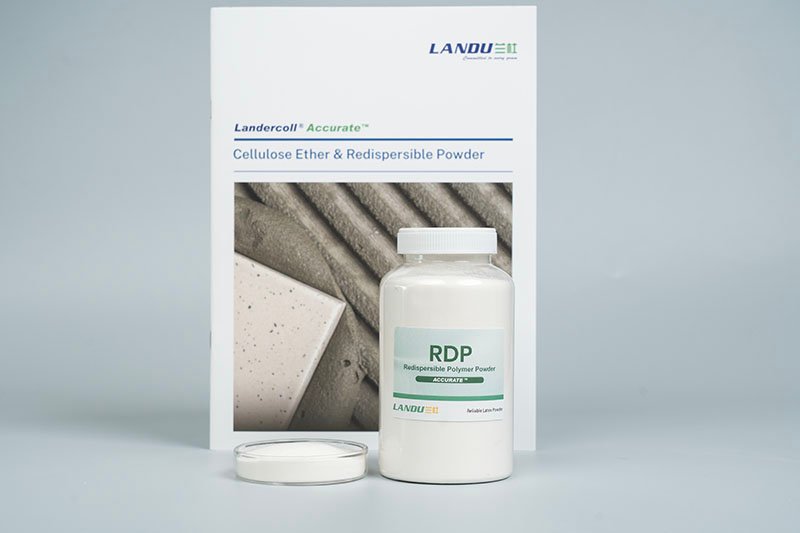
In modern construction dry mix mortar production, performance requirements continue to increase across tile adhesive, exterior insulation systems and cement‑based finishing materials. Contractors and dry mix mortar manufacturers are no longer focused only on compressive strength. Adhesion, flexibility, workability and long‑term durability have become equally important in many construction applications.
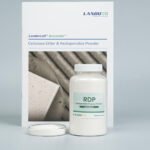
This is where Redispersible Polymer Powder (RDP) plays an important role.
As a polymer modifier for dry mix mortar, RDP is widely used in tile adhesive, skim coat, EIFS / ETICS, self‑leveling compounds and repair mortar formulations. Proper polymer selection helps improve mortar performance while supporting more stable application properties under different jobsite conditions.
At LANDU, we work with dry mix mortar manufacturers and distributors in different markets to develop application‑oriented additive systems for modern construction materials.
Redispersible polymer powder is a free‑flowing polymer powder produced by spray drying polymer emulsions, typically based on vinyl acetate‑ethylene (VAE) copolymers.
When mixed with water, the powder redistributes into a stable polymer emulsion and forms a flexible polymer film inside the cementitious system during curing.
Compared with conventional cement mortar, polymer‑modified mortar generally offers:
Because of these properties, RDP has become a standard additive in many modern dry mix mortar formulations.
Traditional cement mortar provides good compressive strength but remains relatively brittle after curing. Under temperature variation, substrate movement or external stress, unmodified mortar may develop cracking, debonding or reduced durability over time.
Polymer modification helps improve the internal structure of the mortar system.
After cement hydration and water evaporation, polymer particles gradually coalesce into a continuous film within the mortar matrix. This polymer network improves cohesion and creates a stronger bond between mortar and substrate surfaces.
In practical applications, this often results in:
For flexible tile adhesive and exterior insulation systems, polymer modification is especially important.
One of the primary reasons manufacturers use Redispersible Polymer Powder is to improve adhesion performance.
Modern construction materials often involve dense or low‑porosity substrates, including porcelain tiles, concrete panels and insulation boards. These surfaces can be challenging for traditional cement mortar systems.
RDP helps improve bonding by increasing the mortar’s ability to form stronger interfacial contact with the substrate.
In tile adhesive formulations, this contributes to:
The balance between polymer powder and cellulose ether is particularly important in C1 and C2 tile adhesive additives systems.
Related solutions:
Cement‑based materials naturally have limited flexibility. In applications exposed to vibration, thermal expansion or substrate movement, brittle mortar systems are more likely to crack.
Adding RDP improves deformability and flexibility within the mortar matrix.
This is particularly important in:
Flexible polymer grades are commonly used when crack resistance and movement tolerance are critical performance requirements.
Shrinkage cracking is a common issue in skim coat, rendering mortar and repair mortar applications. Factors such as rapid water loss, formulation imbalance and environmental conditions can all contribute to cracking during curing.
Polymer modification helps reduce internal stress within the mortar system and improves crack resistance after drying.
In practice, optimized polymer dosage can help:
Proper formulation balance remains essential, especially when adjusting cement, fillers and cellulose ether content together.
In exterior construction environments, moisture resistance is closely related to long‑term durability.
Certain Redispersible Polymer Powder grades can help reduce water absorption inside the mortar structure while improving cohesion and film formation.
This contributes to:
Hydrophobic polymer grades are often used in waterproof mortar systems and exterior insulation systems where water resistance is a key requirement.
RDP is widely used in cement‑based tile adhesive formulations to improve:
Exterior insulation systems require mortar with good flexibility, adhesion and weather resistance.
RDP helps improve bonding between insulation boards and cementitious layers while reducing cracking caused by thermal stress and environmental exposure.
In skim coat applications, polymer powder contributes to smoother application properties and improved surface adhesion.
It also helps improve cohesion, crack resistance, surface durability and finishing quality.
Self‑Leveling Compounds require both flowability and mechanical performance.
Rigid RDP grades are commonly used to improve surface hardness, abrasion resistance, cohesion and durability after curing.
| Polymer Type | Main Characteristics | Typical Applications |
|---|---|---|
| Flexible RDP | Higher flexibility and crack resistance | Tile adhesive, EIFS, waterproof mortar |
| Rigid RDP | Higher hardness and compressive strength | Self‑leveling mortar, repair compounds |
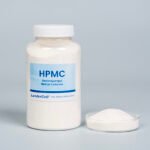
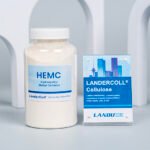
In dry mix mortar formulations, Redispersible Polymer Powder is commonly used together with cellulose ether additives such as HPMC and HEMC.
While RDP mainly improves flexibility and adhesion, cellulose ether contributes to:
Related solutions:
At LANDU, we focus on practical additive solutions for dry mix mortar formulations, including cellulose ether, redispersible polymer powders and customized application support.