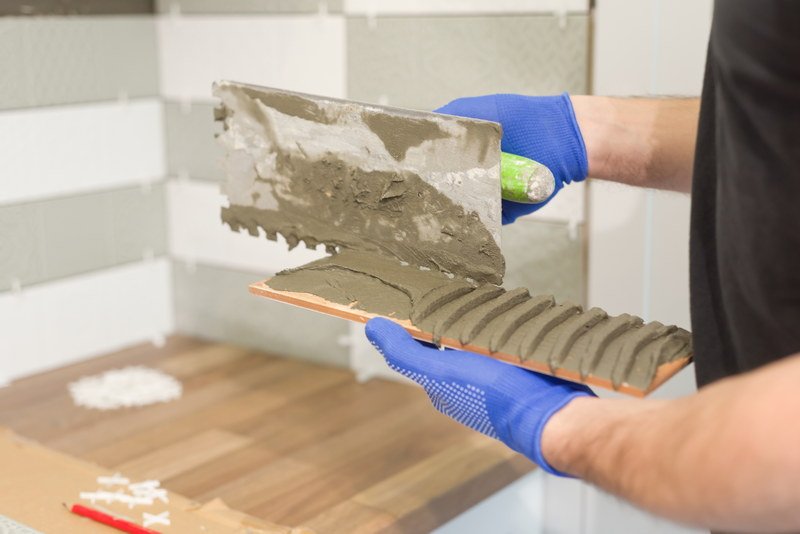
HPMC for Tile Adhesive
Stable Tile Adhesive Depends on More Than Viscosity
Many tile adhesive problems are still blamed on cement, sand, or installation methods.
In actual production, unstable cellulose ether performance is often the hidden reason behind issues like:
- inconsistent open time
- poor tile wetting
- wall tile slipping
- heavy troweling
- changing workability between batches
This becomes more obvious in summer production, large-format tile applications, and high-performance C2 systems where mortar behavior on site matters more than laboratory viscosity values.
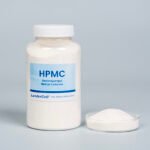
LANDU develops HPMC grades specifically for cement-based tile adhesive formulations, helping manufacturers improve water retention stability, rheology control, and application consistency under real production conditions.
Why Water Retention Still Causes Problems in Tile Adhesive
Some tile adhesives perform well during initial factory testing but become difficult to control after continuous production or seasonal weather changes.
One common reason is unstable water retention behavior.
When moisture escapes too quickly, installers usually notice problems immediately:
- mortar loses workability faster than expected
- comb lines dry too early
- tiles cannot wet properly
- bonding strength becomes inconsistent
- open time shortens on hot substrates
In many cases, increasing viscosity alone does not solve the issue.
What matters more is whether the cellulose system can maintain stable hydration behavior throughout the application window.
This is especially important for:
- porcelain tile adhesive
- large-format tile adhesive installation
- thin-bed tile systems
- extended open-time tile adhesive formulations
LANDU HPMC grades are designed to help maintain more stable mortar performance under variable construction conditions instead of relying only on high nominal viscosity.
Anti-Sag Performance Is a Rheology Problem, Not Simply a Viscosity Problem
For wall tile applications, excessively high viscosity often creates another issue: poor application feel.
Installers may describe the mortar as:
- too sticky
- difficult to spread
- dragging on the trowel
- hard to level evenly
At the same time, insufficient cohesion may lead to tile slipping after installation.
Good anti-sag performance usually comes from balanced rheology control rather than pushing viscosity higher.
LANDU modified HPMC systems help improve:
- comb stability
- smoother troweling
- mortar cohesion
- vertical slip resistance
- spreading consistency
This balance becomes increasingly important in modern large-format tile adhesive systems where both workability and stability are required together.
Open Time Stability Matters More During Real Production
Many formulations perform acceptably in small laboratory batches.
The real challenge starts during continuous manufacturing.
Differences in local cement activity, aggregate moisture, seasonal temperature, and mixing conditions can quickly expose unstable cellulose systems.
Manufacturers often encounter:
- changing open time between batches
- unstable mortar consistency
- customer complaints during summer application
- repeated water adjustment during production
- reformulation pressure after raw material changes
For export-oriented dry mix mortar producers, stable rheology control is often more valuable than simply achieving higher viscosity numbers on paper.
Several manufacturers switching from inconsistent local cellulose systems use LANDU grades to improve batch-to-batch stability in tile adhesive production.
Different Tile Adhesive Systems Require Different HPMC Strategies
Using one HPMC grade across all tile adhesive formulations usually creates unnecessary limitations.
Different systems respond differently to water retention, viscosity development, and workability control.
Standard C1 Tile Adhesive
Economical formulations generally prioritize:
- stable construction performance
- balanced water retention
- reasonable open time
- production efficiency
Overbuilt viscosity systems may increase stickiness without improving actual installation performance.
High-Performance C2 Tile Adhesive
C2 and extended open-time systems typically require better balance between:
- tile wetting ability
- anti-slip performance
- open time stability
- deformation compatibility
- smooth application feel
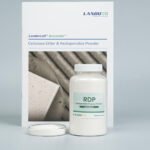
In these systems, compatibility between HPMC and redispersible polymer powder becomes increasingly important for maintaining stable mortar behavior.
LANDU HPMC grades are commonly used in:
- C2TE tile adhesive
- porcelain tile adhesive
- large-format tile adhesive systems
- extended open-time tile adhesive applications
Application Feel Often Determines Customer Feedback First
Installers rarely evaluate mortar by laboratory data.
What they notice first is how the material behaves on the wall and under the trowel.
Poor rheology control usually appears as:
- collapsed comb lines
- uneven spreading
- difficult tile adjustment
- excessive stickiness
- rapid loss of workability
In many factories, these issues lead directly to customer complaints even when standard strength requirements are technically achieved.
A properly optimized HPMC system helps maintain more predictable application behavior across different climates, substrates, and production conditions.
Rather than supplying one universal viscosity grade, LANDU works with dry mix mortar manufacturers to adjust HPMC performance according to local raw materials and formulation targets.
Supporting Industrial Tile Adhesive Manufacturing
Stable commercial production requires more than laboratory qualification tests.
LANDU supports manufacturers with:
- HPMC grade selection
- viscosity matching
- formulation adjustment
- raw material compatibility evaluation
- production adaptation support
- application performance optimization
This is particularly useful for manufacturers developing export-grade tile adhesive systems or replacing unstable local cellulose sources.
FAQ
Why does tile adhesive lose open time during summer application?
High substrate temperature and rapid moisture evaporation can accelerate water loss inside the mortar. If the HPMC system lacks stable water retention behavior, open time may shorten significantly during hot-weather installation.
Does higher HPMC viscosity always improve tile adhesive performance?
Not necessarily. Excessive viscosity may increase stickiness, reduce spreading smoothness, and negatively affect tile wetting. Stable rheology balance is usually more important than simply increasing viscosity.
Why does tile adhesive become too sticky after adding HPMC?
This is often related to rheology design rather than dosage alone. An unsuitable HPMC profile may create excessive drag during troweling even when water retention appears acceptable.
How does HPMC improve anti-sag performance?
HPMC increases mortar cohesion and helps stabilize the adhesive structure during vertical application, reducing tile slipping on walls.
Why does tile adhesive performance change between batches?
Variations in cement activity, sand moisture, mixing conditions, and unstable HPMC quality can all affect mortar consistency and open time stability.
What additives are commonly combined with HPMC in tile adhesive formulations?
Professional tile adhesive systems often combine HPMC with RDP powder, starch ether, defoamers, and other rheology modifiers to optimize workability and bonding performance.