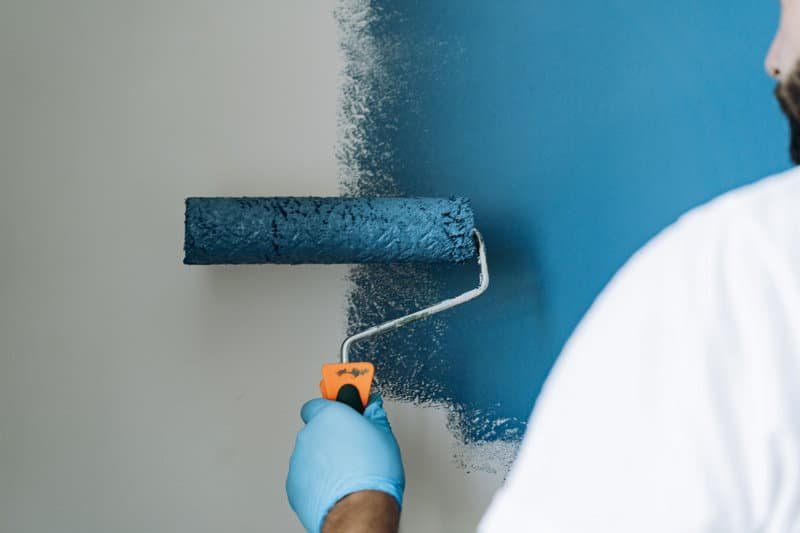
Some water-based paints leave the factory with stable viscosity numbers but quickly generate complaints once they reach the jobsite.
Contractors report heavier roller drag. Leveling becomes uneven under side lighting. Roller spatter increases during fast application. In some cases, the paint even feels thicker after storage despite matching the original viscosity target during production.
Many formulation teams initially investigate dispersants, defoamers, or emulsion compatibility. But in architectural coatings, the thickener system itself is often responsible for the imbalance.
This is where the choice between HEC and HPMC becomes critical.
The difference is not simply about which cellulose ether produces higher viscosity. The real difference appears during rolling, pumping, tinting, drying, and long-term storage stability.
For purchasing managers and coating formulators, selecting the wrong rheology modifier can create far more expensive problems later in production:
In modern low-VOC architectural coatings, rheology behavior has become just as important as viscosity itself.
One of the most common formulation mistakes is evaluating cellulose ethers only by viscosity data.
Two coatings may show similar KU viscosity in the tank while behaving completely differently during application.
This usually happens because rheology profile, shear response, and water management are not the same.
A coating with excessive low-shear structure may initially appear stable during laboratory testing but become difficult to roll at jobsite. Another formulation may level well during application but lose sag resistance on vertical surfaces.
Experienced formulators evaluate thickener systems based on real application behavior:
This is why cellulose ether selection directly affects both coating performance and customer perception.
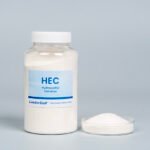
Hydroxyethyl Cellulose (HEC) remains one of the most commonly used rheology modifiers in water-based decorative coatings because it creates a balanced application profile without generating excessive structural buildup.
In practical formulations, HEC is often selected for:
Many formulation teams prefer HEC because it allows viscosity development while maintaining smoother application flow.
This becomes especially important in contractor-grade wall paints where application consistency directly affects end-user satisfaction.
Compared with heavier rheology systems, HEC generally provides:
In large-scale coating production, these characteristics often reduce adjustment frequency during batching and help improve consistency between production lots.
Another advantage is formulation flexibility.
HEC systems are usually easier to fine-tune when formulators need to balance sag resistance, application feel, and storage stability simultaneously.
This is particularly valuable in modern water-based coatings where VOC restrictions already narrow the formulation window.
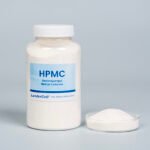
Hydroxypropyl Methyl Cellulose (HPMC) behaves differently inside coating systems because it generally creates stronger low-shear structure and higher water retention.
In some formulations, this additional structure can improve:
However, stronger structure is not always beneficial in decorative coatings.
A common issue appears when formulators replace HEC with HPMC mainly to increase viscosity or reduce additive dosage.
The coating may initially appear thicker in the tank but begin showing:
Under side lighting, these rheology differences become even more visible after drying.
This is why HPMC is more carefully evaluated in architectural coatings than in construction mortars.
In decorative paint systems, excessive structure can sometimes create more application problems than it solves.
| Performance Area | HEC | HPMC |
|---|---|---|
| Roller Spatter Resistance | Better | Moderate |
| Flow & Leveling | Better | Moderate |
| Brush Drag | Lower | Higher |
| Water Retention | Moderate | Strong |
| Low-Shear Structure | Moderate | Strong |
| Sag Resistance | Good | Strong |
| Application Smoothness | Better | Heavier Feel |
| Tinting Stability | More Stable | More Sensitive |
| High-PVC Paint Compatibility | Better | Depends on formulation |
| Rheology Adjustment Flexibility | Easier | Narrower window |
The better choice depends on the final coating target rather than viscosity alone.
For example:
Professional rheology design always depends on the balance between:
This is why experienced coating manufacturers rarely evaluate cellulose ethers using viscosity data alone.
Many production issues begin after a thickener substitution during cost optimization.
A formulation that previously rolled smoothly may suddenly become harder to apply after replacing HEC with a stronger low-shear system.
Typical production complaints include:
In many cases, the problem is not caused by raw material quality alone.
The rheology balance itself has changed.
This is especially common in low-VOC systems where modern formulations already operate within tighter stability margins.
Even small changes in cellulose ether behavior can alter overall coating performance.
As European environmental standards continue pushing toward lower VOC coatings, formulation tolerance becomes smaller.
Modern decorative paints require:
In these systems, excessive low-shear buildup can quickly reduce application comfort and increase visible surface defects.
This is why many formulators continue selecting HEC for Coatings for water-based architectural coatings.
LANDU coating-grade cellulose ethers are commonly evaluated in formulations where viscosity stability, application consistency, and production reliability remain critical across different seasonal and climate conditions.
The most successful coating formulations are rarely built around maximum viscosity.
They are built around predictable application behavior.
HEC is commonly preferred when formulators require:
HPMC may still be evaluated where formulations require:
The correct selection depends on:
In modern coatings, rheology modifiers are no longer simple thickening additives. They directly influence how the coating performs during real application.
In many architectural coatings, HEC is preferred because it provides smoother roller application, better leveling, and lower brush drag. HPMC may still be used where stronger anti-sag performance or higher water retention is required.
A stronger low-shear rheology system can increase structural buildup inside the coating. Even when viscosity remains similar, the paint may feel harder to roll or brush during application.
Some thickener systems create excessive structure during drying, reducing the coating’s ability to flow evenly across the surface.
Many low-VOC decorative coatings prefer HEC because it provides more balanced rheology adjustment and smoother application performance under modern formulation constraints.
Yes. HPMC can improve wet film hold and anti-sag behavior because of its stronger low-shear structure. However, excessive dosage may negatively affect leveling and application feel.
Two paints can show similar viscosity values while behaving completely differently during application. Real coating performance depends on shear response, leveling, sag control and application consistency.