
LANDU / PCE selection guide
Concrete PCE Selection Guide: How to Solve Poor Water Reduction, Rapid Slump Loss and Low Early Strength
Match the PCE performance profile to your concrete mix, placing window and production requirements.
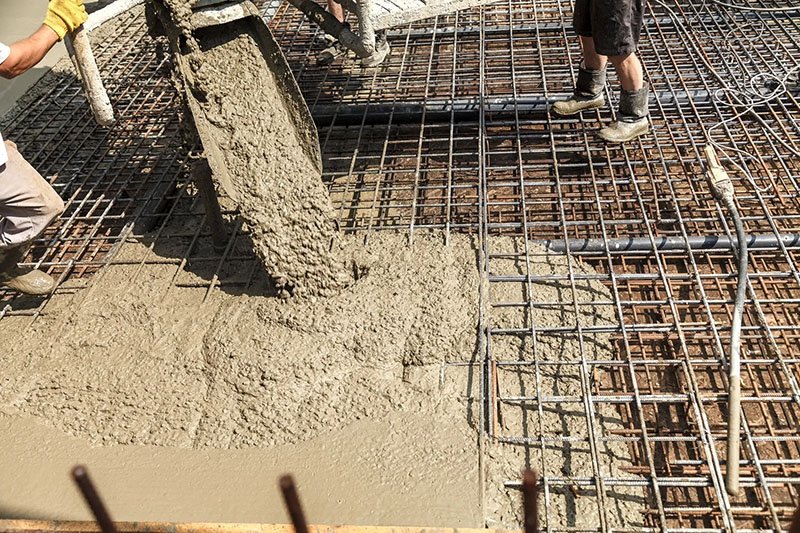
Choosing a PCE superplasticiser starts with identifying what your concrete must achieve—and when it must achieve it.
A ready-mixed concrete supplier needs workable concrete at delivery and throughout placement. A precast producer needs enough time to fill the mould, followed by reliable strength development for demoulding. A contractor placing high-performance concrete needs flow without losing the stability required for pumping and compaction.
For technical procurement teams, these requirements lead to a practical question:
Which PCE grade delivers the required performance with your local materials, at an acceptable dosage and cost?
Comparing water reduction figures alone will not answer that question. A useful purchasing evaluation connects the product’s performance profile with the concrete mix, production process and construction programme.
Which PCE Performance Should You Prioritise?
Polycarboxylate ether, or PCE, is the technology behind many concrete superplasticisers, also commonly written as superplasticizers.
Water reduction, slump retention and early strength describe performance priorities. They are not three completely separate product categories: a formulated admixture may combine these characteristics.
Use your main production requirement to decide which candidates to test first.
| Your main requirement | PCE performance to prioritise | What to verify before purchasing |
|---|---|---|
| Reduce water while maintaining the required consistence | Water reduction | Actual water demand, flow, stability and strength |
| Maintain workability through transport and placement | Slump retention | Consistence over the required period, setting behaviour and strength |
| Reach the specified demoulding or transfer strength | Early strength performance | Strength at the required age under actual curing conditions |
| Place concrete through congested reinforcement | Flow and passing ability | Filling, segregation resistance and suitability of the complete mix |
| Pump concrete reliably | Suitable rheology and stability | Pumping behaviour under representative site conditions |
Write these requirements into the sample request. “High-performance PCE” is too broad to give suppliers a clear selection target.
When Should You Choose a Water-Reducing PCE?
Prioritise a water-reducing PCE superplasticiser when your mix must achieve the specified consistence with less mixing water.
This is relevant to high-strength concrete, high-performance concrete and other mixes where the water–binder ratio is an important design constraint.
The purchasing question should be:
How much water can this candidate remove from our reference mix while maintaining the required fresh and hardened concrete performance?
Ask suppliers how their quoted water reduction was measured. A percentage is difficult to compare without the reference concrete, admixture dosage, target consistence and test conditions.
For your own trials, record:
- The reference mix and its water content.
- The candidate dosage and dosage basis.
- The water adjustment needed to reach the target consistence.
- Fresh concrete temperature and air content.
- Bleeding, segregation and application behaviour.
- Strength results at the specified ages.
Keep water accounting consistent, including relevant contributions from aggregates and liquid admixtures.
A candidate that produces excellent initial flow should still pass the required retention and stability checks. For bridge and building work, the concrete must remain suitable for the actual placement process.
When Does Slump Retention Matter More Than Initial Flow?
Prioritise slump retention when concrete must remain workable through transport, queuing, pumping and placement.
This applies to ready-mixed concrete deliveries, extended pours and sites where the time between batching and final placement varies.
A sample can look satisfactory immediately after mixing but fail to maintain the required consistence until the end of placement. That makes an initial slump result an incomplete basis for approval.
Build the trial around your delivery sequence:
| Production stage | What the comparison should establish |
|---|---|
| After mixing | Whether the concrete starts within the required consistence range |
| Expected arrival time | Whether it remains suitable for discharge and placement |
| Expected end of placement | Whether the usable working window is sufficient |
| After placement | Whether setting and strength development meet the programme |
Use agreed measuring intervals that reflect the project. Record concrete temperature, mixing or agitation conditions and any additions made during the trial.
Do not assume that a “slump-retaining” label guarantees unchanged setting time. Evaluate workability retention and setting separately.
A practical specification is more useful than a general request for maximum retention: define the consistence needed at the relevant stages and the acceptable setting behaviour.
When comparing liquid PCE superplasticisers for ready-mixed concrete, use the required delivery and placing window to shortlist grades, then confirm retention and setting in your own mix.
Which PCE Should You Evaluate for Precast Concrete?
For precast concrete, connect PCE selection to the production cycle.
Precast beams, bridge segments, wall panels and other structural elements need sufficient workability for placing and compaction, followed by the strength required for the next operation.
Specify the actual decision point:
What strength must the element reach, at what age, and under which curing conditions?
For prestressed production, this may include the specified strength required before prestress transfer. For other elements, it may be the approved demoulding or handling requirement.
Ask for evidence relevant to that time and curing regime. A later-age compressive strength result cannot establish whether a candidate meets an earlier production deadline.
Compare:
- Workability during mould filling.
- Compaction or self-compacting performance, as applicable.
- Setting behaviour.
- Strength at the required production age.
- Surface finish and visible defects.
- Later-age strength requirements.
Early strength and setting time are separate measurements. An early-strength-oriented PCE should not automatically be treated as a set accelerator.
For cold-weather production, include the actual concrete and curing temperatures in the evaluation. The admixture selection remains part of the wider production and curing plan.
Does Higher Slump Mean Better Pumpability?
Use slump as a consistence measurement, then assess pumping separately.
For high-rise construction and bridge works, the purchasing requirement may include reliable delivery through a particular pump and pipeline arrangement. A single slump reading does not establish that outcome.
Define the conditions that matter to your operation:
- Pumping distance and vertical lift.
- Pipe arrangement and delivery rate.
- Aggregate grading and maximum size.
- Concrete temperature.
- Required stability during pumping and discharge.
For self-compacting concrete, include the specified flow, passing ability and segregation-resistance assessments. High flow alone does not demonstrate that concrete can pass through congested reinforcement without separation.
Where pumping performance is central to the purchase, include a representative production or site trial before final approval.
For projects using ultra-high-performance concrete, review the specific UHPC additive requirements for flow and placement alongside the PCE selection criteria.
How Do Local Cement and Aggregates Affect PCE Selection?
Supplier test results are a starting point for evaluating your own materials.
A successful comparison should identify the cement source, supplementary cementitious materials, aggregates and other admixtures used. Without that information, it is difficult to establish how closely the results represent your production.
When requesting samples, share:
- Cement type and source.
- The binder combination, including relevant additions.
- Aggregate grading, moisture control and available fines information.
- Current admixture system.
- Mixing sequence and available equipment.
- Normal and seasonal concrete temperatures.
For European producers changing cement or introducing a different binder combination, repeat the relevant compatibility checks before carrying over an existing dosage.
Keep the question specific: does the candidate still meet the required water demand, workability window, setting and strength targets with the revised mix?
How Should You Compare PCE Dosage Between Suppliers?
First establish what each supplier is supplying.
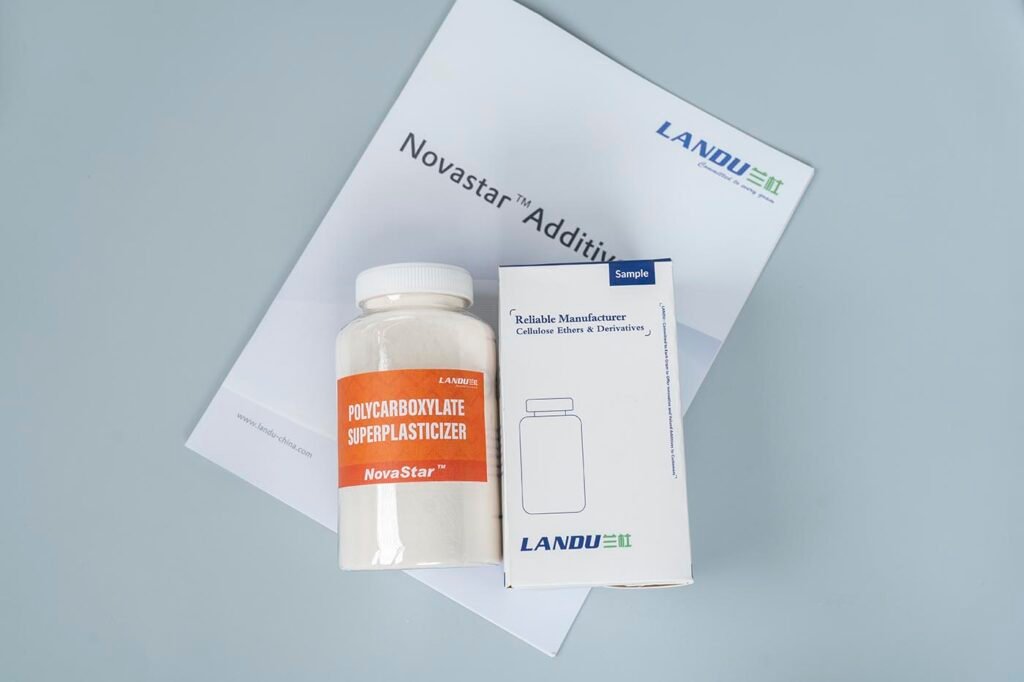
A PCE powder, concentrated polymer solution and formulated liquid concrete admixture are different purchasing inputs. Their quoted dosages should not be compared without understanding the product form and concentration.
Ask each supplier to identify the exact supplied form and the basis of its dosage recommendation.
| Information required | Why it matters |
|---|---|
| Product form | Establishes how the material will be handled and incorporated |
| Solids content and its test basis | Helps interpret concentration differences |
| Dosage basis | Clarifies whether addition is based on cement or total binder |
| Recommended addition procedure | Supports a reproducible trial |
| Intended use | Distinguishes a formulation raw material from a ready-to-use admixture |
| Grade-specific TDS and SDS | Connects the sample to its technical and handling information |
Solids-normalised dosage can help interpret comparisons, but total solids do not necessarily represent the same amount of effective PCE polymer in every formulated product.
The final purchasing comparison should use the dosage at which each candidate meets the same concrete requirements.
When reviewing PCE superplasticiser powder options, confirm the intended application and incorporation procedure for the specific grade.
What Documents Should European Buyers Request?
Request documentation for the exact product supplied and its intended use.
For concrete admixtures, EN 934-2 addresses definitions, requirements, conformity, marking and labelling. Identify the applicable product declaration and supporting documentation rather than treating “PCE” as a compliance category.
Your enquiry should distinguish between purchasing a polymer raw material for admixture formulation and purchasing a finished concrete admixture.
Ask for the current TDS, SDS, relevant declarations and test evidence for the supplied product. Confirm the documentation required for the destination market and project specification.
Product documentation supports qualification; concrete trials establish performance in your mix. Review LANDU’s quality control and assurance information when preparing your supplier questions.
How Can You Compare Samples Without Favouring One Supplier?
Give each candidate the same performance target and document how the trials are conducted.
A practical comparison sequence is:
- Test the current approved product as a control. Use the same raw materials and record the production conditions.
- Evaluate each candidate within its recommended dosage range. Follow the documented addition procedure.
- Adjust to the agreed initial consistence. Record any changes to water or dosage.
- Measure retention, setting and strength. Use the project’s required methods and ages.
- Repeat the promising candidates. Check whether the result is reproducible.
- Validate under representative production conditions. Include pumping, placement or curing requirements where relevant.

Keep fresh-concrete temperature and air content in the record. Also document any changes to the mix instead of attributing every improvement to the PCE.
This produces a purchasing record that explains both the result and the conditions under which it was achieved. Discuss the relevant testing scope with the LANDU Innovation Center.
Which PCE Offers the Lowest Cost in Use?
Compare cost after the candidates meet the same acceptance criteria.
Admixture cost per cubic metre = accepted consumption in kg/m³ × delivered price per kg
Then consider the production consequences: preparation requirements, dosing arrangements, batch correction work and any demonstrated effect on the production cycle.
A lower price per kilogram is attractive only when the required consumption and performance also support the decision.
Avoid including assumed cement savings, faster demoulding or reduced heating costs in the business case before those benefits have been demonstrated in the approved mix.
Choose a PCE That Matches Your Production Priority
Start with the requirement that matters most:
- Water reduction for achieving the required consistence within the mix’s water constraint.
- Slump retention for maintaining workability through delivery and placement.
- Early strength performance for meeting the specified precast production milestone.
Then compare the full result: dosage, fresh concrete behaviour, setting, strength and cost in use. Final selection should be confirmed with local materials and representative production conditions.
Explore NOVASTAR specialty additives as a starting point for a grade-specific discussion.
LANDU TECHNICAL SUPPORT
Shortlist a PCE for Your Concrete Mix
Need help with building or bridge concrete? Send your application, cement and binder details, target consistence, required working time, strength requirements and current admixture dosage.
Request a PCE Sample & Technical Information