HEC vs HPMC in Personal Care
HEC vs HPMC in Personal Care Formulations
LANDU Technical Guide | Cellulose Ether Additives Series
1. Why the Choice Between HEC and HPMC Matters in Production
In personal care manufacturing, thickener selection is rarely a laboratory issue—it becomes a production stability issue during scale-up.
Formulations that appear stable at pilot scale may behave differently when exposed to:
- seasonal temperature changes
- surfactant and electrolyte variation
- raw material substitution
- high-volume mixing shear conditions
The most common symptoms are not immediate failure, but gradual performance drift:
- unexpected clouding during storage
- viscosity inconsistency between batches
- foam structure changes in finished products
- consumer perception differences across markets
In most cases, these issues are linked to incorrect selection between HEC and HPMC for the system environment, rather than formulation design itself.
2. The Hidden Cost of Choosing the Wrong Thickener
In industrial production, incorrect selection does not usually cause immediate breakdown. Instead, it leads to cumulative quality and cost pressure:
- reformulation and re-approval cycles
- increased QC testing frequency
- higher batch rejection rate
- seasonal complaint fluctuations
- loss of texture consistency in export markets
These hidden costs often exceed the material cost difference between HEC and HPMC.
3. Core Functional Difference: Stability vs Sensory Performance
Both HEC and HPMC are non-ionic cellulose ethers, but their behavior in surfactant systems is fundamentally different.
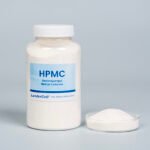
HEC (Hydroxyethyl Cellulose)
HEC is primarily selected for:
- high clarity systems
- excellent surfactant compatibility
- stable performance in cold-water processing
It is widely used in transparent shampoos, body washes, and facial cleansers where optical clarity and system stability are critical.
HPMC (Hydroxypropyl Methylcellulose)
HPMC is selected when formulation priority shifts toward:
- foam structure enhancement
- skin sensory improvement
- film-forming and conditioning effects
It can improve foam density and texture in soap-based systems, but may show sensitivity to low-temperature conditions in electrolyte-rich formulations.
4. Selection Risk Matrix (Industrial Decision View)
| Requirement | Recommended Choice | Risk if Incorrect Choice | LANDU Grade Example |
|---|---|---|---|
| Transparent, clear system | HEC | Clouding at low temperature (HPMC risk) | HE100M |
| Premium foam structure | HPMC | Flat or weak foam (HEC limitation) | MP30M-P |
| High electrolyte system stability | HEC | Viscosity loss and instability | HE series |
| Conditioning & skin feel | HPMC | Lower sensory performance | MP series |
5. Why Scale-Up Stability Depends on Supplier Consistency
Even with correct selection, inconsistent raw material quality can lead to:
- viscosity deviation between production batches
- dissolution rate differences during mixing
- unstable rheology under industrial shear conditions
For export-oriented manufacturers, this becomes a critical risk factor affecting long-term formulation stability.
6. LANDU Cellulose Ether Manufacturing Consistency
LANDERCOLL cellulose ethers are produced under automated DCS and CIS control systems to ensure:
- controlled substitution uniformity
- stable viscosity distribution
- reproducible dissolution behavior
All grades comply with ISO 9001 and REACH requirements, supporting regulatory compliance for global markets.
More importantly, production consistency reduces formulation re-validation risk during scale-up.
7. Technical Support for Formulation Optimization
To reduce formulation risk before mass production, LANDU provides technical support including:
- surfactant system-based grade selection
- viscosity and rheology behavior evaluation
- sample testing for pilot validation
- scale-up troubleshooting guidance
This approach helps formulators reduce reformulation cycles and improve batch-to-batch consistency.
8. Request Technical Evaluation Before Scale-Up
Before moving into full-scale production, it is recommended to evaluate:
- compatibility with surfactant system
- clarity and stability under temperature variation
- viscosity behavior at target dosage
- foam structure and sensory performance
Early-stage selection support can significantly reduce downstream production risk.
Talk to LANDU Personal Care Technical Team
If you are choosing between HEC and HPMC for personal care formulas and need stable cellulose ether supply & formula testing, LANDU offers exclusive technical services:
- Free surfactant compatibility & temperature stability testing
- HEC / HPMC sample matching for clarity or foam optimization
- Pilot scale formulation trial guidance
- Batch consistency inspection and full REACH/COA documents
👉 Request samples and professional personal care formulation consultation from the LANDU cellulose ether team