Chooseing the right cellulose ether for daily cheimcals
Choosing the Right Cellulose Ether for Daily Chemicals
LANDU Technical Guide | Cellulose Ether Additives Series
1. Why Cellulose Ether Selection Often Becomes a Cost Problem in Production
In daily chemical manufacturing, most formulation issues do not start in the lab—they start at scale-up.
A thickener that looks stable at pilot scale may behave very differently when:
- surfactant concentration increases
- electrolyte levels fluctuate between batches
- production temperature shifts across regions
- raw material sources are replaced due to cost pressure
The result is usually not a total failure, but subtle instability:
- viscosity drift after 24–72 hours
- phase separation in storage
- inconsistent pouring behavior between batches
- consumer-perceived texture differences
In most cases, the root cause is not formulation design—it is incorrect cellulose ether selection for the system conditions.
2. The Real Selection Risk: Cost vs Stability vs Compatibility
Cellulose ethers are often selected based on price or viscosity grade, but in industrial systems, three parameters actually determine performance:
- Electrolyte tolerance (detergent systems)
- Surfactant compatibility (personal care systems)
- Batch-to-batch rheology stability (scale production systems)
A lower-cost grade may appear efficient on paper but can lead to hidden production losses:
- rework cost
- stability testing cycles
- customer complaints
- formulation re-approval delays
This is where most procurement teams underestimate total cost of ownership.
3. CMC vs HEC vs HPMC — What Actually Drives the Decision
CMC: Cost-efficient, but system-sensitive
CMC performs well in basic detergent systems, especially where:
- cost control is the primary target
- electrolyte levels are stable
- opacity is acceptable
However, in high-salt or multi-surfactant systems, viscosity loss can occur, leading to unstable flow behavior.
HEC: Stability in complex surfactant systems
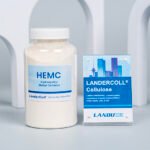
HEC is widely used in transparent personal care formulations due to:
- strong surfactant compatibility
- good clarity in aqueous systems
- stable shear-thinning behavior
It is typically preferred in shampoos, body washes, and facial cleansers where appearance consistency matters.
HPMC: High-efficiency rheology control for premium systems
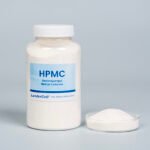
HPMC offers higher thickening efficiency at lower dosage and improved electrolyte resistance.
It is typically selected when:
- formulation stability under complex conditions is required
- premium texture or film-forming behavior is needed
- multi-phase or sulfate-free systems are used
4. Application-Based Selection (Industrial Reality View)
| Application | Risk Factor | Recommended System | LANDU Grade Range |
|---|---|---|---|
| Laundry detergent | electrolyte fluctuation | CMC / HPMC blend systems | CM series / MP series |
| Dishwashing liquid | surfactant instability | HEC / low-viscosity HPMC | HE series |
| Shampoo | clarity + salt sensitivity | HEC dominant system | HE30M / HE100M |
| Premium skincare | emulsion stability | HPMC functional system | MP series |
| Toothpaste | structure integrity | CMC backbone system | CM-P grades |
5. Why Most Production Issues Come from Supplier Variability
Even when the formulation is correct, inconsistent raw materials can lead to:
- viscosity deviation between batches
- dissolution speed differences
- water retention inconsistency
- unpredictable rheology curves during mixing
This is why industrial buyers prioritize:
- COA consistency
- REACH compliance
- batch traceability
- technical support during scale-up
6. LANDU Manufacturing Control and Supply Stability
LANDU cellulose ethers are produced under controlled DCS + CIS automation systems, ensuring:
- consistent molecular substitution patterns
- stable viscosity distribution
- reproducible dissolution behavior across batches
For procurement teams, the key value is not just product selection—but reliable repeatability at industrial scale.
LANDU also provides:
- formulation guidance for scale-up
- application-specific grade selection support
- documentation (COA, MSDS, REACH compliance)
7. How Procurement Teams Should Select the Right Grade
A practical selection process should follow:
- Define system type (detergent / shampoo / emulsion)
- Identify electrolyte and surfactant load
- Confirm viscosity target at production scale
- Evaluate stability under storage conditions
- Select cellulose ether based on system compatibility—not price alone
8. Request Technical Support Before Scale-Up
Before moving to full production, procurement and R&D teams are recommended to request:
- sample evaluation
- viscosity curve data
- dissolution behavior report
- system compatibility test
This step significantly reduces scale-up risk and avoids formulation re-approval delays.
Talk to LANDU Daily Chemical Technical Team
If you need grade matching, formula testing and stable supply of cellulose ether for daily chemical production, LANDU delivers full technical service:
- Free compatibility test for your surfactant & electrolyte system
- Custom CMC / HEC / HPMC sample trial
- Scale-up formulation guidance for mass production
- Batch stability inspection and COA supporting documents
👉 Request samples and professional technical consultation from the LANDU cellulose ether team