LANDU Technical Guide | Cellulose Ether Additives Series
In most water-based daily chemical systems, formulation instability rarely comes from the surfactant itself. More often, it is related to how the thickener behaves during dispersion, hydration, and system integration.
Hydroxyethyl Cellulose (HEC), a non-ionic cellulose ether, is commonly selected in personal care and household formulations where stable viscosity and system compatibility are required without introducing strong ionic interactions.
In practice, it is not treated as a “simple thickener,” but as a functional polymer that influences flow behavior, suspension stability, and overall formulation robustness.
In formulations such as shampoos, liquid detergents, and cleansing gels, several recurring production and storage challenges trouble daily chemical manufacturers:
HEC integrates smoothly into these complex systems without disrupting surfactant core functions, delivering steady rheology control once fully hydrated.
Unlike ionic thickeners, HEC barely reacts with mainstream surfactant varieties, making it adaptable to formulas with varying ingredient complexity.
From a formulation perspective, HEC value lies in predictable, consistent performance under diverse production parameters rather than single thickening effects.
After complete dispersion and full hydration, HEC delivers these key stable properties:
Industrial production feedback confirms final formula performance heavily relies on early-stage dispersion quality. Poor dispersion control will cause inconsistent product texture even when using matched HEC grades.
HEC stabilizes viscosity in high-surfactant shampoo formulas, maintaining uniform texture through shelf storage and reducing dependence on salt for viscosity adjustment.
Hydration speed is sensitive to raw material feeding order, especially for formulas with elevated surfactant loadings.
HEC optimizes fluid flow and uniform sensory experience. It locks consistent texture during pumping and preserves transparent, homogeneous appearance over storage cycles.
Low-dosage HEC provides mild rheology tuning without clouding the formula or altering delicate skin-friendly sensory properties required for facial care products.
HEC inhibits phase separation and locks stable viscosity for multi-surfactant detergent formulas mixed with builders.
Electrolyte concentration changes will shift its thickening effect, so real-production formula verification is mandatory.
Formulators can select different HEC grades and dosages to develop low-viscosity spray cleaner formulas or thicker gel-type household surface cleaners.
In oral care products, HEC reinforces suspension stability and uniform extrusion performance, keeping consistent paste structure during tube filling and daily consumer use.
Four core variables directly determine HEC’s final functional output in finished products:
Uneven dispersion is the top cause of inconsistent thickening. Rapid HEC feeding or insufficient mixing shear triggers localized swelling and irreversible lump formation, resulting in uneven viscosity distribution.
HEC works stably under moderate salt content, yet its thickening response will shift with rising electrolyte concentration and different surfactant molecular structures.
Production temperature, mixing shear intensity, and material feeding sequence all change HEC hydration rate and final rheology curve.
Though non-ionic, HEC’s overall system performance still varies based on surfactant mixing ratios and formula ingredient complexity.
Viscosity grade selection cannot rely solely on target fluidity requirements; matching the full surfactant formula system is critical to avoid performance deviation.
Typical application scenarios:
Typical application scenarios:
Typical application scenarios:
Note: Identical viscosity grades deliver different thickening results when surfactant concentration and formula structure differ. Lab formulation trials are mandatory before mass production.
HEC is the preferred cellulose ether for surfactant-rich daily chemical formulas requiring high transparency and ingredient compatibility.
Compared with HPMC, HEC shows outstanding advantages in these fields:
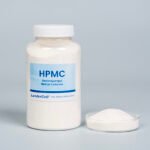
By contrast, HPMC features thermal gelation characteristics and is widely applied in construction dry-mix mortars rather than daily chemical surfactant systems.
Most on-site HEC application defects in mass manufacturing stem from unstable process parameters instead of raw material quality flaws:
Once the dispersion and hydration process parameters are standardized, HEC delivers stable, repeatable thickening and stabilizing performance across all formula lines.
HEC acts as multi-functional thickener, formula stabilizer and suspension aid for shampoos, body washes, liquid detergents, toothpaste and all surfactant-based daily chemical formulations.
Yes. As a non-ionic cellulose polymer, HEC achieves full compatibility with anionic, nonionic, and amphoteric surfactant raw materials used in personal care and cleaning products.
Lumping issues originate from improper dispersion operation instead of material defects, mainly caused by fast powder feeding speed or inadequate mixing shear force in production tanks.
Grade selection depends on target rheology and product type, and must pass lab validation within your complete surfactant formula before formal procurement and mass production.
LANDU is a professional manufacturer of cellulose ether series including HEC, HPMC and RDP for construction and daily chemical industrial sectors.
Our daily chemical technical team provides full-cycle formula support for customers producing personal care and household cleaning products:
Continuous R&D investment in cellulose ether polymerization and purification technology ensures consistent batch quality for global daily chemical manufacturers.
High-quality HEC eliminates formula instability risks, reduces production waste, and improves finished product shelf performance & consumer experience. Standardized evaluation and production operation procedures cut long-term formulation and manufacturing costs.
If you are optimizing daily chemical formulas or sourcing stable HEC raw materials, LANDU offers exclusive technical services for cleaning & personal care manufacturers:
👉 Request HEC samples or professional daily chemical formulation technical support from the LANDU team