
How Silicone Hydrophobic Powder Reduces Capillary Water Absorption in Dry-Mix Mortar
A practical guide to water-repellent mechanisms, suitable mortar applications, SHP grade screening and reproducible absorption tests—without confusing reduced water uptake with complete waterproofing.
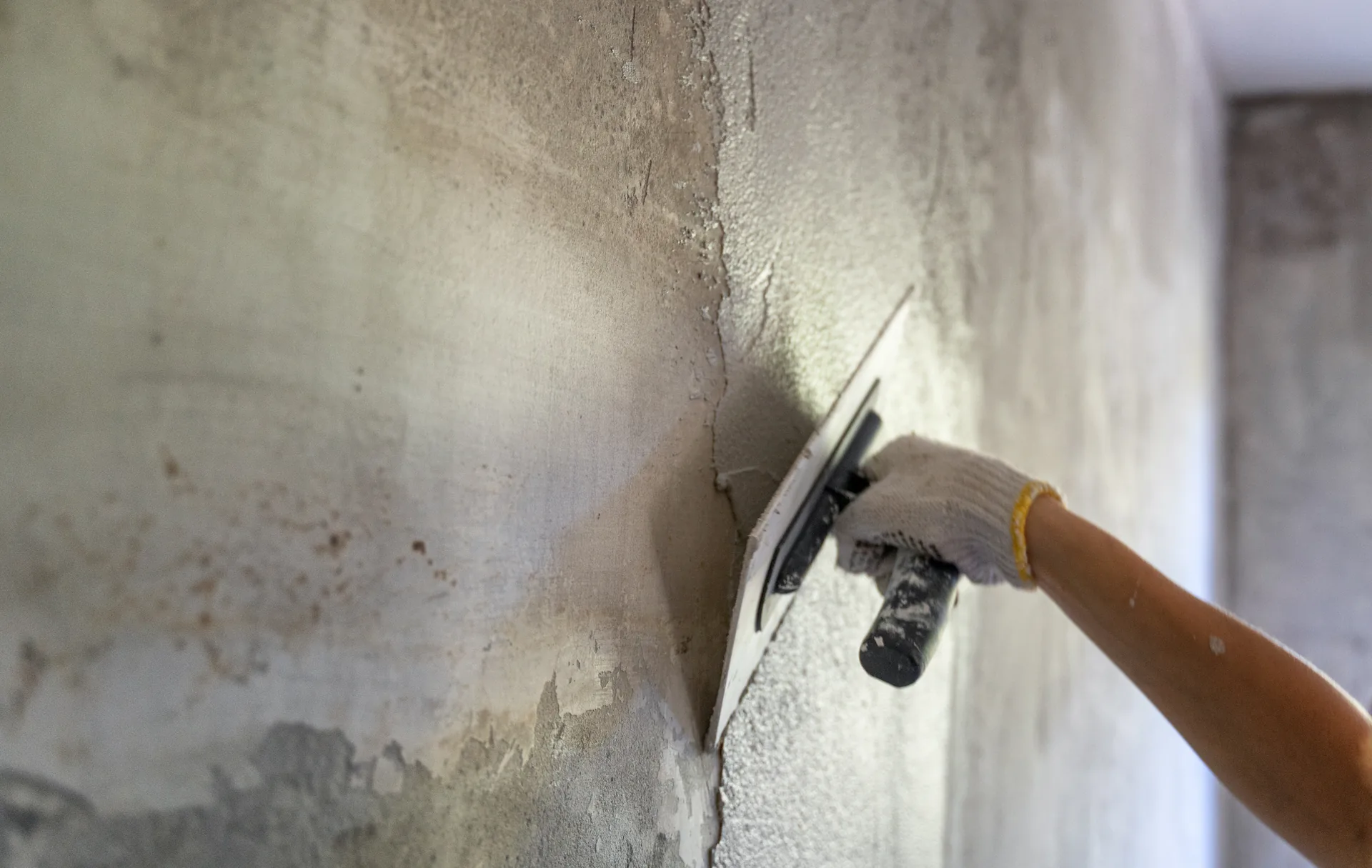
Reducing water absorption starts with the transport mechanism
Rainwater, intermittent wetting and moisture at exposed joints can enter hardened mineral mortars through connected capillary pores. The speed of uptake depends on pore connectivity, surface wetting, binder composition and the exposure conditions. A dense mortar may still take up some water; a water-repellent mortar may still contain capillary pores.
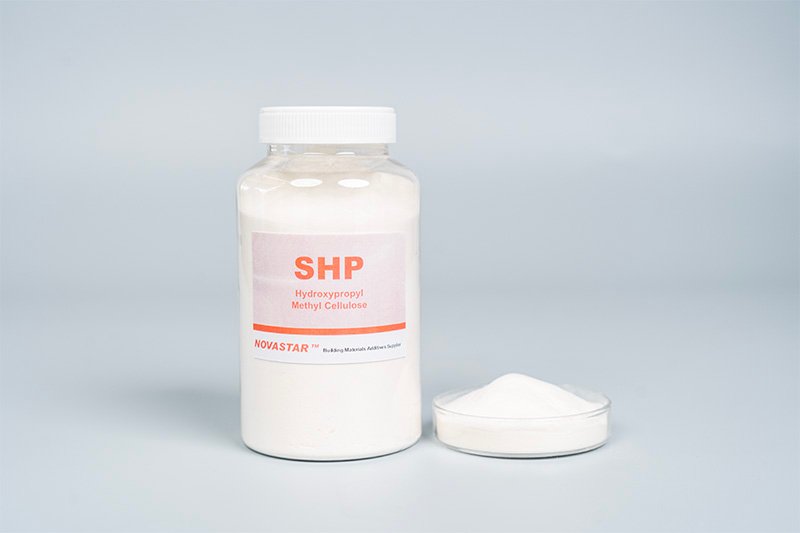
Silicone hydrophobic powder (SHP) is a functional, dry-blend-compatible water-repellent additive. When a suitable product is dispersed and activated in the mortar, silicone-based hydrophobic chemistry can reduce the affinity of mineral surfaces for liquid water. For appropriately formulated and cured cement-based mortars, this can reduce uptake driven by capillary suction.
For product details, review the NOVASTAR™ Silicone Hydrophobic Powder product page. This article focuses instead on why capillary uptake occurs and how to test whether an SHP grade meets a specific formulation target.
How silicone chemistry influences pore-wall wetting
Capillary suction is governed partly by whether liquid water wets the internal surfaces of a porous material. Silicone-based water repellents can lower surface energy and make the relevant mineral surfaces less wettable, reducing the tendency of liquid water to enter fine capillaries.
Actual powder products differ: the active silicone chemistry, carrier, release behavior and interaction with the binder are grade dependent. Not every powder operates by exactly the same reaction pathway.
Hydrophobization is therefore different from closing all pores or creating a continuous waterproof membrane. Water-vapor transmission may be better retained than with some barrier systems, but vapor permeability must be measured before making a grade-specific claim.
The mechanism is described in silicone-resin hydrophobic-powder research in dry-mix mortar. Separate research on silane admixtures in concrete supports pore-wall hydrophobization as a reason for lower liquid-water sorptivity, but its results do not constitute data for LANDU SHP grades.
Dry-blend distribution
Introduce the selected powder through a validated dry-mixing process.
Moisture interaction
Active chemistry becomes available under the product’s specified mixing and curing conditions.
Lower liquid-water affinity
Appropriate hydrophobic modification can reduce capillary suction in the hardened matrix.
Where water-repellent powder adds practical value
Specify the exposure before selecting the additive. The main target may be short-term rain wetting, splash exposure, capillary absorption at exposed joints or a requirement for moisture-resistant surface finishes.
Exterior renders and plasters
Consider SHP when rain-driven capillary uptake is a concern. Also verify adhesion, finishing, water-vapor behavior and the chosen render’s classification.
Explore cement render and plaster additives →Tile grout and joints
Lower capillary absorption can be relevant to repeated wetting. Joint continuity, cracks and installation details still influence moisture ingress.
Waterproofing mortar
SHP may be part of a multi-additive system, but water-pressure resistance, crack control and substrate bonding require independent verification.
See waterproof mortar additives →Mineral wall putty and finishing mortar
Evaluate substrate compatibility and moisture response alongside workability and subsequent coating adhesion. Not every interior putty needs integral hydrophobization.
View wall putty and skim coat applications →EIFS / ETICS exterior finishing layers
For exterior insulation finishing systems, evaluate moisture uptake only in relation to the specified layer and complete assembly. Compatibility, adhesion and the system’s moisture-management design still require independent verification.
Explore EIFS / ETICS additive applications →
Application requirement comes before additive selection
For cement renders and plasters, compare liquid-water uptake with the complete finish requirements. For waterproof mortar additives, evaluate SHP within the binder, polymer modification and crack-control strategy. These are different finished-product objectives, even when both formulations contain a water-repellent powder.
Hydrophobic powder does not replace HPMC, RDP or crack-control design
| Additive | Primary formulation role | What it does not independently establish |
|---|---|---|
| Silicone Hydrophobic Powder | Can reduce liquid-water wetting and capillary uptake in compatible mineral mortars. | Watertightness under pressure, crack bridging or guaranteed durability. |
| HPMC / HEMC / MHEC | Controls fresh-mortar rheology, water retention and application behavior. | Integral water repellency or guaranteed cured bond strength. |
| Redispersible Polymer Powder (RDP) | Polymer modification for selected adhesion, cohesion and deformability needs. | Universal crack resistance or a complete waterproof barrier. |
| Powder Defoamer | Helps control entrained air in applicable formulations. | Hydrophobic pore surfaces or assured impermeability. |
Choose additives based on the actual failure mode, then verify their combined behavior. Adding SHP may also change fresh-mortar properties, hydration-related behavior or bonding depending on the system.
Water retention during application and water repellency after curing are not the same property. For a complementary explanation, read Water Retention in Dry Mix Mortar.
A controlled trial for comparing SHP grades
A simple three-group screen allows a formulator to check whether the candidate powder changes capillary uptake under consistent conditions. It is a proposed test design, not a published LANDU performance result.
| Group | Change made | Question answered |
|---|---|---|
| C0 · Control | Existing formulation with no SHP, if technically relevant. | What is the baseline absorption and mechanical performance? |
| S1 · Candidate A | Use SHP75 as a screening candidate at a defined trial addition level. | What changes relative to C0? |
| S2 · Candidate B | Use SHP80 at a matched, justified trial condition. | How does candidate behavior compare without changing unrelated variables? |
If grades differ in active content, equal total-powder addition does not necessarily mean equivalent active-chemistry exposure. Agree the comparison basis and obtain current grade-specific TDS before testing.
Keep the baseline controlled
Document binder, fillers, water-to-dry-mix ratio, mixer, mixing time, specimen geometry, conditioning, curing age and exposed surface. When changing dosage or water content, use a separate trial series.
Measure the relevant outcomes
Compare capillary absorption coefficient or mass uptake under the selected method, alongside workability, setting behavior, adhesion and strength as required by the product.
Choose the relevant test method
For suitable mineral rendering mortars, EN 1015-18 determines a capillary absorption coefficient. ISO 15148 covers a partial-immersion water-absorption coefficient for building materials and products. Confirm method suitability and any applicable national adoption.
Check durability claims separately
Reduced water uptake does not by itself demonstrate freeze-thaw classification, pressure-water resistance or long-term performance. Test those properties under the finished product’s requirements if they are claimed.
Shortlist NOVASTAR™ SHP grades using evidence, not labels alone
The existing LANDU SHP page lists SHP75 and SHP80. These are real site-listed products available for grade discussion, but current TDS and controlled comparison data are needed before assigning either one a superior water-repellent performance.
The grades sit within NOVASTAR specialty additives. Verify the current technical data for the exact grade supplied before treating a label as an active-content or performance ranking.

NOVASTAR™ SHP75
Candidate for controlled screening. Request the current composition-related disclosures, addition guidance and relevant application data before selecting.

NOVASTAR™ SHP80
Second candidate for comparison under defined conditions. Confirm product specifications and test behavior in the intended mortar system.
Information that helps a supplier recommend a test sample
- Binder type and composition
- Target mortar application
- Exposure to rain, splash or pressure
- Existing additives and water demand
- Required absorption test method
- Any adhesion, strength or vapor target
- Trial quantities and packaging needs
- Destination market and documentation needs
Request the NOVASTAR SHP product details and current grade-specific TDS. Treat the existing page’s suggested dosage range as a preliminary supplier reference, not a universal optimized addition for every mortar.

Technical questions from mortar formulators
Does silicone hydrophobic powder make mortar completely waterproof?
No. It can reduce capillary liquid-water uptake in suitable formulations, but does not automatically provide hydrostatic-pressure resistance, bridge cracks, or replace a complete waterproofing system.
Is capillary water absorption the same as water permeability under pressure?
No. They describe different moisture-transport situations. A partial-immersion capillary test is not a direct proof of a system’s resistance to sustained water pressure.
Will hydrophobic powder always preserve water-vapor permeability?
Not necessarily. Silicone hydrophobization need not fill all pores, but measured vapor transmission depends on the entire hardened mortar formulation and test conditions.
Can SHP replace RDP or cellulose ether?
Not on a function-for-function basis. SHP targets liquid-water affinity, HPMC/HEMC modifies fresh-mortar properties, and RDP can contribute to cured adhesion and deformability. Use each where testing shows a need.
How should SHP75 and SHP80 be compared?
Confirm current grade specifications and compare them with an appropriate control mix using consistent water content, specimen preparation, curing and capillary-uptake measurements. Verify application and mechanical properties in parallel.
What information should buyers send before requesting samples?
Share the binder system, application and substrate, moisture exposure, target test method, existing additives, current absorption results and required technical documents. This helps narrow the candidate list without implying a finished-system performance guarantee.
Evaluate NOVASTAR™ SHP with your own mortar system
LANDU supplies functional silicone hydrophobic powder for manufacturers to evaluate. Share your application, binder type and target capillary water-absorption requirements to request available SHP technical data or samples.
Standards and published technical background
- BS EN 1015-18:2002 — water absorption coefficient due to capillary action of hardened mortar.
- ISO 15148:2002 — water absorption coefficient by partial immersion; see applicable amendments.
- Lecomte et al., New silicone resin-based hydrophobic powder for the drymix market — mechanism and test examples with products other than LANDU SHP.
- Water absorption behavior of hydrophobized concrete using silane emulsion as admixture — 2022 peer-reviewed study on silane emulsion in concrete (different additive form from SHP).