
LANDU / Technical insights / Wall putty & skim coat
Wall Putty Powdering
After Drying:
Causes, Tests and Formulation Solutions
Identify surface dusting, binder weakness and adhesion failure before changing your additive package. Use controlled comparisons to evaluate the next step for your HPMC, HEMC or RDP selection.
01 / First diagnostic decision
Is it surface dusting, weak cohesion or loss of adhesion?
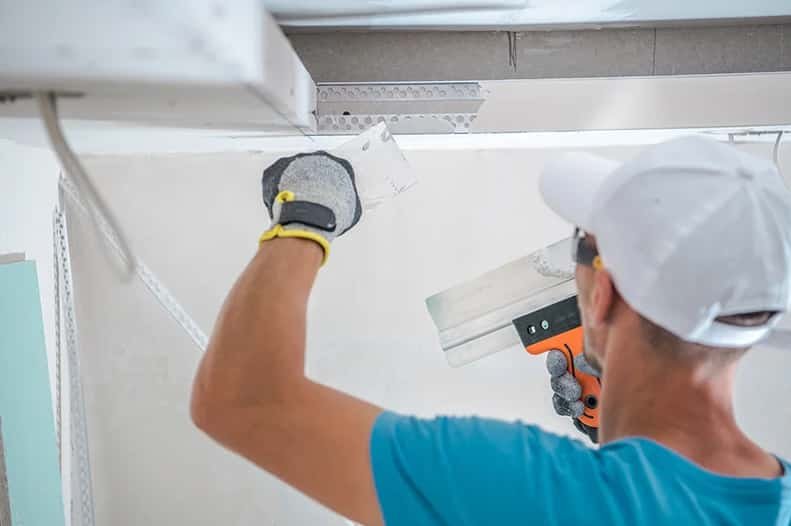
Normal sanding produces dust. A potential defect is different: an adequately cured, unsanded surface releases excessive loose material under light rubbing, the entire layer crumbles, or the finish detaches from its substrate. These do not point to the same remedy.
Surface dusting
Only the top layer is weak. Check early moisture loss, curing exposure, surface condition and near-surface binder development.
Weak through the layer
Putty crumbles below the surface. Start with binder-to-filler balance, material batches, water addition and mixing.
Interface failure
The putty separates from concrete or masonry. Inspect substrate cleanliness, suction, preparation and adhesion testing.
| Observed condition | First investigation | Avoid assuming |
|---|---|---|
| Powder comes off before sanding | Binder level, substrate suction, curing and surface cohesion | That increasing cellulose ether will always fix it |
| Dust appears mainly during sanding | Specified finish, sanding time, tool/abrasive and cure age | That all sanding dust is a quality failure |
| Hard upper crust; weak layer beneath | Thickness, drying gradient, binder and water addition | That a clean-looking surface proves full cure |
| Whole layer debonds from the wall | Substrate strength, contaminants, absorption and interface failure mode | That surface powdering and low adhesion are identical |
On mobile, swipe the table sideways to read every column.
Practical first move: retain an affected batch and a known acceptable batch, record their raw materials and water addition, and compare them on the same reference substrate under the same curing conditions before reformulating.
02 / Formulation and application
Six mechanisms worth checking before changing additives
Powdering is a symptom, not a formulation diagnosis. Test the raw-material and application variables in an order that separates binder weakness from drying and substrate effects.
Binder-to-filler imbalance
If the effective binder is insufficient for the filler system, the material may spread smoothly but develop weak hardened cohesion. Check binder chemistry, incoming quality, filler grading and any increase in inert filler replacement.
Rapid water loss
Porous substrates, dry airflow or high temperature can remove water before adequate cement hydration develops. Cellulose ether can help control water migration, but its effect must be confirmed in the actual mix.
Water ratio or mixing variation
Excess water may increase porosity. Poor dispersion, altered mixing energy or inconsistent rest time can also change the fresh mix. Check batch records before adjusting the additive package.
Substrate problems
Dust, weak old coatings, poor preparation and high suction can produce failures localized at the interface. Compare a controlled reference substrate with the intended substrate.
Insufficient curing or early sanding
Dry-to-touch does not mean mechanically mature. Compare specimens at a consistent defined curing age, conditioning and finishing procedure.
Polymer grade mismatch
Where the performance specification requires polymer modification, an unsuitable RDP grade or dose may limit cohesion or adhesion. Evaluate polymer type, film-forming conditions and the complete formulation.
Do not use a universal recipe: more HPMC does not replace a deficient binder, and more RDP cannot compensate for contaminated or unsound substrate preparation. A confirmed root cause determines the useful adjustment.
03 / Reproducible quality investigation
A two-stage laboratory plan for wall putty powdering
Stage A tests environmental and substrate sensitivity without changing the formulation. Stage B screens one formulation variable at a time. The tables below are proposed test designs, not results from a completed LANDU customer study.

Stage A — Separate substrate suction from drying exposure
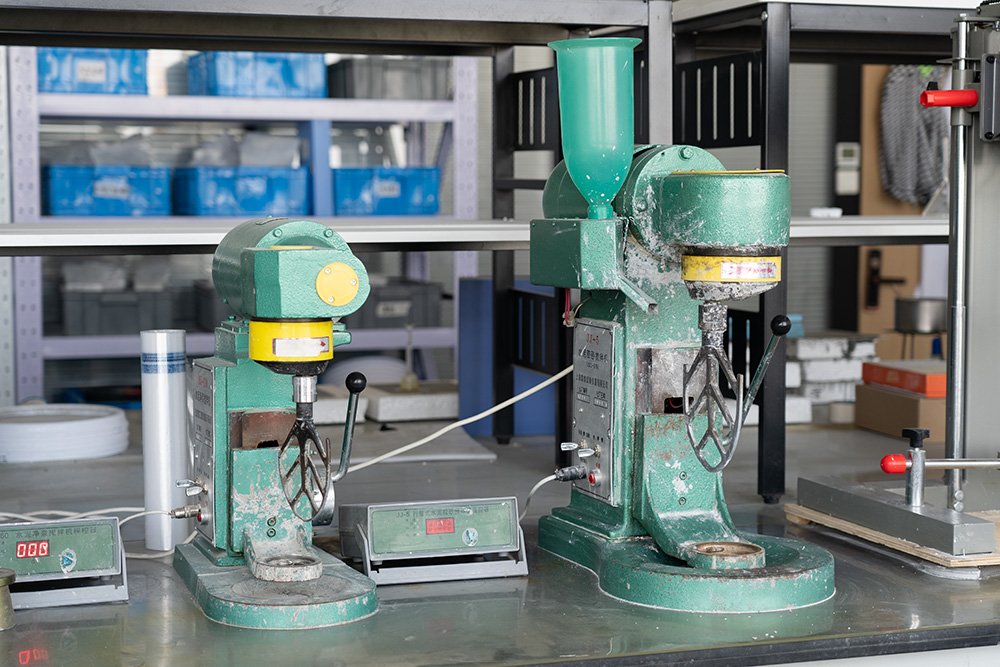
Use one reference formula, one production batch, the same measured water addition, mixing protocol and layer thickness. Prepare the reference and high-suction substrates to a documented condition. Define “controlled” and “accelerated” drying by recorded temperature, relative humidity and airflow rather than vague labels.
| Trial | Substrate | Curing exposure | Comparison question |
|---|---|---|---|
| A0 — Baseline | Specified reference substrate | Controlled reference conditions | Does the unchanged formula meet the agreed surface criteria? |
| A1 — Suction | Representative high-suction substrate | Same reference conditions | Does the substrate alone increase powdering? |
| A2 — Drying | Reference substrate | Defined accelerated drying | Does drying alone reduce surface performance? |
| A3 — Combined | High-suction substrate | Defined accelerated drying | Does combined exposure aggravate the defect? |
Compare A1 versus A0 for suction; A2 versus A0 for drying. A3 helps detect combined sensitivity. These comparisons suggest mechanisms, not final proof of causality.
Stage B — Modify only one formulation factor per trial
Run Stage B under the most informative controlled condition identified above. Begin with a fixed-water screening series. Document any new water demand; if needed, perform a second, separately labeled equal-workability series. Do not combine the two sets of results.
| Trial | Single main change relative to F0 | Record / decision |
|---|---|---|
| F0 | Current formulation; unchanged | Powdering, water demand, consistency, adhesion and finishing baseline |
| F1 | Alternative HPMC/HEMC grade at the same recorded addition level | Does water retention or application behavior improve without harming the finish? |
| F2 | Change binder-to-filler proportion while holding total dry mass constant | Does a revised binder balance improve cohesion without unacceptable shrinkage? |
| F3 | Alternative RDP grade, with comparable polymer solids where relevant | Does the alternative improve measured adhesion or cohesive performance? |
| F4 | Change mixing water alone, recorded as % of dry-mix mass | How sensitive are workability, porosity and surface strength to water addition? |
F1–F4 are independent comparisons against F0, not sequential recipe changes. Verify the best candidate again with the full additive package.
Set your product specification, curing age and test method before starting.
Hold raw materials, substrate, layer thickness and mixing sequence constant.
At least duplicates for preliminary screening; use required sample counts for formal testing.
Document surface loss, cohesive failure, interface failure and any trade-offs.
Measure what the customer actually needs
- Before-sanding rub check: define contact force, repetitions, specimen age and how residual powder is assessed.
- Controlled sanding: fix abrasive type, strokes, pressure and endpoint. Normal sanding dust is not itself proof of failure.
- Adhesion and failure location: record values, substrate conditions, curing and whether failure is adhesive or cohesive.
- Fresh-mix behavior: record water-to-dry ratio, mixing energy, consistency and working-time response.
EN 1015-12:2016 covers adhesive-strength testing of hardened rendering and plastering mortars on substrates within its scope. For thin-film putty outside that scope, use an appropriate product-specific or agreed test method. Simple rub or sanding checks are comparative internal methods unless formally validated.
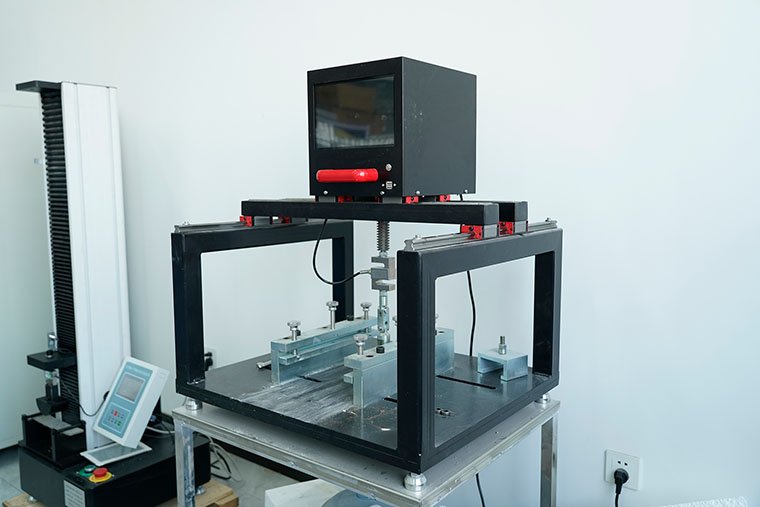
Minimum lab record: formulation ID; raw material batch; additive grade and dosage; water ratio; mix protocol; specimen count; substrate; coat thickness; temperature; relative humidity; airflow; curing age; powdering observations; measured adhesion; failure mode; acceptance decision.
04 / Grade selection after diagnosis
Choose the first additive to screen by the failure mechanism
LANDU supplies additive grades; it does not supply a universal ready-to-use wall putty formulation. Select products from the diagnosed cause, then request current TDS and test samples for your own binder and filler system.
HPMC
Start here if: water loss, fresh-mix consistency or application handling is the main concern.
- Compare water retention at matching conditions.
- Check dissolution, workability and water demand.
- Retest hardened performance after grade selection.
HEMC / MHEC
Compare when: a different cellulose ether grade is needed for fresh consistency or specified working conditions.
- Use the same solution-viscosity test method for comparisons.
- Test handling, water retention and application stability.
- Do not infer mortar results from viscosity labels alone.
RDP
Screen when: defined hardened cohesion, adhesion or other polymer-modified performance is inadequate.
- Confirm polymer family and solids data.
- Evaluate substrate adhesion and failure mode.
- Check sanding, hardness and formulation trade-offs.
Do not choose by the largest nominal number: increasing cellulose ether viscosity or polymer dosage is not a validated route to solving every surface defect. Read HPMC vs RDP in Wall Putty for grade-screening differences; this article focuses on diagnosing powdering.
05 / Production and purchasing
Prevent repeat complaints with batch-level controls
A successful bench trial is useful only when a manufacturer can reproduce it consistently. Document both the selected additive and the finished putty's production and application conditions.
- Incoming materials: track binder chemistry, filler particle-size distribution, incoming moisture and additive grade.
- Production: record dosing accuracy, mixing sequence, batch number and retained reference sample.
- Application verification: compare fixed-water and equal-workability results separately, using the same reference substrate and cure.
- Supplier documents: request latest TDS, SDS where applicable, available quality documentation, sample identifiers and destination-specific information.
- Change control: revalidate performance after switching raw material or additive supplier, rather than comparing only nominal viscosity or unit price.
06 / Technical FAQ
Frequently asked questions from wall putty manufacturers
Why does wall putty become powdery after drying?
Possible causes include insufficient binder relative to filler, high water demand, rapid moisture loss, poor curing or a weak substrate. First separate surface dusting from layer-wide weakness and interface debonding.
Can I solve powdering simply by adding more HPMC?
Not reliably. HPMC can improve fresh-mix water retention, but cannot replace adequate binder or correct unsuitable substrate preparation. Compare grades under controlled water, substrate and curing conditions.
Should RDP be increased for stronger surface cohesion?
Only after confirming a relevant hardened-performance shortfall. Test the actual RDP grade and polymer content against adhesion, cohesion, sanding and cost targets in the finished formulation.
Is sanding dust always a failure?
No. Sanding normally removes fine powder. Investigate if an adequately cured unsanded surface releases excessive material or fails an agreed strength or adhesion requirement.
What information should a purchasing or R&D team send with a sample request?
Share putty type, binder and filler, target substrate, current additive grade and dosage, mixing water, application thickness, curing conditions, failure photographs and available test results. This makes technical screening more useful.
LANDU / Additive evaluation support
Troubleshooting powdering in your wall putty formula?
Share your binder system, substrate, current HPMC/HEMC or RDP grades, curing conditions and observed failure. Ask LANDU for the latest available product data and candidate additive samples to support a controlled comparison.
Useful details to include
- Interior or exterior mineral putty; binder/filler type
- Current additive dosage and mixing water
- Substrate, coat thickness and curing conditions
- Powdering photos and tests already performed
What to request
- Applicable HPMC/HEMC or RDP grade candidates
- Current product TDS and relevant SDS
- Sample identification and evaluation discussion
- Supply and documentation for your destination market
LANDU supplies functional additives. Finished wall-putty performance must be confirmed by the manufacturer under its intended application and testing conditions.
Technical references and scope
- Chen et al., “Water Retention Mechanism of HPMC in Cement Mortar,” Materials (2020) — supports a water-retention mechanism in the studied mortar, not LANDU-specific wall-putty test results.
- BS EN 1015-12:2016 — adhesion-strength method for hardened rendering and plastering mortars on substrates, subject to product scope.
- LANDU: HPMC vs RDP in Wall Putty — separate grade-screening guidance for mineral dry-mix systems.