
HPMC Viscosity in Self-Leveling Mortar: Flow Retention & Surface Finish
A practical guide to initial flow, flow retention, HPMC grade selection and surface quality in cement-based self-leveling mortar. Learn how to evaluate HPMC alongside PCE without compromising workability.
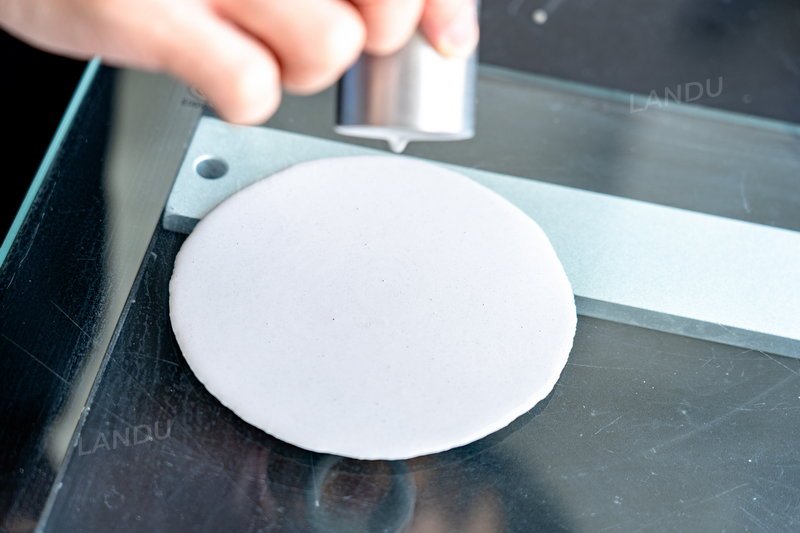 LANDU / Self-leveling materials
Initial flow and flow retention come first
For a self-leveling mortar manufacturer, the first practical questions are whether the material spreads to the target flow and whether that performance remains usable throughout the specified working period.
Initial flow describes spreading shortly after mixing. Flow retention describes how that spreading ability changes over time under a defined test procedure. Leveling and healing concern how the surface closes and smooths after placement.
A product may have a satisfactory initial spread yet lose workability too quickly for the intended pouring or pumping operation. Another mix may spread readily but develop ridges, local settlement or an inconsistent finish.
In rheological terms, yield stress influences the start of movement while plastic viscosity influences resistance during flow. Binder chemistry, water content, particle grading, PCE and HPMC all influence the result. Visual particle separation or a surface water film can be noted as supplementary signs of instability, rather than treated as a primary standardized flow-performance measure.

How HPMC changes fresh-mortar behavior
Hydroxypropyl methylcellulose (HPMC) is a cellulose ether used for water retention and rheology adjustment. Its effect is influenced by grade characteristics and compatibility with the rest of the formulation.
Initial spread & flow retention
HPMC can change the fresh mix’s resistance to flow. More thickening may reduce initial spread, while time-dependent behavior also depends on binder hydration, PCE and application conditions.
Leveling & surface appearance
The mix should spread, close surface marks and form a consistent finish. Ridges, surface marks and pinholes should be diagnosed separately rather than attributed to a single additive.
Water retention & stability
HPMC modifies liquid-phase rheology and can help maintain cohesion. Watch for settlement or free surface water as secondary formulation observations.

Review initial spread, retained flow and leveling quality together. HPMC controls rheology and cohesion, while PCE primarily supports particle dispersion. Changing either additive can alter the complete mixture.
Explore LANDERCOLL® cellulose ethers →How to Interpret HPMC Viscosity Data for Self-Leveling Mortar
Supplier viscosity data normally describe an aqueous HPMC solution measured under specified conditions. A 2% solution value does not directly represent the viscosity, yield stress or spreading ability of a completed self-leveling mortar.
Before comparing reported grades, confirm the method, temperature, solution concentration and instrument conditions. Different molecular characteristics, substitution chemistry, dissolution behavior and formulation compatibility can also affect mortar response.
LANDU’s current self-leveling information lists LANDERCOLL® HPMC K04 and K5 for consideration. Treat these as evaluation candidates—not as guaranteed rankings for a particular mixture. Request up-to-date grade-specific TDS and test the samples in your intended formulation.
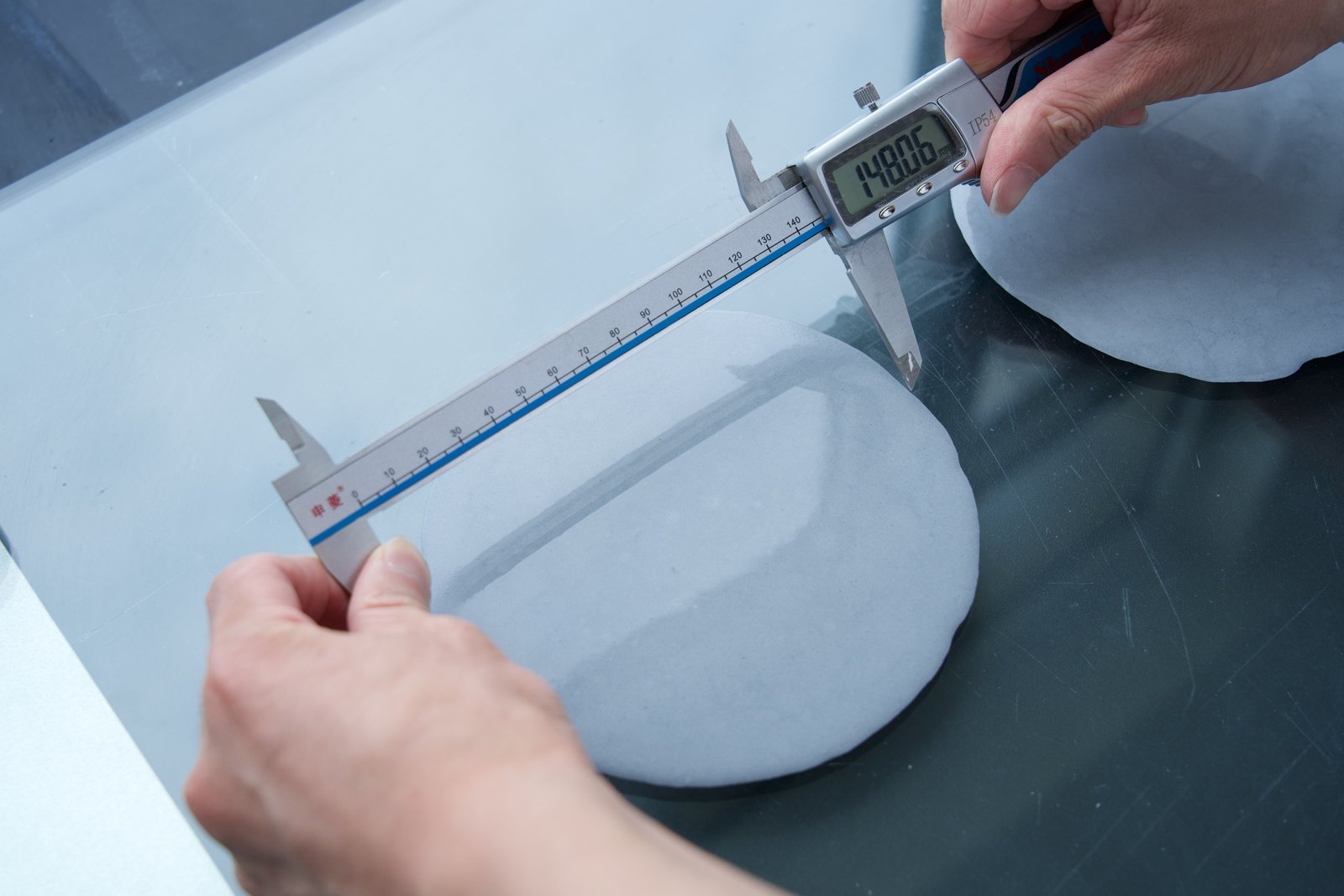
Use each HPMC candidate in the same reference formulation. Record initial spread, flow over time and the resulting surface finish before deciding whether an HPMC grade needs adjustment.
HPMC and PCE compatibility matters for flow retention
PCE promotes dispersion and fluidity at controlled water content; HPMC modifies water retention and rheology. Because they interact, initial spread and retained flow should be compared in the actual binder system. Published cement-paste research has reported that certain HPMC characteristics reduce the dispersing effect of PCE; this is a formulation risk to assess, not a universal prediction for every mortar.
| Additive | Primary contribution | Main evaluation concern |
|---|---|---|
| LANDERCOLL® HPMC | Rheology adjustment and water retention | Initial spread, time-dependent flow, grade selection and PCE compatibility |
| PCE Superplasticizer | Binder-particle dispersion and fluidity | Initial flow, flow retention and compatibility with HPMC and binder |
| NOVASTAR™ Powder Defoamer | Foam management and air-release support | Entrapped air, pinhole appearance and combined formulation response |
System boundary: The main technical discussion concerns cement-based self-leveling mortars. Calcium-sulfate-based systems have different binder behavior and require separate evaluation.
Common self-leveling mortar defects and what to check first
Start with the performance experienced during mixing and placement: initial spread, change in flow over time and finished surface. Then check possible causes before selecting an additive adjustment.
| Observed problem | Possible contributing factors | Recommended checks |
|---|---|---|
| Initial spread below target | High resistance to flow, unsuitable water demand or grading, HPMC/PCE interaction | Use the agreed flow test; compare candidate HPMC grades at controlled water and PCE conditions |
| Flow decreases too quickly | Binder hydration, temperature, setting-control behavior or admixture compatibility | Repeat spread tests at defined intervals and check the usable working window |
| Visible ridges or poor surface closure | Insufficient leveling, rapid loss of workability, substrate or placement variation | Assess surface healing/leveling using a consistent procedure and application thickness |
| Pinholes or trapped air | Mixing conditions, foam stabilization, air-release limitations or defoamer mismatch | Assess air release and finished surface separately from spread diameter |
| Local settlement or a surface water film | Particle separation, excess mixing water, grading or dispersant imbalance | Document visible separation under repeatable conditions as a supplementary diagnostic observation |
On a phone, swipe horizontally within the table to read the complete diagnostic information.
Practical example: If initial spread is acceptable but flow retention is poor, do not automatically raise HPMC viscosity. First compare the time-dependent flow response, setting behavior and HPMC–PCE compatibility. If free surface water or particle settlement is observed, document it separately as evidence of possible instability.
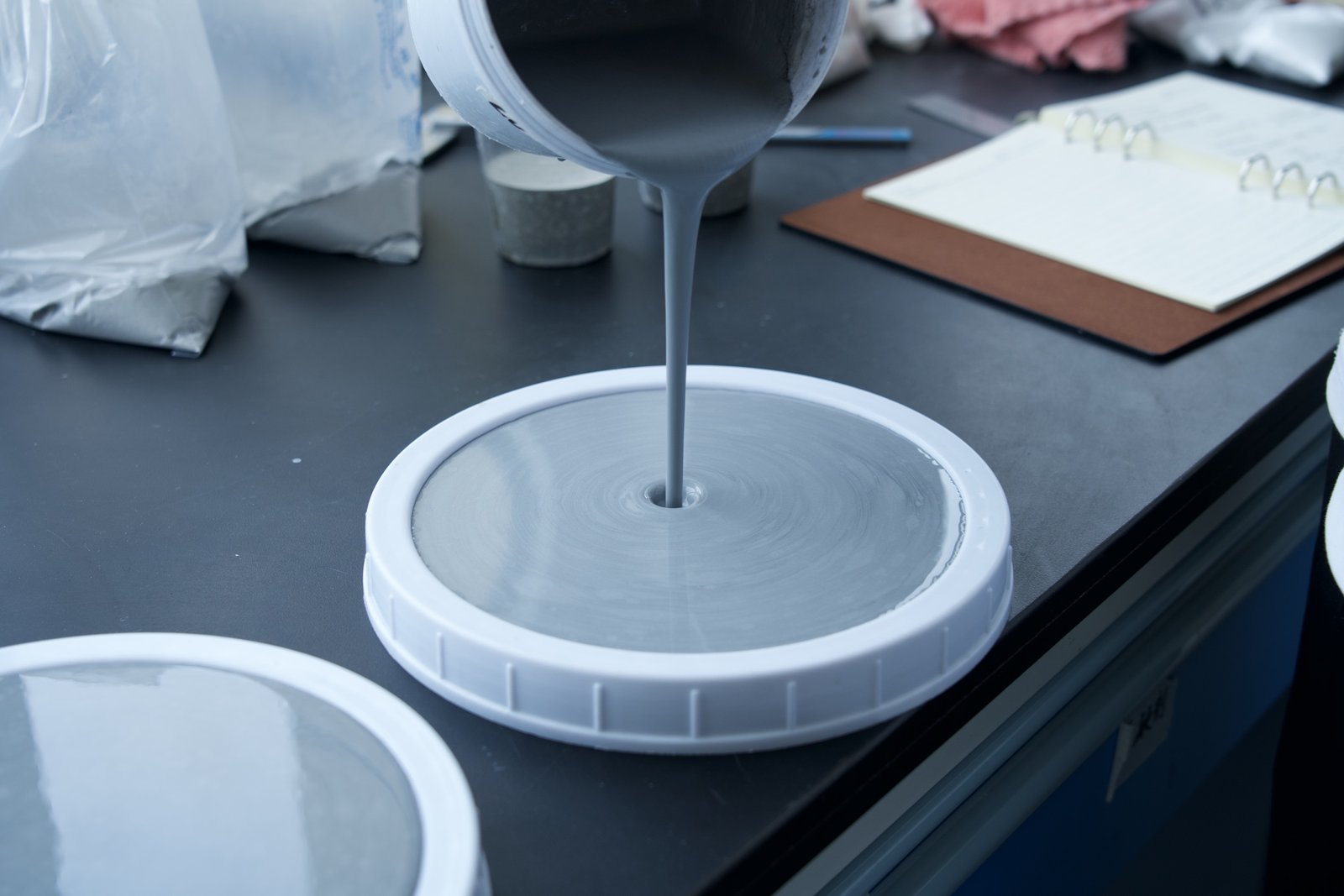
Separate poor initial spread, fast flow loss, slow leveling and entrapped air into different diagnostics. Identify contributing factors first; only then decide whether to adjust the cellulose ether, PCE or defoamer.
Five-step HPMC trial: measure flow first, then diagnose stability
A controlled comparison gives formulators more actionable information than choosing an HPMC solely from a solution-viscosity specification.
Define performance targets
Record binder type, layer thickness, placement method, target initial spread and useful working time.
Keep a reference mix
Fix water, raw materials, temperature and mixing sequence for a meaningful comparison.
Screen HPMC grades
Change one agreed variable at a time and record initial flow and HPMC–PCE response.
Track flow and finish
Repeat flow measurements over time; assess leveling, healing and visible surface defects.
Confirm the full system
Review setting and hardened properties; note any visible separation as supplementary evidence.

Control water content, mixing sequence and temperature. Compare time-dependent flow and surface quality with the same reference formulation so that the influence of the additive selection can be interpreted.
Applicable test-method context: ASTM C1708/C1708M-26 addresses initial flow, flow retention, healing time and certain hardened properties of hydraulic-cement self-leveling mortars. For European hydraulic-setting floor smoothing/leveling compounds, EN 12706 is relevant to flow-characteristic assessment. Select applicable procedures and performance targets according to the finished product, intended use and customer specification.
Research context: A published cement-based self-leveling mortar study examined cellulose ether, PCE and setting-control additives together. Its experimental optimum is formulation-specific, not a universal dosage recommendation.
From technical requirements to suitable additive candidates
LANDU supplies functional raw materials and additive grades. It does not supply a finished or pre-certified self-leveling mortar system.

HPMC grades
Evaluate water retention, cohesion, flow response and compatibility with the selected PCE package.
View HPMC product details →
PCE superplasticizer
Evaluate binder-particle dispersion and flowability while monitoring segregation and flow retention.
View PCE product details →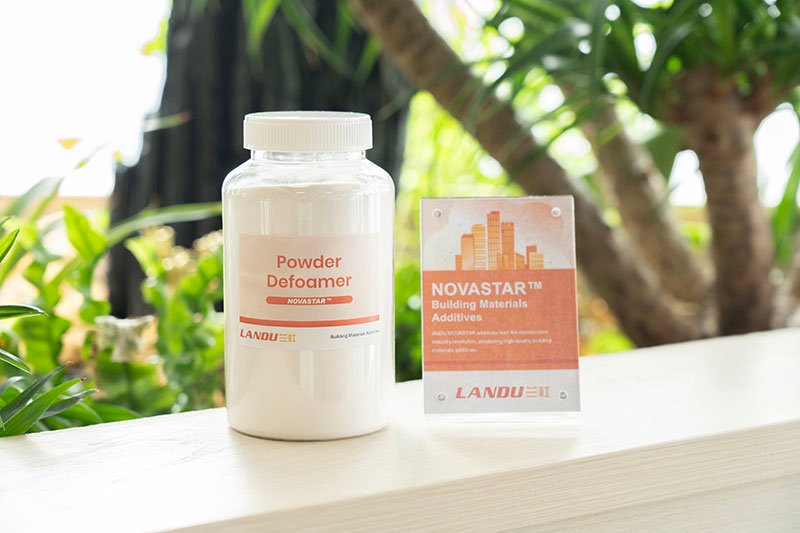
Powder defoamer
Evaluate foam control and air release where pinholes or entrapped air are observed.
View powder defoamer details →What to share when requesting an HPMC recommendation
For manufacturers, useful grade selection starts with the real application conditions. Include the binder type, relevant filler and aggregate information, existing cellulose ether and PCE grades, water content and mixing method.
Also describe target initial flow, flow retention or usable working time, surface-finish concerns, required technical documents and expected purchasing volume. Record visible particle separation or surface water only when it is actually observed. This helps the supplier discuss suitable samples without promising finished-system performance.
For related post-curing defects, read Why Self-Leveling Compounds Crack After Curing.
Technical FAQs
Is higher-viscosity HPMC always better for self-leveling mortar?
No. Stronger thickening can help with suspension stability in some mixes but may restrict flow. The right grade depends on actual mortar performance and required application conditions.
Can a 2% HPMC viscosity result predict mortar flow?
No. It identifies aqueous-solution behavior under a defined method. It does not replace mortar spread, flow-retention and stability testing.
Should HPMC and PCE be selected separately?
They may be screened individually during controlled trials, but the final choice must confirm their combined effect on initial flow and flow retention in the target binder system.
What should be tested when comparing HPMC samples?
Prioritize initial spread, flow retention, leveling/healing behavior and surface finish using a consistent procedure. Also inspect air release, setting and visible mix uniformity; verify the necessary hardened properties.
Which test standards are relevant to self-leveling mortar flow?
ASTM C1708/C1708M covers initial flow, flow retention and healing-time testing for hydraulic-cement self-leveling mortars. EN 12706 addresses flow characteristics of hydraulic-setting floor smoothing and leveling compounds. Follow the edition and procedure applicable to your market and product.
Request HPMC Technical Data or Samples
Evaluating HPMC for a cement-based self-leveling mortar? Share your binder type, existing additive package, target flow behavior and current formulation challenges to discuss suitable LANDERCOLL® HPMC candidates.
Tell us your application and performance requirements. Ask for current grade-specific data and samples for evaluation.
Request TDS / Request SampleTechnical references
- Ma, B., et al. “Effect of hydroxypropyl-methyl cellulose ether on rheology of cement paste plasticized by polycarboxylate superplasticizer.” Construction and Building Materials 160 (2018): 341–350. DOI: 10.1016/j.conbuildmat.2017.11.010.
- Feng, K., et al. “Influence of cellulose ethers on rheological properties of cementitious materials: A review.” Journal of Building Engineering (2024), article 110347. DOI: 10.1016/j.jobe.2024.110347.
- Wang, Y., et al. “Effect of Chemical Admixtures on the Working Performance and Mechanical Properties of Cement-Based Self-Leveling Mortar.” Buildings 13(9) (2023), 2248. Read open-access article.
- ASTM International. ASTM C1708/C1708M-26 — Standard Test Methods for Self-leveling Mortars Containing Hydraulic Cements. Official ASTM standard information.
- CEN. EN 12706:1999 — Determination of Flow Characteristics for Hydraulic-Setting Floor Smoothing and/or Levelling Compounds. National standard implementation and scope.