EIFS adhesive failures rarely start with the insulation board itself.
On many projects, the first warning signs already appear during installation. The mortar looks fine in the bucket, but once installers start pressing EPS boards onto the wall, the behavior changes. The adhesive loses body too quickly. Edge hold feels weak. Sometimes the board grabs at first, then shifts slightly a few minutes later.
Most crews blame the cement first.
In practice, adhesion problems are usually connected to formulation balance — especially polymer content, water retention behavior, and how the mortar wets the substrate during real site application.
You see this a lot during summer work. The mortar tightens up faster on the wall, installers add extra water to keep things moving, and the original formulation balance is gone.
A mortar that performs well in lab testing can still become unpredictable on scaffolding.
That is why experienced dry mix manufacturers usually focus less on chasing the highest tensile value and more on balanced performance:
For modern EIFS adhesive mortars, long-term bonding strength comes from how the whole system works together — cellulose ether, polymer powder, cement hydration, fillers, water demand, and application conditions on site.
Some EIFS adhesives feel very sticky during application. Installers often like that at first because the board grabs quickly during pressing.
But strong initial tack does not always translate into stable long-term performance.
A few weeks or months later, the same system may start showing:
This happens quite often in low-cost formulations that try solving adhesion problems simply by increasing cement dosage.
Usually that creates a harder mortar, not a more durable one.
Experienced applicators notice this quickly. The board may stay in place, but the mortar underneath feels stiff during pressing. On south-facing façades in summer, that rigidity becomes a problem fast.
A stable EIFS system needs more than good dry tensile numbers in controlled testing conditions. The adhesive layer also has to absorb movement between the substrate, insulation board, and finish coat over time.
That flexibility normally comes from proper polymer modification — not from loading more cement into the mix.
A formulation that works on EPS boards may still struggle on mineral wool systems.
This catches a lot of newer producers off guard.
EPS is relatively light and easier to wet. Mineral wool behaves differently. The board is heavier, the surface is more open, and the adhesive has to maintain stronger wet grip during installation.
If the formulation balance is weak, mineral wool usually exposes it very quickly.
The first issue is often subtle. The board does not fully fail — it just feels unstable during pressing. Edge support weakens. Sometimes the board slowly moves a little before the mortar starts setting.
Then the site adjustments begin.
Some crews press harder. Some add water. Others apply thicker adhesive layers because it “feels safer”.
Usually that creates even more instability later during curing.
This is why mineral wool EIFS systems typically need better polymer flexibility and more controlled water retention behavior.
Simply pushing viscosity higher rarely solves the real problem.
In fact, chasing higher viscosity can reduce substrate wetting and make the mortar less forgiving during application.
LANDU technical teams see this regularly during formulation discussions. Some producers focus too much on thick mortar texture, while the real issue is insufficient polymer film formation after curing.
This is one of the most misunderstood parts of EIFS adhesive formulation.
A lot of generic online articles make it sound simple:
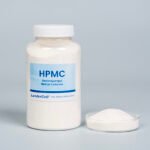
More HPMC = better performance.
Real production does not work that way.
Excessive cellulose ether can create problems that only become obvious during application or after curing:
Some mortars become overly creamy. They spread easily, but once installers start pressing boards, the mortar lacks compact support underneath the trowel.
Experienced applicators usually notice this immediately.
They often describe the mortar as “too light” or “too fluffy”.
Neither is a good sign in EIFS work.
Good workability still needs body and resistance during pressing.
For cellulose ether for EIFS, the goal is not maximum viscosity. The goal is balance between:
In most EIFS adhesive formulations, low-to-medium viscosity grades are usually easier to balance than extremely high-viscosity products.
LANDU cellulose ethers for EIFS systems are generally selected around overall mortar behavior instead of viscosity alone. That difference becomes much more visible on real projects than in laboratory mixing tests.
When EIFS boards detach months after installation, insufficient flexibility inside the cured adhesive layer is often part of the problem.
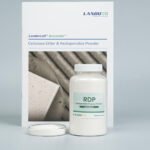
This is where redispersible polymer powder becomes critical.
Without enough polymer modification, cement-based adhesives become too rigid after curing. They may still pass initial pull-off testing, but durability starts dropping once the façade is exposed to:
One common cost-cutting mistake in EIFS production is reducing polymer dosage while trying to recover workability through additional cellulose ether.
The mortar may still feel smooth in the bucket.
Long-term adhesion is another story.
In practice, durable EIFS bonding is not only about tensile strength. It is also about stress absorption inside the adhesive layer.
That is why experienced formulators usually evaluate:
before adjusting viscosity modifiers.
For higher-performance EIFS system additives, LANDU redispersible polymer powders are commonly used to improve:
Flexible RDP grades are typically preferred for EIFS bonding mortars where both adhesion and movement tolerance matter.
Not every adhesion issue comes from the factory.
Some formulations are technically acceptable, but site handling ruins the intended performance.
This happens more often than most manufacturers admit.
In hot weather, crews often add extra water once the mortar starts tightening up.
It improves spreading for a while, but bonding strength usually drops afterwards.
Short mixing time can leave additives unevenly dispersed inside the mortar. One batch behaves differently from the next.
On summer façades, substrate temperature can rise much faster than expected. Open time shortens quickly, especially on absorbent surfaces.
Some formulations are designed to feel extremely smooth during application.
The mortar feels great in the bucket, but loses support once boards are pressed onto the wall.
A mortar that feels luxurious during troweling is not always reliable after curing.
There is no single additive that fixes every EIFS adhesive problems.
Stable formulations usually come from balancing:
This is why experienced manufacturers still test formulations under real working conditions instead of relying only on laboratory reports.
The same mortar can behave very differently:
That gap between laboratory performance and real site behavior is where many bonding failure in EIFS begin.
Small formulation changes can completely alter board feel during pressing and long-term bonding performance after curing.
Based on practical EIFS formulation experience and regional application requirements, LANDU works with dry mix mortar manufacturers to optimize additive selection, formulation balance, and application stability across different exterior insulation finishing systems.
In many cases, the problem is insufficient flexibility after curing rather than weak initial tack. Low polymer dosage, excessive filler loading, or poor water retention balance can all contribute to later debonding.
Not necessarily. Higher cement content often increases rigidity rather than improving durable adhesion. Overly hard mortars are more likely to develop stress-related interface problems over time.
Mineral wool boards are heavier and more porous than EPS. They require stronger wet adhesion, better polymer flexibility, and more stable application behavior during installation.
Yes. Excessive cellulose ether can reduce substrate wetting, increase air entrainment, and weaken final bond strength after curing.
RDP improves flexibility, crack resistance, adhesion durability, and stress absorption inside the cured adhesive layer.
Usually to recover workability during hot weather or long application periods. However, excessive water often reduces final bonding strength and curing stability.