
Cellulose Ether and Additives for Gypsum Plaster
Formulation guidance for gypsum plaster manufacturers and dry-mix mortar producers: how cellulose ether, retarder, and starch ether affect setting time, water retention, and workability — and how to match additive selection to your gypsum source and application method.

Gypsum plaster is used across interior wall and ceiling leveling — on aerated concrete blocks, brick, cast-in-place concrete and precast panels — as a lighter, faster-setting alternative to cement-based plastering mortar. On its own, calcined gypsum sets in a matter of minutes and offers little control over water retention, sag resistance, or trowel feel, so producers build a functional additive package around it: cellulose ether, retarder, starch ether, and in many formulations an air-entraining agent or redispersible polymer powder.
Getting that package right is a formulation exercise, not a recipe lookup. Gypsum source (natural, FGD, or phosphogypsum), phase composition, and aging condition all shift how a cellulose ether or retarder performs in the same mix design. LANDU supplies cellulose ether and construction additives for gypsum-based systems and works with formulators to match product selection — viscosity grade, modification, dosage range — to the plant's gypsum source, mixing equipment, and application method (manual or machine-sprayed).
How Additives Function in a Gypsum Plaster System
Each additive addresses a specific point in the hydration and application process — understanding the mechanism is what makes dosage decisions repeatable across batches.
Gypsum hydration and why it needs modification
Building gypsum (β-hemihydrate, CaSO₄·½H₂O) reacts with water to reform dihydrate (CaSO₄·2H₂O), and this reaction is fast — natural setting time for β-hemihydrate in contact with water typically falls in the 3–10 minute range. Left unmodified, that leaves no realistic working window for spreading, floating, and finishing a wall area. Retarders and cellulose ether both interact with this hydration process, but through different mechanisms, and formulators generally target a total workable window of roughly 1–1.5 hours.
Water retention mechanism
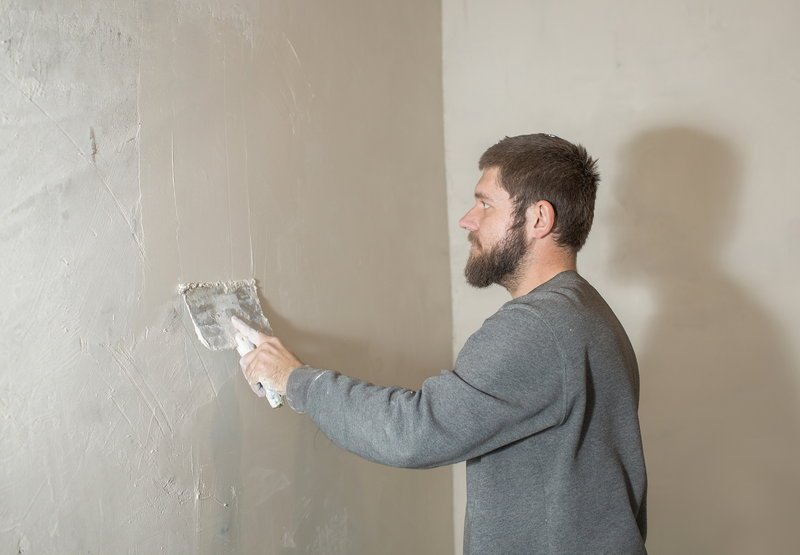
Cellulose ether (HPMC or HEMC) forms a polymer film around water in the fresh mortar and slows moisture migration into a porous or absorptive substrate. In gypsum systems this matters more than in cement mortar, because gypsum hydration depends on having enough water available at the reaction site for the full duration of set. If the substrate — particularly high-absorption lightweight block — pulls water out of the plaster faster than the cellulose ether can retain it, the result is incomplete hydration near the substrate interface, which shows up later as powdering, dusting, or loss of bond strength.
Setting time control
Because unmodified β-hemihydrate sets too fast to work with, retarders are a standard part of any gypsum plaster formulation. Common chemistries include organic acids and their salts (citric acid, tartaric acid, sodium citrate, sodium gluconate), alkaline phosphates (sodium hexametaphosphate, polyphosphates), and protein-based retarders. What formulators look for is not just delay time but consistency across batches and a predictable dose-response curve — a retarder that gives the right open time but costs several MPa of strength is not a net improvement.
Workability, thixotropy, and sag resistance
Starch ether is typically used alongside cellulose ether at low dosage (commonly 0.02–0.1%) to improve sag resistance and thixotropy — keeping material from slumping on vertical surfaces while still troweling smoothly and releasing cleanly from the blade. Air-entraining agents, used at much lower dosage (commonly 0.002–0.02%), introduce fine, stable air voids that reduce bleeding and segregation and improve fine-aggregate packing. Air content is one of the more sensitive variables in a gypsum plaster mix — overdosing measurably reduces strength and degrades the visual appearance of the wet material.
Manual vs. Machine-Sprayed Gypsum Plaster: Different Additive Priorities
Hand-applied and machine-sprayed gypsum plaster are formulated differently because the equipment and application speed impose different constraints.
| Parameter | Manual (Hand-Applied) | Machine-Sprayed |
|---|---|---|
| Aggregate fineness | Coarser, prioritizes trowel feel | Finer (e.g. 80–120 mesh sand) for smooth pumping and flat finish |
| Cellulose ether | Higher water retention, longer open time | Lower-viscosity, highly modified grades; precise dosage control |
| Setting time | Longer working time for fine hand finishing | Shorter initial set for continuous spraying |
| Workability additives | Anti-sag, smooth troweling | Air-entraining for pumpability, plus anti-sag for thick layers |
| Formulation focus | Hand feel, open time, trowel smoothness | Pumpability, anti-splash, spray efficiency, flatness |
A cellulose ether grade that performs well in a hand-applied top-coat formulation is not automatically the right choice for a machine-sprayed base-coat — pump pressure and continuous-cycle spraying put different demands on viscosity build and modification level than manual troweling does.
Gypsum Raw Material Quality and Its Effect on Additive Performance
Additive dosage is only half the formulation story — the gypsum itself has a direct effect on how well the additive package performs.
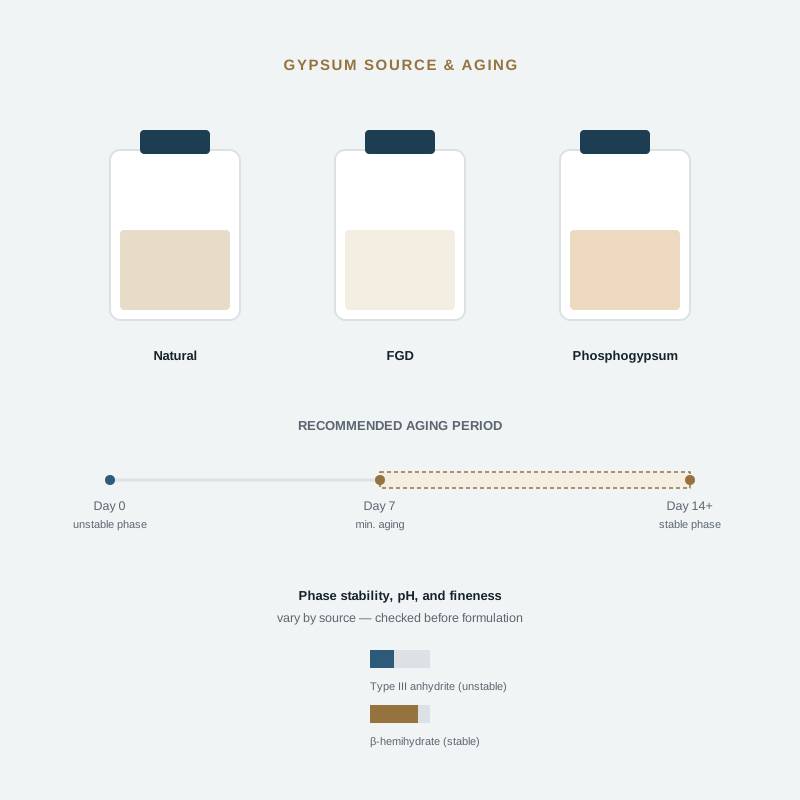
- Phase composition and aging. Freshly calcined gypsum contains unstable Type III anhydrite, with a much higher expansion rate (~0.7–0.8%) than normal β-hemihydrate (~0.05–0.15%). Gypsum aged less than roughly 7 days is more prone to cracking regardless of the additive package.
- Standard consistency water demand. Higher water demand generally means a wetter mix at the same workability target, affecting drying rate, shrinkage, and cracking risk.
- Source variability. Natural gypsum, FGD gypsum, and phosphogypsum can behave differently in the same formulation even at similar nominal purity, because impurity profile, pH, and phase stability differ by source.
- Fineness, pH, and 2h strength. Standard incoming-QC checks — lots that pass on purity but vary on fineness or pH can still cause inconsistent set behavior downstream.
Because gypsum quality varies by source and batch, cellulose ether and retarder selection is realistically a plant-specific tuning exercise — which is also why ongoing technical support, not just a data sheet, tends to matter in gypsum plaster formulation.
Troubleshooting: Linking Common Problems to Formulation Causes
Most on-site complaints in gypsum plaster trace back to a small set of formulation or raw-material variables.
| Issue | Common Cause | Formulation Response |
|---|---|---|
| Sticking to trowel | Gypsum/filler ratio, cellulose ether dosage or viscosity, starch ether performance | Reduce CE viscosity, adjust starch ether type/dosage, add fine filler or sand |
| Sagging on vertical surfaces | Excess water, insufficient sag resistance | Lower water content, select CE/starch ether with better sag resistance, add thixotropic additive |
| Bubbling during application | Porous substrate, missing primer, over-thick single pass | Apply substrate primer, thinner layered application, lower-viscosity CE |
| Short open time | CE grade, gypsum quality, retarder dosage, high-absorption aggregate | Match retarder type/dosage, select modified CE, use lower-absorption lightweight aggregate |
| Cracking (early / during set / after hardening) | Unaged gypsum, thin application, high substrate absorption, over-extended retarder, excess shrinkage | Verify phase content & water demand, prime substrate, adjust retarder, review cement/lime ratio |
| Powdering / dusting | Low-strength gypsum, insufficient water retention, retarder or additive overdose | Confirm gypsum strength, raise CE content or prime substrate, avoid re-tempering with water |
The pattern across nearly every one of these issues is the same: cellulose ether dosage and grade selection show up as a contributing factor almost every time, alongside gypsum quality and substrate condition — which is why cellulose ether selection is worth treating as a formulation decision, not a commodity purchase.


LANDU Cellulose Ether for Gypsum Plaster — LANDERCOLL™ Series
LANDU's LANDERCOLL™ series for gypsum-based systems is built on hydroxyethyl methyl cellulose (HEMC), a non-ionic, water-soluble cellulose ether modified specifically for gypsum-based construction materials — targeting water retention, adhesion strength, and workability in gypsum mortar.
Recommended applications: gypsum-based wall putty / skim coat, gypsum-based plastering mortar, and gypsum-based manual plastering mortar.
| Property | Typical Specification |
|---|---|
| Appearance | White or off-white powder |
| Moisture content | ≤ 6% |
| Residue on ignition | ≤ 5–7% (grade-dependent) |
| Etherification (MS/DS) | 0.8–1.2 / 1.8–2.0 |
| pH value | 6.0–8.0 |
| Particle size | 80 mesh pass ≥ 90% |
| Viscosity (Brookfield, 2% solution, 20°C) | 35,000–45,000 mPa·s (grade-dependent) |
Within the series, grades are differentiated primarily by viscosity and modification level, so a base-coat formulation and a finer skim-coat formulation can each be matched to a grade rather than compromising on one product across both. As with any cellulose ether, the technical data sheet describes the product — it doesn't replace formulation testing on the buyer's own gypsum source and mix design.
Quality Control and Technical Support
Cellulose ether performance in gypsum plaster is sensitive to batch-to-batch consistency — viscosity, degree of substitution, and particle size distribution all affect water retention and workability, and a shift in any of them changes how the formulation behaves even if nothing else in the mix design changed.
LANDU controls incoming raw material and finished product against the specification ranges shown above, with batch testing before dispatch. For buyers qualifying a new supplier, this is generally the starting point for technical dialogue — TDS review, sample testing against the buyer's own gypsum and mix design, and dosage guidance based on those results, rather than a generic recommendation.
Frequently Asked Questions
What does cellulose ether actually do in gypsum plaster?
Is HPMC or HEMC better for gypsum plaster?
What dosage of cellulose ether is used in gypsum plaster?
Why does the same cellulose ether perform differently with different gypsum sources?
Why is my gypsum plaster cracking even though the formulation hasn't changed?
Can the same cellulose ether be used for both manual and machine-sprayed gypsum plaster?
Does starch ether replace cellulose ether in gypsum plaster?
Related Resources
Working on a gypsum plaster formulation?
Send your gypsum source, target application (manual or machine-sprayed), and current pain point — our technical team will recommend a starting dosage and grade for trial testing.