
LANDU / Technical insights / Cement render & plaster
Machine-Applied Cement Render: Pump Blockage and Sagging Troubleshooting
Separate equipment variation from formulation problems before changing additives. Compare HPMC, HEMC and starch ether through controlled mixing, pumping and wall trials.

For dry-mix mortar manufacturers
Formulation, application and technical purchasing teams.
Scope: Factory-produced cement and cement-lime renders. Gypsum spray plaster, organic ready-mixed coatings and structural shotcrete require separate evaluation.
01 / Start with the symptom
Find where performance becomes unstable
For manufacturers, pump blockage and wall sagging require different checks. Confirm actual water dosing, material feed and machine configuration first. Then compare formulations at a defined output and application thickness.
Pressure rises, output falls
Stop abnormal operation. Have trained personnel check the conveying arrangement, equipment condition and material consistency before changing the recipe.
Discharge becomes uneven
Record water flow, dry-material throughput and consistency over the same interval. Investigate feed variation before blaming a cellulose ether grade.
The fresh layer moves
Separate deformation within the mortar from slipping at the substrate. Fix water content, wet thickness and preparation before comparing anti-sag candidates.
Difficult start-up
Check first: Approved start-up procedure, line arrangement, material age and mixing consistency.
Do not assume: Higher pressure is an acceptable way to overcome a restriction.
Stiff / fluid discharge cycles
Check first: Measured water dosing and dry feed over matching intervals.
Do not assume: A single water-flow setting proves a constant water-to-dry-mix ratio.
Poor restart after a pause
Check first: Permitted interruption, mortar temperature, material age and restart observations.
Do not assume: Additional water can safely restore partially setting material.
Sagging after stable pumping
Check first: Wet thickness, substrate, consistency and defined observation times.
Do not assume: Good pumpability proves adequate vertical stability.
These are investigation priorities, not confirmed diagnoses. Check the shared operating conditions before changing the formulation.
02 / Establish controlled conditions
Check the setup before reformulating
Equipment suppliers define conveying capability for specific configurations. Keep the pump unit, hose diameter, hose length, lift and nozzle unchanged when comparing candidates. A successful short-line trial does not validate every site arrangement. [1]
Record the operating arrangement
- Machine model, rotor/stator or pump unit, and documented condition.
- Hose internal diameter, length, lift, connections and nozzle.
- Approved start-up procedure, water supply and dry-feed stability.
- Material temperature, time since mixing and any interruption.
Run an accepted reference batch alongside the complaint batch. If both behave poorly on the same setup, investigate shared operating conditions before concluding that the new additive is responsible.
Measure water against dry material
Water addition (%) = added water mass / dry-mix mass × 100
For continuous equipment, use measured water flow and dry-material throughput from the same stable interval. Document the measurement method; do not substitute a dial setting for the actual ratio.
Keep water adjustments within the finished mortar's specified range. Evaluate restart only within the machine and material supplier's permitted operating conditions.
Two pressure records, not one: distinguish mortar conveying pressure from compressed-air pressure at the spray system. Record units, gauge location and stable operating range. Compare conveying pressure at comparable measured output and unchanged line geometry.
03 / Formulation and grade screening
Balance movement through the hose with stability on the wall
Do not optimise one result in isolation. Evaluate manageable conveying, consistent discharge, vertical stability and finishing together. Fresh standing strength means the newly applied layer remains in place; it is not a hardened-strength or adhesion result.
Review the complete mineral system
Include binder type, aggregate grading, oversize particles, fine-filler fraction and raw-material batches in the comparison. Test one defined grading or proportion change at a time rather than simultaneously changing the entire mineral blend.
Record fresh density and, where appropriate, measured air content. A density change alone does not isolate air content when water or composition also changes.
Do not select by viscosity alone
Dedicated spray-render cellulose ethers combine dissolution, water retention and fresh-mix properties. Compare the commercial grade in the actual mortar, not only its aqueous-solution viscosity. [2]
Record laboratory mixing and rest times. A grade evaluated only after a long rest still needs checking under the actual machine's mixing and application timing.
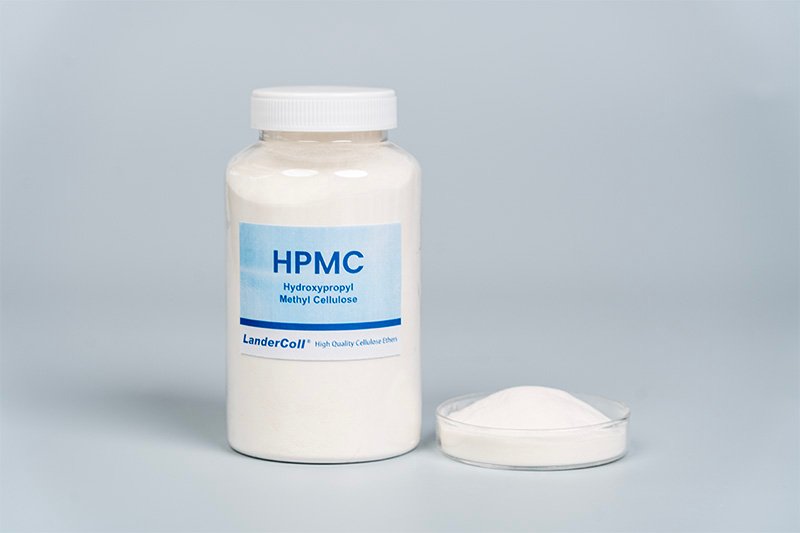
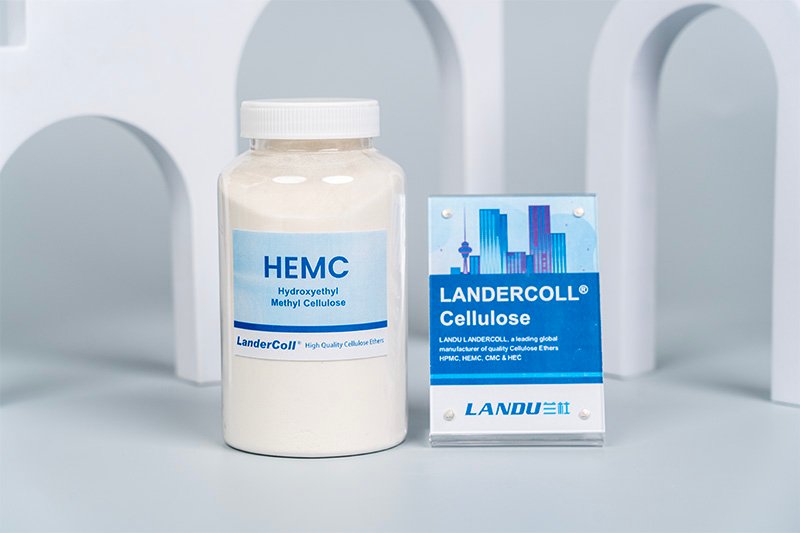
HPMC
Screen for: water retention, consistency development and handling.
- Compare solution-viscosity results only with matching methods and conditions.
- Check mixing response and fresh properties before a machine trial.
HEMC / MHEC
Compare when: an alternative cellulose ether profile is needed.
- Document commercial grade, modification information and dose.
- Do not assume every HEMC grade outperforms every HPMC grade.
Starch ether / HPS
Investigate when: vertical consistency remains inadequate after basic checks.
- Change the grade or dosage separately.
- Retest conveying, finishing and setting; effects depend on the binder and grade. [3]
These product families are candidates for evaluation, not pre-approved machine-specific recommendations. No universal grade, dosage or pressure reduction is asserted.
04 / Proposed development workflow
Build a comparison that can be repeated
The following is a proposed investigation plan, not a completed LANDU customer study. Set acceptance criteria in advance and retain the reference formula throughout.

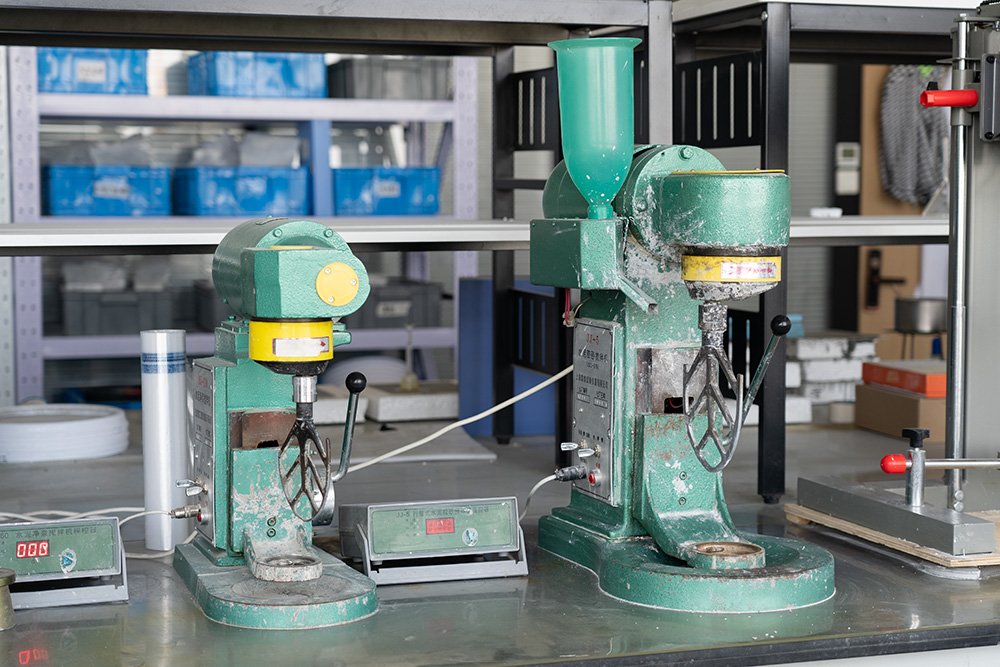
Stage A — Establish a reliable baseline
Compare an accepted batch and the problem batch using the same documented laboratory procedure. Record consistency at agreed ages, separation, fresh density, handling and vertical-layer stability.
Where applicable, EN 1015-3 provides a fresh-mortar consistency method using a flow table. Its result is not a pumpability certification. Keep formal standard testing separate from internal comparative checks. [4]
Stage B — Screen one factor per trial
Start with fixed-water comparisons. Run any equal-workability series separately and report the additional water required. F1–F5 below each compare against F0; they are not successive additions to a changing formula.
Reference formulation
Variable: Accepted reference formula; no change.
Evaluate: What baseline is repeatable under the chosen conditions?
Cellulose ether grade
Variable: Cellulose ether grade at the same stated dosage.
Evaluate: Does the commercial replacement improve the full fresh-property balance?
Cellulose ether dosage
Variable: Cellulose ether dosage; grade unchanged.
Evaluate: Is the selected level appropriate for handling and stability?
Starch ether dosage
Variable: Starch ether dosage; grade unchanged.
Evaluate: Can sag resistance improve without unacceptable conveying or setting effects?
Aggregate grading
Variable: One defined aggregate-grading adjustment.
Evaluate: Is the mineral particle distribution contributing to instability?
Mixing water
Variable: Water addition within the specified application range.
Evaluate: How sensitive is the formulation to permitted water variation?
State how total dry mass is maintained when ingredient amounts change. Keep all other formulation and test conditions documented.
Interpretation note: replacing a commercial grade is a product-level comparison, not an isolated test of viscosity or one chemical mechanism. Record available modification information. Use repeat batches and a reference repeat to detect drift; follow required specimen counts for formal tests.
Stage C — Validate shortlisted candidates on the machine
Use an operator-approved trial procedure and unchanged line geometry. Record measured discharge together with conveying pressure, check consistency, and assess spraying and finishing. Compare restart behaviour only within permitted interruption conditions.
A lower pressure reading with lower output is not proof of improved pumpability. Recheck laboratory winners with the complete additive package and intended application conditions before approving a replacement.
05 / Record evidence, not impressions
What to record in a machine trial
Keep a separate record for the reference and each candidate using the same measurement methods. The nine items below define what to document; acceptance limits must come from the finished mortar specification and the equipment instructions.
Formula and materials
Record the formulation ID, raw-material batch IDs, commercial additive grades and dosage basis. Identify the exact change made relative to the reference.
Machine and delivery line
Record the machine model, pump unit, hose internal diameter and length, vertical lift and nozzle. Keep the setup unchanged during a direct comparison.
Water and dry-material feed
Record water as a percentage of dry-mix mass. For continuous equipment, measure water flow and dry-material throughput over the same stable interval.
Mortar conveying pressure
Record pressure in bar or MPa, the gauge location, the stable operating range and fluctuations. Compare readings at comparable measured output.
Spraying air
Record compressed-air pressure separately from mortar conveying pressure. Identify the gauge location and nozzle settings used for each trial.
Measured discharge
Record actual output in kg/min or L/min, together with the safe measurement method and collection interval. Do not substitute the machine setting for measured discharge.
Time and temperature
Record mortar temperature in degrees Celsius, age after mixing, any permitted interruption and the timing of restart observations.
Wall-panel response
Record substrate preparation, wet layer thickness, observation times and downward movement in millimetres. Distinguish movement within the mortar from slipping at the interface.
Acceptance and trade-offs
Review conveying, spraying, levelling, finishing, setting and required hardened tests together. Record acceptance against the agreed criteria and any remaining limitations.
Test sagging at equal wet thickness
Fix substrate preparation, mortar age, application method, wet thickness and observation times. Photograph downward movement against fixed reference marks. Label the procedure as an internal comparative method unless following an applicable standard.
Distinguish deformation inside the mortar from slipping or detachment at the substrate. A thinner coat is not evidence that an additive improved anti-sag performance.
Keep fresh and hardened tests separate
EN 1015-12 addresses adhesion of hardened rendering/plastering mortar to substrates within its scope. It does not measure fresh sagging. Record both bond values and failure location when hardened adhesion is part of the specification. [5]
After improving vertical stability, recheck conveying, levelling, finishing and setting. Approve the overall balance, not one isolated result.
06 / Turn a trial into a specification
Buy against an agreed application result
A useful supplier comparison identifies the approved commercial grade, dosage basis, test conditions and acceptance criteria. A similar nominal viscosity is not sufficient evidence of interchangeability.
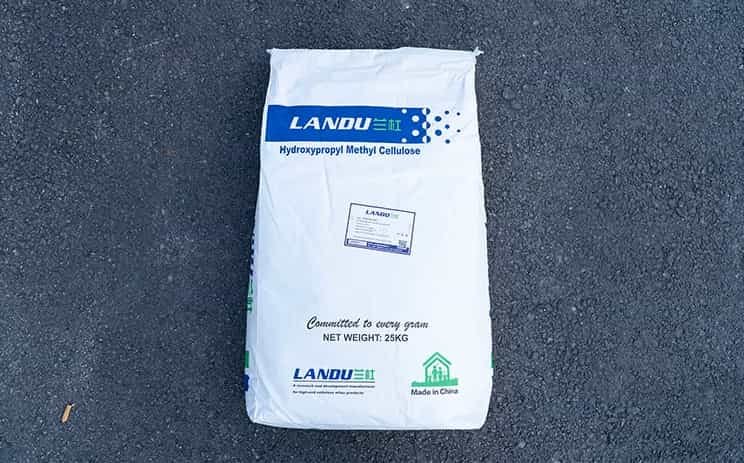
- Product identity: current TDS, applicable SDS, sample ID and available batch COA.
- Application evidence: the formula, water ratio, machine setup and tests supporting each claimed benefit.
- Supply control: sample-to-order traceability, agreed specifications and notification of material changes.
Confirm the supplied specification before approval. Keep the selected sample and record any required revalidation after a material or equipment change.
Technical and purchasing questions
Before selecting your next sample
Why can a render work by hand but struggle in the machine?
Hand testing does not reproduce the actual mixing, conveying and restart conditions. Treat it as screening and verify shortlisted formulas on a representative, documented machine setup. Equipment capability is configuration-specific. [1]
Should I choose HEMC instead of HPMC, or simply increase starch ether?
Neither is a universal correction. Confirm the failure stage, then compare the actual grade or dosage separately. Include conveying, wall stability, finishing and setting in the decision. Starch ether response depends on grade and formulation. [3]
Is a complete confidential formula required for the first enquiry?
Start with mortar type, failure stage, machine model and current additive information. Ask what additional data are needed before sending confidential details. Agree any confidentiality arrangements before sharing a complete proprietary formula.
Which documents should accompany a candidate grade?
Request the current TDS, applicable SDS, sample identification and available batch documentation. Confirm viscosity test conditions, dosage basis and whether application data relate to a comparable mortar and machine configuration.
How much sample is needed, and what belongs in a quotation request?
Define the laboratory and machine-trial material requirement before agreeing sample quantity. Include repeat batches and machine/line requirements in that plan. For a quotation, specify the candidate grade, expected purchasing quantity, packaging needs and destination. Confirm sample availability and delivery terms with LANDU.
LANDU / Additive evaluation support
Planning a controlled render trial?
Share your mortar type, failure stage, machine configuration and current additive information. Ask for candidate HPMC/HEMC or starch ether grades, current technical data and sample options.
Start with the essentials
Cement or cement-lime render; blockage, unstable discharge, restart or sagging; machine model; current additive type and approximate dosage.
Add details as the trial develops
Water ratio, pressure/output records, application thickness and completed checks. Discuss confidentiality before sharing proprietary formulation details.
On the contact page, mention “machine-applied cement render” in your message. The contact link does not automatically transmit your trial notes. LANDU supplies additives; the mortar manufacturer must validate the finished product.
Technical references and evidence limits
- PFT G 4 gen25: official equipment information and operating-document downloads. Use the exact manual for the machine in service; this article is not a repair instruction.
- Dow: WALOCEL MKW 10000 PP01 technical product information. An industry example of a spray-render grade's performance profile, not test evidence for LANDERCOLL products.
- Vasiliou et al. (2017): starch ethers as rheology-modifying admixtures for cement-based systems. Supports grade- and formulation-dependent behaviour; not a universal dose recommendation.
- BS EN 1015-3: fresh mortar consistency by flow table. Consult the applicable edition and full method.
- BS EN 1015-12:2016: hardened rendering/plastering mortar adhesion. Does not establish fresh sag resistance or pumpability.
No completed LANDU machine-trial results, universal dosages or numerical performance improvements are claimed. Existing site images provide context, not before/after evidence. Product suitability and equipment safety require separate verification.