A lot of EIFS adhesive problems do not start with bond strength testing. They start much earlier — when installers begin fixing boards on the wall. At LANDU, we often see EIFS adhesive problems appearing first during site application rather than during laboratory testing.
The mortar may look workable in the mixer, but once application starts, problems appear quickly:
On many projects, installers compensate by adding more water on site. That usually makes the situation worse, not better.
For dry mix mortar manufacturers, these issues are rarely caused by cement alone. In most EIFS adhesive formulations, stability depends on how cellulose ether, redispersible polymer powder, water retention, and workability balance together under real jobsite conditions — not only in laboratory testing.
This is one of the most common complaints during facade installation, especially in summer conditions or on taller exterior walls.
At first, the adhesive feels normal during mixing. But after the boards are pressed onto the substrate, installers notice slight movement. Ten minutes later, some panels need to be repositioned again.
In Southern Europe or windy coastal projects, this becomes even more obvious because the surface dries faster while the inner mortar body remains unstable.
In many low-cost formulations, the issue is not simply “low viscosity”. The real problem is unstable EIFS mortar rheology control under application conditions.
Some cellulose ether for EIFS mortars initially build viscosity quickly in the mixer, but lose structure once the mortar is spread across the wall. The result is familiar to most EIFS applications contractors:
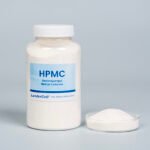
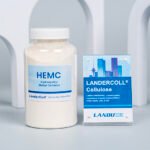
A more stable HPMC or HEMC system usually helps maintain body consistency after application, not only inside the mixing bucket.
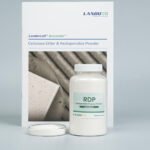
RDP for exterior insulation system also contributes to early cohesive strength, which becomes important when fixing heavier insulation boards or working on uneven substrates.
Related reading:
• What Is EIFS System
• EIFS Adhesive Formulation Guide
Mineral wool systems expose formulation weaknesses much faster than EPS.
In LANDU formulation evaluations, mineral wool EIFS System usually expose open-time instability much earlier than standard EPS applications.
The surface absorbs water aggressively, and the fiber structure reduces effective adhesive contact area. Some adhesives pass initial pull-off testing but still develop hollow spots after curing on site.
This often happens when:
In real construction environments, especially during summer facade work, the usable application window can become much shorter than expected from laboratory results.
Many contractors recognize this situation immediately: the mortar still looks wet, but bonding efficiency has already dropped.
A balanced polymer-modified EIFS mortars system helps improve substrate wetting and flexibility, especially in mineral wool EIFS applications where movement tolerance matters more than pure compressive strength.
At the same time, stable water retention additives helps cement hydration continue properly instead of drying too fast near the surface layer.
Applicators rarely describe problems using technical terminology.
They usually say things like:
These are often rheology balance problems rather than simple viscosity problems.
Some EIFS adhesive formulations look stable during laboratory mixing, but become difficult to control once installers work continuously on large wall areas.
A common situation is:
This usually means the formulation is over-corrected toward viscosity while ignoring application flow.
Experienced EIFS adhesive mortars manufacturers normally focus on keeping the mortar stable during the entire working cycle: mixing → standing → re-stirring → wall application.
That is much closer to real site behavior than short laboratory mixing evaluations.
On exposed facades, especially under wind or direct sunlight, EIFS adhesive may start skinning much faster than expected. LANDU technical teams often see this problem during summer facade applications where installers try to recover workability by adding extra water on site.
Installers often notice:
To compensate, workers sometimes add water directly on site. That may temporarily improve workability, but usually weakens early adhesion and increases later shrinkage risk.
This is one reason why open time stability matters more than “high initial viscosity” in many EIFS System.
A cellulose ether with stable water retention behavior helps slow premature moisture loss during actual application — particularly important in:
The goal is not making the mortar excessively retentive. Over-retention can also slow strength development and affect curing balance.
Reliable EIFS adhesive formulations are usually built around controlled water management rather than maximum retention values.
When cracks appear in the adhesive layer, the first assumption is often “not enough flexibility”.
But on site, cracking usually comes from multiple factors happening together:
Environmental exposure matters as well. A formula that performs well at 20°C in laboratory conditions may behave very differently on a windy facade during peak summer installation.
Some low-cost EIFS adhesive mortars systems compensate for weak polymer performance by increasing cement content. That can improve hardness, but often increases brittleness at the same time.
Flexible redispersible polymer powder systems generally help absorb stress better during thermal movement and curing shrinkage, especially in EIFS applications exposed to large day-night temperature differences.
Many formulation problems begin when one parameter is pushed too aggressively.
For example:
That is why experienced EIFS System manufacturers usually optimize formulations around real application behavior, not only laboratory numbers.
In practice, stable EIFS adhesive performance depends on how the system behaves:
For manufacturers developing EIFS adhesive mortars, formulation stability is often more valuable than chasing a single high-performance indicator. LANDU supplies works with dry mix mortar manufacturers developing EIFS adhesive formulations for EPS, XPS, and mineral wool applications under different climate and construction conditions.