EIFS adhesive mortars are expected to do more than simply bond insulation boards to a wall surface. In modern EIFS applications, adhesive performance directly affects installation efficiency, facade durability, crack resistance, and long-term system stability.
For dry mix mortar manufacturers, balancing these properties is often more challenging than it first appears. A formulation with strong initial adhesion may still suffer from poor workability or sagging during application. Increasing cement content may improve strength in some cases, but can also negatively affect flexibility and application consistency.
This is why EIFS Adhesive Formulation is not only about raw material selection, but also about how different components interact under real construction conditions.
A stable EIFS adhesive mortar must remain workable on site, maintain reliable bonding performance, and tolerate temperature variation and environmental stress after curing.
In practical construction environments, EIFS adhesive mortars need to balance several functions at the same time.
They must:
These requirements become even more important in large facade projects where installation speed and application consistency directly affect construction efficiency.
Because EIFS System are exposed to temperature fluctuation, moisture variation, and substrate movement over time, adhesive mortars also need a certain level of flexibility rather than excessive rigidity.
Related reading:
• EIFS System Additives
• Cellulose Ether for EIFS Mortars
Although formulations vary depending on regional standards and project requirements, most EIFS adhesive mortars contain several core material categories.
Cement acts as the primary binding material in EIFS adhesive mortars.
Portland cement is commonly used because it provides compressive strength and contributes to substrate adhesion after curing. However, cement alone cannot provide all the application properties required in modern exterior insulation systems.
Without proper formulation balance, cement-heavy mortars may become difficult to apply and more prone to cracking.
Mineral fillers and graded aggregates help control mortar consistency, density, and workability.
The particle size distribution of fillers influences:
Proper aggregate grading is important for achieving stable application behavior on vertical surfaces.
Cellulose Ether is one of the most important additives in EIFS adhesive mortars.
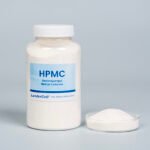
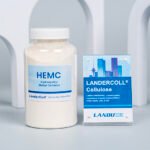
HPMC and HEMC are commonly used to improve:
In practical installation conditions, water retention is especially important because rapid water loss can negatively affect cement hydration and bonding performance.
Well-balanced cellulose ether for EIFS mortars systems help installers maintain smoother application and more consistent mortar behavior under varying weather conditions.
In EIFS Adhesive Formulation, maintaining stable workability without sacrificing bonding performance is often one of the main formulation challenges. LANDU supplies cellulose ether solutions developed for dry mix mortar where water retention, open time, and application consistency need to remain stable under practical jobsite conditions.
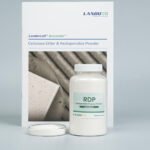
Redispersible polymer powder plays an important role in improving flexibility and adhesion performance in EIFS systems.
Compared with unmodified cement mortars, polymer-modified EIFS mortars generally provide:
Because exterior insulation systems experience thermal expansion and contraction over time, polymer modification helps reduce stress concentration within the mortar layer.
For many EIFS Adhesive Formulation, balancing cellulose ether and RDP performance is essential for achieving both workable application properties and long-term facade durability. RDP for exterior insulation system delivers reliable long-term durability.
In laboratory testing, adhesive strength often receives most of the attention. On actual construction sites, however, poor workability can quickly become a much larger problem.
Mortars that feel too heavy, stiff, or difficult to spread may reduce installation efficiency and create inconsistent bonding conditions across the facade surface.
Contractors generally prefer EIFS adhesive mortars that provide:
These properties are strongly influenced by EIFS mortar rheology control within the formulation.
This is one reason why cellulose ether selection has such a significant impact on overall application behavior.
Even when laboratory strength values appear acceptable, poor formulation balance can still create on-site performance issues.
Insufficient rheology control may cause mortar movement after application, especially on large insulation boards.
Poor polymer balance or improper substrate wetting may reduce long-term adhesion reliability.
Rapid moisture loss can make installation more difficult under warm or dry conditions.
Mortars with insufficient flexibility may develop cracking under thermal movement or substrate stress.
Poor powder dispersion or unstable additive systems may create mixing inconsistency between batches.
Because of these risks, EIFS Adhesive Formulation should always be evaluated under practical installation conditions rather than laboratory strength values alone.
One common formulation mistake is focusing too heavily on compressive strength while overlooking flexibility.
EIFS systems are not rigid concrete structures. They are layered facade assemblies exposed to continuous environmental movement.
As temperatures rise and fall, materials expand and contract at different rates. Adhesive mortars that are too rigid may transfer stress directly into the system, increasing the risk of cracking or adhesion failure over time.
This is why polymer modification plays such an important role in EIFS applications.
A properly balanced EIFS adhesive mortar should maintain:
rather than maximizing strength alone.
In industrial dry mix mortar manufacturing, additive compatibility is often just as important as individual additive performance.
A formulation may perform well in small-scale laboratory testing but still encounter production instability if additive interactions are not properly balanced.
Factors that influence formulation stability include:
For this reason, many manufacturers optimize formulations through repeated adjustment and application testing rather than relying only on theoretical dosage calculations.
For manufacturers producing EIFS adhesive mortars at industrial scale, formulation consistency between batches is often just as important as laboratory performance. LANDU supplies supports dry mix mortar producers with cellulose ether and polymer additive systems designed for stable production, reliable workability, and long-term facade durability.
Although EIFS adhesives and tile adhesives share some similar raw materials, their performance priorities are different.
| Property | EIFS Adhesive Mortar | Standard Tile Adhesive |
|---|---|---|
| Main Purpose | Bond insulation boards | Bond ceramic or stone tiles |
| Flexibility Requirement | Higher | Moderate |
| Sag Resistance | Critical | Important |
| Lightweight Workability | Important | Moderate |
| Crack Resistance | High priority | Moderate |
| Thermal Movement Tolerance | Essential | Lower |
EIFS systems generally require higher flexibility and better stress management because insulation boards and facade systems experience greater thermal movement than tiled surfaces.
In practical EIFS applications, facade durability depends on much more than insulation board quality alone.
Mortar workability, bonding stability, flexibility, and crack resistance all play a major role in long-term system reliability. Even well-designed facade systems may encounter installation and durability problems if adhesive formulations are not properly balanced for real construction conditions.
For dry mix mortar manufacturers, this is why formulation stability has become increasingly important in modern EIFS production.
Carefully selected cellulose ether help improve application control and water retention additives, while redispersible polymer powder contribute to flexibility, adhesion strength, and long-term durability under environmental stress.
As exterior insulation standards continue to evolve across Europe and other international markets, stable EIFS Adhesive Formulation design will remain one of the key factors behind reliable facade performance.
In modern EIFS System, manufacturers increasingly focus on how cellulose ether and polymer additives work together rather than optimizing each material independently.
EIFS adhesive mortar is used to bond insulation boards to exterior wall substrates while maintaining workability, bonding strength, and durability.
Cellulose ether improves water retention, open time, workability, and anti-sagging performance in cement-based EIFS mortars.
RDP improves bonding strength, flexibility, crack resistance, and durability in polymer-modified EIFS adhesive systems.
Cracking may occur due to insufficient flexibility, poor formulation balance, thermal movement, or improper application conditions.
Good sag resistance helps insulation boards remain stable during vertical installation and improves application consistency.
EIFS adhesive mortars generally require higher flexibility and better thermal movement tolerance than standard tile adhesives.
Formulation stability is influenced by cement type, additive compatibility, water retention, polymer balance, rheology control, and environmental application conditions.