
LANDU / Technical insights / Repair mortar
Repair Mortar
Bond Failure:
Diagnosis, Pull-Off Tests and Additive Selection
Debonding from concrete is not automatically an RDP problem. Identify the failure location, check the application conditions and choose the next controlled comparison before changing additive grades or dosage.

For dry-mix manufacturers and formulation teams. Scope: cement-based repair mortars, including polymer-modified systems. Structural repair design, corrosion and active movement require assessment by qualified professionals; this guide does not establish structural safety.
01 / Diagnose before reformulating
Where did the repair system fail?
A pull-off value is not automatically an interface-strength measurement. The concrete, repair layer, interface or test adhesive may limit the result. Record the fracture location before choosing a corrective trial. [1] [2]
At the concrete interface
Check next: preparation, moisture condition, bonding layer and placement.
Do not conclude: that insufficient RDP is the only possible cause.
Within the repair mortar
Check next: matrix integrity, water addition, mixing and curing.
Do not conclude: that this result establishes the exact interface strength.
Within the concrete
Check next: near-surface substrate strength and preparation consistency.
Do not conclude: that substrate failure automatically approves the whole repair.
At the loading-dolly adhesive
Check next: the test adhesive, its curing and the method's validity rules.
Do not conclude: that the repair-to-concrete bond necessarily failed.
Preserve every result: photograph both fracture surfaces and record mixed failure where present. ASTM C1583/C1583M requires the failure mode for each test and permits averaging only results with the same mode. Apply EN 1542's own rules when using that method; do not transfer reporting rules without checking. [1]
Include the method, individual values, failure locations and curing conditions in your initial enquiry.
02 / Eliminate uncontrolled conditions
Check the substrate before changing the additive
Use the selected repair system's application instructions. Moisture conditioning, primer use and curing are system-specific; one manufacturer's product instructions are not a universal recipe. [3]
Sound, clean and documented
Record concrete source, removal of weak material, preparation and cleaning. Roughness alone does not establish a sound bonding surface. Use comparable preparation for reference and candidate specimens.
Describe more than “damp”
Where the system requires a saturated-surface-dry substrate, follow its conditioning procedure and exclude visible free surface water. Record the condition immediately before placement.
Treat the primer as a variable
Record product, coverage and application interval. A primer or scrub coat is neither universally required nor universally optional. Changing it alongside RDP prevents a clean grade comparison.
Keep the history comparable
Document water, mixing, placement delay, thickness and curing. Equal test age does not mean identical curing. Follow the system's requirements for protection and subsequent coatings.
First comparison: retain the complaint batch and an accepted batch. Apply both under the same documented conditions before changing the formulation. If the complaint cannot be reproduced, investigate the application history rather than declaring a new grade a solution.
03 / When separation develops later
Look beyond initial adhesion
Repair-material compatibility matters to durability, and shrinkage is an important part of that assessment. Do not reduce delayed cracking or separation to polymer dosage alone. [4]
Document when and where
Record the first observed crack or separation, edge and thickness-transition patterns, curing history and any known movement. Compare retained specimens with the actual complaint conditions.
Set the required performance balance
Include dimensional stability, mechanical requirements and intended exposure in the validation plan. Escalate structural movement or corrosion concerns to the responsible repair professional rather than proposing an additive-only correction.
04 / LANDU additive portfolio
Define what the next grade must improve
RDP can modify adhesion and cohesive behaviour in suitable mortar systems. HPMC research supports water-retention and rheological effects in the studied cement mortar. Neither source establishes performance for a LANDU grade in your repair formula. [5] [6]

RDP
Evaluate: the required hardened bond and cohesion, alongside other finished-mortar properties.
- Request current grade and polymer information.
- State the dosage comparison basis.
- Compare fracture location as well as strength.

HPMC
Screen for: water management, consistency and repeatable placement.
- Document mixing and dissolution response.
- Measure water demand separately.
- Retest hardened performance after selection.
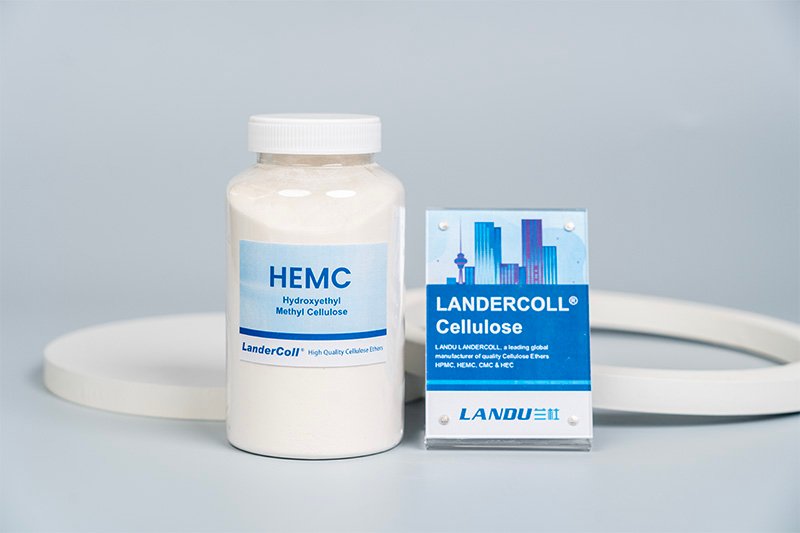
HEMC / MHEC
Compare when: screening an alternative cellulose ether profile for the actual mortar.
- Use comparable viscosity test conditions.
- Record any grade modification information.
- Do not assume chemical family proves superiority.
Comparison basis: hold commercial powder dosage constant, or use a documented polymer-content basis only when reliable composition data permit it. Do not mix the two approaches. Higher nominal viscosity is not an application acceptance criterion.
For background rather than repair-specific diagnosis, read how RDP works in mortar . Grade suitability still requires testing.
05 / Proposed investigation workflow
Keep the problem baseline and accepted benchmark separate
This is a proposed development plan, not a completed LANDU study. Define the method, specimen requirements and acceptance criteria before testing.
Stage A — Reproduce the complaint
Apply the complaint batch and accepted retained batch to comparable specimens under the same preparation, water addition, thickness and curing conditions.
If the problem is reproduced, use that problem formulation as F0 for modification trials. Keep the accepted batch as a separate benchmark B. It checks investigation consistency; it is not the formulation silently substituted for F0.
When an application condition is suspect, change that condition separately. Do not combine a new substrate treatment, new curing and new polymer in one initial comparison.
Stage B — Compare each change with F0
Accepted benchmark
Purpose: check that the test system remains consistent using a previously accepted batch.
Keep its formulation and identity separate from the reproduced problem baseline.
Problem baseline
Change: none. Retain the formulation that reproduces the complaint.
Establish repeatable workability, individual pull-off results and failure locations.
RDP grade
Change: polymer grade at the declared comparison basis.
Keep cellulose ether, water, substrate and cure fixed. Evaluate the full required performance.
RDP dosage
Change: addition level; keep polymer grade unchanged.
Identify the ingredient used to balance total dry mass and record this limitation.
Cellulose ether grade
Change: HPMC or HEMC grade at the same recorded dosage.
Keep RDP and water unchanged. Treat this as a commercial-product comparison, not isolated viscosity.
Mixing water
Change: water alone, within the proposed application range.
Record consistency, placement, bond and failure mode. F4 is the deliberate water-variable trial.
Comparison rule: F1–F4 are independent changes against F0, not cumulative adjustments. Keep the dry-mass basis explicit, repeat F0 through the programme and use benchmark B to reveal drift. Multiple pull-off locations in one batch are not independent production batches.
Stage C — Separate water strategies
Start with a fixed-water series. Run equal-workability trials as a separately identified series and record the water needed to reach the defined consistency. Do not merge the results as though only the additive changed.
Stage D — Validate the shortlist
Repeat the candidate with the complete additive package and intended production materials. Include the specified thicknesses, curing and exposure requirements. Approve repeatable performance with documented limits, not the highest isolated result.
06 / Method first, number second
Use the right framework and retain the evidence
EN 1504-3
Addresses requirements for structural and non-structural concrete repair products and systems. It is not simply a pull-off procedure. One bond result does not establish all applicable requirements. [7]
EN 1542
Specifies pull-off measurement of tensile bond strength for applicable repair and protection systems. Follow the full method for specimens, conditioning, loading and reporting. [8]
ASTM C1583/C1583M
A direct-tension method for concrete surfaces and repair or overlay materials. Preserve the failure mode with each result and follow its validity and averaging rules. [1]
Do not combine methods: select the required method and edition before preparing specimens. Identify EN and ASTM series separately. An additive grade does not confer an R3 or R4 classification on the finished repair mortar.
Record enough to repeat the comparison
Use these as internal record headings alongside the full test method. They are not a replacement for its required procedure or report.
Materials
Formula ID, material batches, additive grades, dosage basis, balancing adjustments and sample identification.
Fresh mortar
Water-to-dry-mix ratio, mixing sequence, rest time, temperature, consistency and time to placement.
Substrate and cure
Concrete source, preparation, moisture condition, primer if used, thickness, temperature, humidity and curing history.
Test setup
Method and edition, specimen geometry, loaded area, cutting details, loading conditions, dolly adhesive and its cure.
Individual results
Specimen ID, value and units, failure location, mixed-mode observations, photographs and validity decisions.
Acceptance
Method-compliant summaries, applicable product criteria, independent batch repeats, trade-offs and remaining limits.
Keep excluded or questionable results visible with the reason for their treatment. Do not discard a result merely because it favours a different grade.
07 / Sample-to-order decisions
Buy against an agreed application specification
A purchasing approval should identify the commercial grade, dosage basis, incoming specification and conditions under which the mortar was accepted.
Separate the two evidence packages
Raw-material evidence: current technical data sheet, applicable safety data sheet, sample identity and available batch certificate of analysis.
Application evidence: finished formulation, substrate, curing, method, individual results and failure locations. A raw-material certificate is not a repair-system test report.
Confirm sample-to-order traceability, storage, packaging and change notification. Retain an approved reference and define when material or process changes require revalidation.
08 / Technical and purchasing questions
Before requesting your next sample
Should RDP dosage increase whenever repair mortar debonds?
No automatic dosage change is recommended. Establish the failure location and controlled conditions, then test a separate grade or dosage change against the reproduced problem baseline.
Does a repair mortar always need a bonding primer?
Follow the chosen system. Primer use and placement timing are product-specific, not a universal requirement for every cementitious repair. [3]
What bond-strength target should we use?
Define the product category, project requirements and test method first. Do not copy a value from an unrelated product sheet. EN 1504-3 covers more than one adhesion result. [7]
What information is enough for the first enquiry?
Start with mortar type, failure stage and location, test method, current additive type and approximate dosage. Discuss what further information is needed and agree confidentiality before sharing a complete proprietary formula.
How much sample should be requested?
Calculate the requirement from planned batches, repeat specimens and confirmation trials, then confirm available sample options. For a quotation, include candidate grade, purchasing quantity, packaging and destination.
09 / LANDU additive evaluation
Planning a repair mortar comparison?
Share your mortar type, observed failure location, test method and current additive information. Ask LANDU for candidate RDP or cellulose ether grades, current technical data and sample options.
Start with the evidence
Describe the complaint, identify the failure surface and explain the conditions already checked. A complete confidential formulation need not be the opening message.
Define the next comparison
Request relevant grade information, sample identification and available documentation. Discuss additional technical details and confidentiality before sharing proprietary records.
Mention “repair mortar bond failure” in your message. This link opens the contact page; it does not upload or automatically send test records. Finished-mortar suitability remains the manufacturer's responsibility.
Technical references and scope
- ASTM C1583/C1583M-25: direct-tension pull-off testing. Public scope and significance; use the full applicable method for formal work.
- FHWA: tensile bond testing. Background on surface preparation and failure locations.
- Sika MonoTop-4200 Multi Use: system-specific application instructions. An example, not instructions for every repair formulation.
- Emmons, Vaysburd and McDonald: Rational Approach to Durable Concrete Repairs. ACI abstract on compatibility and shrinkage.
- WACKER: dispersible polymer powder applications. Industry background, not ACCURATE grade-test evidence.
- Chen et al. (2020): Water Retention Mechanism of HPMC in Cement Mortar. Results for the studied mortar, not all cellulose ethers or repair systems.
- BS EN 1504-3:2005: repair-product requirements. Verify the applicable specification and edition.
- BS EN 1542:1999: pull-off test method. Follow its own preparation, validity and reporting provisions.
All trial designs are proposed diagnostic approaches. No completed LANDU customer result, universal dosage or numerical improvement is claimed. Existing site images illustrate laboratory, product and supply context, not the proposed tests.