
LANDERCOLL · Formulation knowledge
How HPMC Improves Water Retention and Open Time in Tile Adhesive
Water retention and open time are closely related to the real application performance of cement-based tile adhesive.
Once tile adhesive is spread over a wall or floor, water begins to leave the mortar through evaporation and substrate absorption. If this happens too quickly, the adhesive surface may dry before the tile is installed, reducing workable time and making proper tile wetting more difficult.
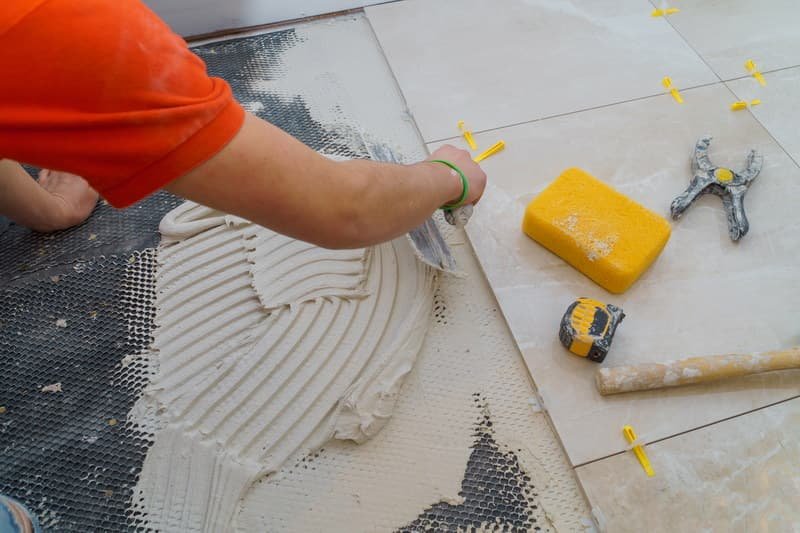
Control early water loss to help maintain a workable adhesive layer.
Delay premature surface drying after the adhesive is spread.
Balance HPMC grade and dosage with substrate and site conditions.
This is one reason why Hydroxypropyl Methyl Cellulose (HPMC) is widely used in cement-based tile adhesive formulations.
HPMC helps control the movement of water inside fresh mortar while also modifying its rheology. As a result, a suitable HPMC grade can help maintain workability, improve water retention and support a longer effective open time.
However, open time is not determined by HPMC alone. HPMC grade, dosage, cement type, sand grading, substrate absorption, temperature, humidity and other additives all influence the final result.
What Is Water Retention in Tile Adhesive?
Water retention describes the ability of fresh tile adhesive to keep mixing water inside the mortar instead of losing it rapidly to the substrate or surrounding environment.
This is especially important because cement-based tile adhesive is normally applied as a relatively thin layer.
Compared with a thick mortar bed, a thin layer has less internal water available and a larger exposed surface area relative to its volume.
After application, water can be lost through:
- absorption into porous substrates
- evaporation from exposed adhesive ridges
- environmental heat and airflow
If water loss becomes too rapid, the adhesive can lose workability and develop a dry surface before the installer places the tile.
A properly selected HPMC for tile adhesive helps slow this process.
How Does HPMC Improve Water Retention?
HPMC dissolves in the mixing water and modifies the liquid phase of the fresh mortar.
Its polymer chains increase the viscosity of the aqueous phase and reduce the mobility of water through the pore structure of the mortar.
This does not mean that HPMC simply “stores” water like a sponge.
A more useful way to understand the mechanism is:
Without sufficient water-retention control
Water moves rapidly toward the substrate and exposed surface
→ moisture is lost quickly
→ mortar consistency changes
→ surface drying accelerates
With suitable HPMC
Water movement becomes more controlled
→ moisture remains available for longer
→ mortar stays workable
→ surface drying is delayed
This controlled water movement is particularly valuable when the substrate is absorbent or when application conditions promote rapid evaporation.
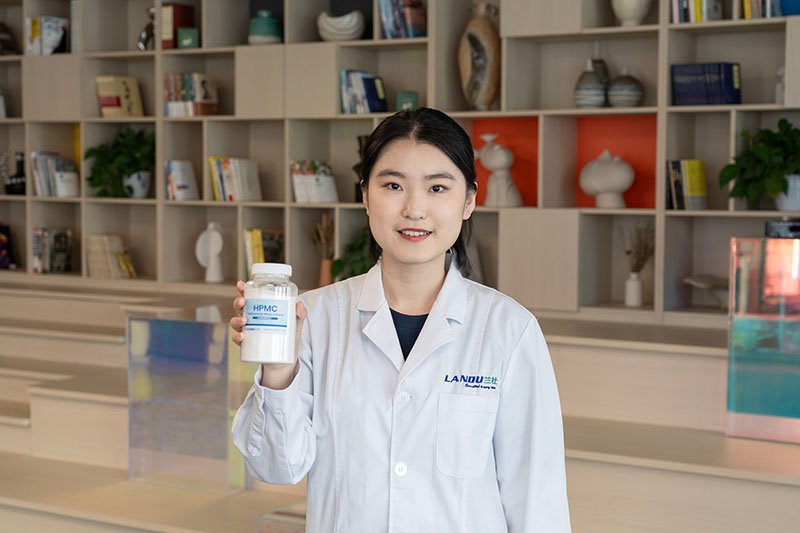
Why Water Retention Matters for Cement Hydration
Cement needs water to hydrate.
If a significant amount of water leaves the adhesive too early, hydration conditions in the thin adhesive layer can become less favorable.
Good water retention helps maintain moisture during the early stage after application.
However, it is important not to oversimplify this relationship.
HPMC does not directly create bond strength by itself. Instead, its ability to manage water loss, rheology and application behavior can help create conditions in which the cementitious system performs more consistently.
Final adhesion still depends on factors such as:
- cement chemistry
- polymer modification
- substrate preparation
- tile type
- application coverage
- curing conditions
This is why HPMC should be evaluated as one part of the complete tile adhesive formula, rather than as an isolated ingredient.
What Is Open Time in Tile Adhesive?
Open time is the period after tile adhesive has been spread onto a substrate during which a tile can be placed while still achieving the required bond performance under the specified test conditions.
This is different from pot life and from adjustment time after a tile has been placed.
Pot Life
Pot life describes how long the mixed adhesive remains usable in the mixing container.
Open Time
Open time begins after the adhesive has been spread onto the substrate.
This distinction matters because an adhesive can still appear workable inside the bucket while the exposed adhesive ridges on the wall have already started drying.
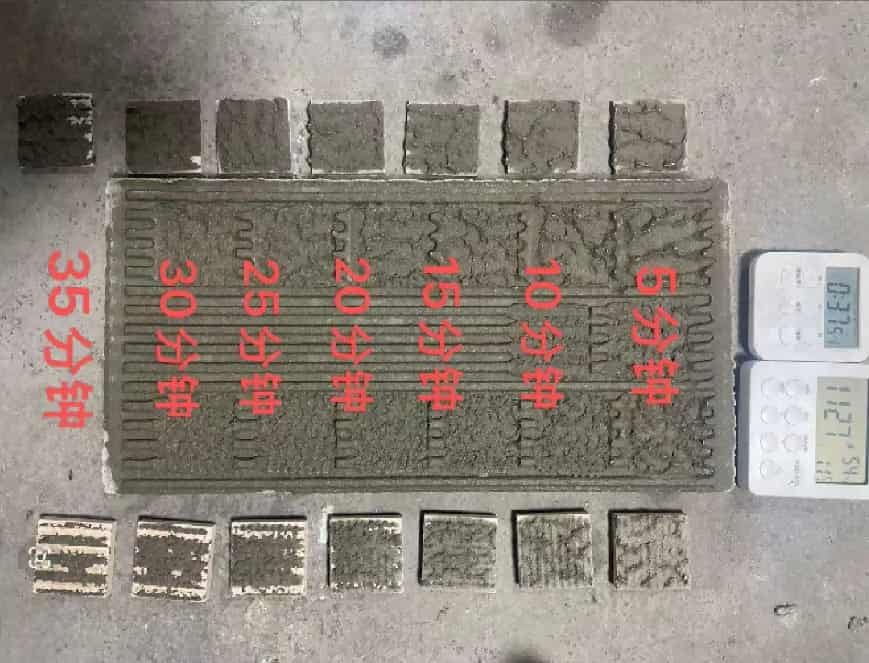
For formulators, open time should be evaluated through the appropriate bonding test as well as application trials, rather than judged only by the consistency of mortar in the container. For application variables, see our guide on how to extend tile adhesive open time.
| Property | What it describes |
|---|---|
| Pot life | Usability of mixed adhesive in the container. |
| Open time | Time available to place a tile after spreading while meeting the required bond performance. |
| Adjustment time | Time available to reposition a tile after placement. |
How Does HPMC Help Extend Open Time?
After the adhesive is combed with a notched trowel, the surface area exposed to air increases substantially.
At the same time, an absorbent substrate may draw water away from the underside of the adhesive.
The adhesive therefore loses moisture from both sides.
If the surface dries too quickly, a skin can develop on the adhesive ridges. The tile may then contact a partially dried surface instead of fresh adhesive.
A suitable HPMC grade helps reduce the rate of water loss and keeps the adhesive surface workable for longer.
This can provide installers with:
- more time to place tiles
- a longer opportunity to place tiles before surface drying
- more stable application consistency
- less risk of premature surface drying
This relationship explains why water retention and open time are strongly connected.
But they are not identical properties.
Water Retention and Open Time Are Not the Same Thing
A formulation can have good measured water retention without necessarily delivering the best open time under every condition.
Open time is also influenced by:
- ambient temperature
- relative humidity
- air movement
- substrate porosity
- adhesive thickness
- water dosage
- cement chemistry
- polymer powder
- HPMC modification
For example, two HPMC grades may provide similar laboratory water retention but behave differently during application at high temperature.
This is why formulators should measure both water retention and open time instead of assuming that one value automatically predicts the other.
Does Higher HPMC Viscosity Mean Better Water Retention?
Not necessarily.
HPMC viscosity is an important formulation parameter, but it should not be used as the only indicator of water-retention performance.
Two grades with similar nominal viscosity may behave differently because of differences in:
- molecular characteristics
- substitution
- modification
- dissolution behavior
- dosage efficiency
The viscosity measurement itself also depends on the test method.
For example, concentration, temperature, instrument and test conditions can influence the reported viscosity value.
Therefore, formulators should compare HPMC grades under consistent test conditions and confirm their behavior in the actual tile adhesive formulation.
If you are comparing different HPMC viscosity grades, the viscosity value should be treated as one selection parameter rather than a complete performance specification.
How HPMC Dosage Influences Water Retention
HPMC dosage can significantly influence fresh-mortar behavior.
If the dosage is too low, the formulation may show:
- insufficient water retention
- rapid consistency loss
- shortened workable time
- weaker control of mortar rheology
Increasing dosage can strengthen the effect of HPMC.
However, more HPMC is not always better.
Excessive dosage may increase:
- mortar stickiness
- water demand
- trowel resistance
- formulation cost
The adhesive may become heavy or difficult to comb even though its water retention is high.
The objective is therefore not to maximize HPMC dosage.
The objective is to identify the dosage that provides the required balance between:
water retention + open time + workability + sag control + cost
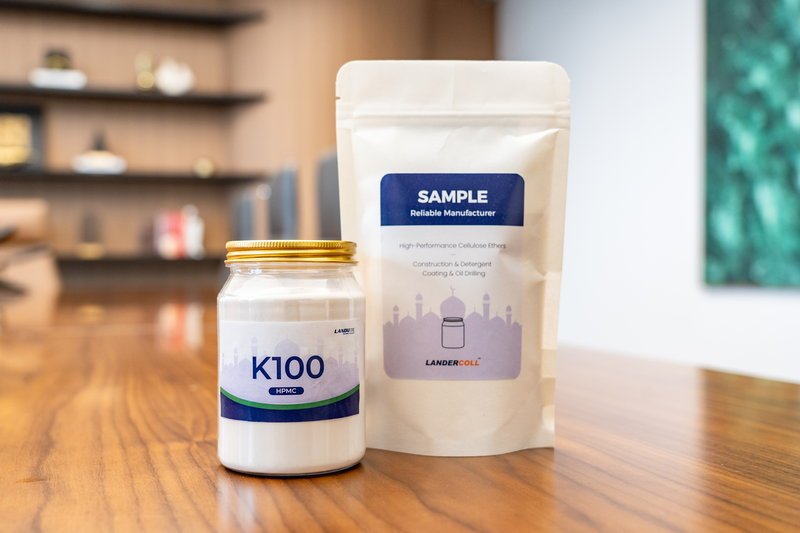
Why Substrate Absorption Can Shorten Open Time
Substrate condition is one of the most important variables when troubleshooting short open time.
Porous substrates can pull water from the adhesive rapidly.
The same formulation may therefore behave very differently on:
- dense concrete
- porous cement render
- aerated concrete
- masonry
- other highly absorbent mineral surfaces
When a customer reports that tile adhesive dries too fast, increasing HPMC dosage should not automatically be the first solution.
The formulator should also investigate:
- substrate absorption
- surface preparation
- environmental temperature
- mixing-water level
- adhesive application thickness
Problems caused by poor substrate preparation may not be solved simply by changing cellulose ether.
For installation-related failures, LANDU's existing guidance on poor adhesion in tile adhesive applications can be used as a related technical reference.
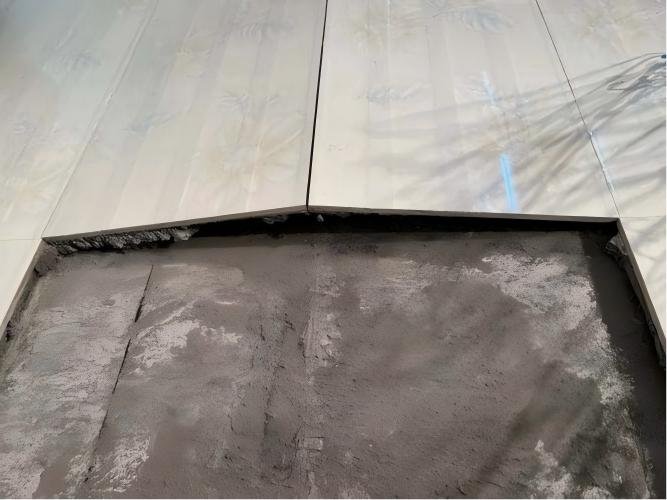
Why Hot Weather Reduces Tile Adhesive Open Time
Temperature strongly influences water loss.
Under hot conditions:
- evaporation becomes faster
- substrates can become hotter
- adhesive ridges dry more rapidly
- installers have less adjustment time
This is especially relevant for tile adhesive manufacturers supplying hot or dry markets.
A formulation that performs well in a laboratory at moderate temperature should not automatically be assumed to provide the same open time during summer construction.
For these markets, HPMC selection should consider performance under elevated-temperature conditions rather than only standard viscosity.
Environmental testing becomes particularly valuable when customers report seasonal differences in tile adhesive behavior.
Does Humidity Affect Open Time?
Yes.
Low relative humidity increases the driving force for evaporation and can accelerate surface drying.
Higher humidity usually slows evaporation.
This means two construction sites using the same tile adhesive may experience different effective open times even when the formulation is identical.
When developing products for different regional markets, it is useful to evaluate:
- temperature
- humidity
- typical substrate type
- installation practices
This is one reason why customer feedback from actual local application conditions is highly valuable during formulation development.
HPMC, Workability and Open Time Must Be Balanced
A good HPMC grade should not only retain water.
Tile adhesive must also remain practical to apply.
Installers expect fresh adhesive to be:
- easy to mix
- smooth during spreading
- easy to comb
- cohesive
- stable on vertical surfaces
- adjustable after tile placement
A formulation can technically retain a large amount of water but still feel unpleasant during application.
For example, excessive thickening can increase drag between the trowel and mortar.
This is why HPMC selection should consider rheology and water retention together.
The best-performing grade is usually not simply the one with the highest viscosity or highest dosage.
It is the grade that creates the appropriate balance for the target formulation.
How RDP and HPMC Perform Different Roles
HPMC and redispersible polymer powder are both commonly used in tile adhesive, but they perform different functions.
HPMC primarily influences:
- water retention
- consistency
- rheology
- workability
- open-time behavior
Redispersible polymer powder primarily contributes to polymer modification of the hardened mortar and can influence properties such as:
- adhesion
- flexibility
- deformation capability
- durability
Because the two additives interact within the same formulation, changing the level of one component can affect the overall balance of the system.
For more detail on this relationship, formulators can also review LANDU's technical guidance on RDP in tile adhesive.
Common Reasons Tile Adhesive Dries Too Fast
When tile adhesive shows unexpectedly short open time, the cause may not be a single ingredient.
A useful troubleshooting sequence is:
1. Check Environmental Conditions
Was the test or application performed at unusually high temperature, low humidity or strong airflow?
2. Check the Substrate
Is the substrate pulling water rapidly from the adhesive?
3. Confirm Water Addition
Was the correct amount of mixing water used?
4. Verify HPMC Dosage
Has the cellulose ether dosage changed?
5. Check Raw Material Changes
Has the cement, sand or filler source recently changed?
6. Compare HPMC Grades
Has a new HPMC batch or grade been introduced?
7. Evaluate Other Additives
Have RDP, starch ether or other rheology modifiers changed?
This type of systematic diagnosis is usually more useful than simply increasing HPMC viscosity.
LANDU's existing page on common tile adhesive problems and solutions can support this troubleshooting path.
How to Compare HPMC Grades in the Laboratory
A useful HPMC comparison should change as few formulation variables as possible.
Keep constant:
- cement
- aggregate
- filler
- RDP
- starch ether
- other additives
Then compare selected HPMC grades under controlled conditions.
Evaluate:
Water Demand
Does the HPMC grade require more or less mixing water to reach the target consistency?
Fresh Consistency
Does the mortar remain stable after mixing and resting?
Trowelability
Can the adhesive be spread and combed without excessive drag?
Water Retention
How effectively does the mortar resist water loss?
Open Time
How does the adhesive perform after being exposed on the substrate for different periods?
Sag Resistance
Does the tile remain stable during vertical application?
Final Adhesion
Does the complete formulation achieve the required hardened performance?

A Better Way to Select HPMC for Open Time
Instead of asking:
“Which HPMC has the highest viscosity?”
Ask:
“Which HPMC provides the required open time while maintaining the best overall application balance?”
A practical selection process is:
Step 1 — Define the target application
C1, C2, standard ceramic tile, large-format tile or another system.
Step 2 — Define the main problem
Short open time, insufficient water retention, excessive sagging or poor workability.
Step 3 — Select candidate HPMC grades
Compare grades based on their full technical profile rather than viscosity alone.
Step 4 — Adjust dosage
Find the level required to reach suitable fresh-mortar behavior.
Step 5 — Test under realistic conditions
Include relevant temperature and substrate conditions.
Step 6 — Confirm the full formulation
Evaluate open time together with adhesion, workability, sag resistance and cost.
LANDU's existing tile adhesive formula page can be used as a reference point when evaluating the role of HPMC alongside cement, filler, RDP and other additives.

Frequently Asked Questions
How does HPMC improve water retention in tile adhesive?
HPMC modifies the aqueous phase and rheology of fresh mortar, helping reduce the rate at which water moves toward the substrate or evaporates from the exposed adhesive surface.
Does HPMC extend tile adhesive open time?
A suitable HPMC grade can support longer effective open time by helping slow premature water loss and surface drying.
Does higher HPMC viscosity always provide longer open time?
No. Open time depends on the complete HPMC grade, dosage, formulation, substrate and environmental conditions. Nominal viscosity alone is not sufficient to predict performance.
Can increasing HPMC dosage solve short open time?
It may help in some formulations, but excessive dosage can negatively affect workability and water demand. The cause of short open time should be identified first.
Why does tile adhesive dry faster in summer?
Higher temperature accelerates evaporation, while hot or absorbent substrates can increase water loss from the adhesive layer.
What should be tested when choosing an HPMC grade?
At minimum, formulators should compare water demand, consistency, workability, water retention, open time and sag resistance in the actual tile adhesive formulation.
Conclusion
HPMC plays an important role in controlling water loss and fresh-mortar rheology in cement-based tile adhesive.
By slowing water movement, a suitable grade can help maintain workable consistency and delay premature surface drying, supporting longer effective open time.
However, neither water retention nor open time should be evaluated through HPMC viscosity alone.
The final result depends on the interaction between HPMC grade, dosage, cement, aggregate, polymer additives, substrate and environmental conditions.
For this reason, the most reliable selection method is controlled formulation testing.
The goal is not to find the HPMC with the highest viscosity.
The goal is to find the HPMC grade that delivers the required water retention and open time while preserving practical workability and overall tile adhesive performance.