
HPMC vs RDP in Wall Putty: Functions, Differences & Grade Selection
HPMC and redispersible polymer powder (RDP) play different roles in mineral dry-mix wall putty. Compare their fresh- and hardened-mortar functions, build a controlled four-mix screening trial, and shortlist cellulose ether and polymer grades using the results—not assumptions based on product labels.
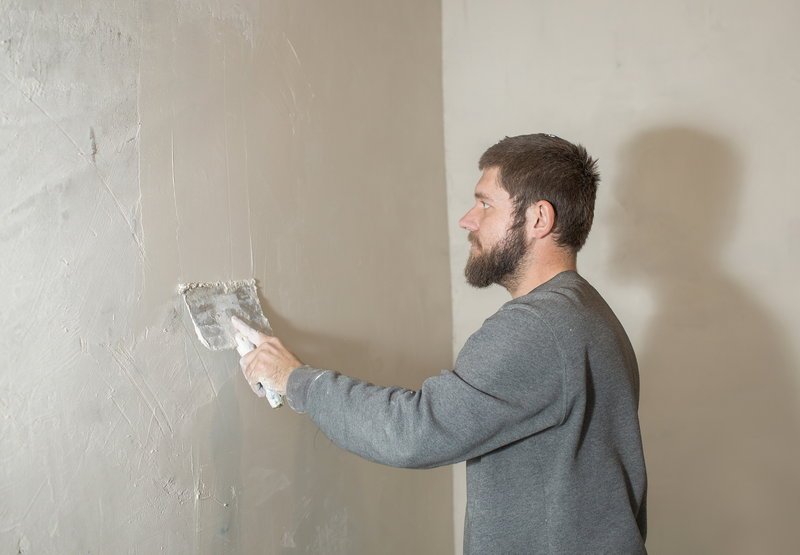
HPMC and RDP solve different formulation problems
In a cement-based dry-mix wall putty, HPMC (hydroxypropyl methylcellulose) mainly modifies the fresh mortar: it improves water retention and helps control consistency, workability and sag. RDP (redispersible polymer powder) functions primarily as a polymer modifier, contributing to cohesion, adhesion and deformation behavior as the material hardens.
These are dominant functions, not exclusive ones. Some RDP grades also affect fresh-mix handling; HPMC can indirectly influence cured properties through water retention and cement hydration. Neither ingredient can independently guarantee the finished putty’s adhesion, crack resistance or service life.

HPMC: fresh-mix control
Useful when the main requirement is controlled water loss, workable trowel consistency and vertical application stability. Excessive thickening can make application heavy or sticky.
LANDERCOLL HPMC application grades →
RDP: bond and matrix modification
Appropriate for evaluations focused on tensile adhesion, cohesion, flexibility or surface durability after curing. Results depend on polymer grade, binder, substrate, curing and test conditions.
ACCURATE RDP application grades →| Selection question | HPMC: primary contribution | RDP: primary contribution |
|---|---|---|
| Fresh-mix water control | Water retention and migration control | Not usually the main water-retention additive; grade-dependent |
| Application feel | Consistency, lubrication and sag/vertical hold | May influence cohesion and trowel feel depending on polymer |
| Adhesion after curing | Indirect influence via water retention and binder hydration | Polymer film and matrix/interfacial modification can improve tensile adhesion |
| Crack behavior | Can reduce premature water loss in certain mixes | Selected grades can enhance deformability and resistance to some cracking mechanisms |
| Main comparison data | Solution-viscosity method, dissolution, fresh-mix behavior | Polymer type, Tg/film formation information, cured-mortar tests |
Important distinction: Improved workability is not the same as verified bond strength. Similarly, greater RDP addition does not automatically prevent cracking. Compare performance in the actual dry-mix formulation.
Use the observed symptom to set the first trial variable
A surface defect does not identify its cause by itself. Check binder content, filler grading, substrate preparation, layer thickness and curing before attributing a failure to HPMC or RDP. The table helps decide which variable to investigate first—not which additive to increase automatically.
| Observed problem | First formulation check | Possible additive screening |
|---|---|---|
| Rapid drying or difficult troweling | Substrate suction, mixing water, workability and binder system | Compare HPMC dissolution, water retention and fresh rheology |
| Weak pull-off adhesion | Surface preparation, binder level and curing | Compare RDP candidates using the same substrate and adhesion procedure |
| Hairline cracking after drying | Shrinkage, thickness, filler grading and substrate movement | Assess polymer-modified mixes alongside the shrinkage/curing checks |
| Dusting or poor sanding response | Binder-to-filler balance and drying/curing conditions | Recheck both water retention and polymer modification if necessary |
Product type determines the additive priority
“Wall putty” can describe different products across markets. The recommendations below mainly concern dry-mix, mineral-binder wall putty or skim coat, especially cement- and lime-containing systems. They are not universal instructions for ready-mixed acrylic putty or every gypsum-based finishing compound.
Interior mineral finishing putty
Application ease and a consistent, sandable finish may be priorities. Screen HPMC for water retention and handling. Assess RDP only against the required bond and surface-performance targets; it is not an automatic requirement at the same level for every economical grade.
Cement-based skim coat
Balance controlled water loss and trowel properties with tensile adhesion to the specified substrate. Check both HPMC selection and polymer modification when the formulation needs stronger cohesive or interface performance.
Exterior or exposed mineral putty
Evaluate adhesion under relevant conditioning, deformability and moisture-exposure performance. Select a suitable polymer chemistry and verify the finished system; exterior suitability is not created by RDP alone.

A repeatable HPMC–RDP screening plan for wall putty
A useful comparison separates the effect of changing HPMC grade, the effect of changing RDP grade, and the result when both changes are made together. It does not require a universal dosage recipe or assume that higher viscosity and greater polymer addition always improve performance.
Start with one product and one reference mix
Define whether the target is cement-based interior putty, a cement-based skim coat or an exterior mineral finishing material. Document the actual substrate, intended coat thickness, binder and filler system, target working time, required adhesion and surface finish. Keep these requirements unchanged throughout the comparison.
- Binder and filler sources, batch and grading
- Dry mixing sequence and mixing energy
- Water-to-dry-mix ratio during the first screening pass
- Sample size, application thickness and substrate preparation
- Temperature, humidity, rest period and curing method
Stage 1 — Screen HPMC for fresh-mortar behavior
Keep the current RDP grade and addition level unchanged. Compare a reference HPMC grade with one candidate grade at the same recorded HPMC addition level. Evaluate dispersion/dissolution, water-retention behavior, trowel drag, vertical hold and working-time consistency. Record any change in water demand rather than silently adjusting the water content during the initial comparison.
Stage 2 — Screen RDP for cured-mortar requirements
Use the selected reference HPMC, and compare RDP candidates under otherwise matching formulation and curing conditions. Compare adhesion to the intended substrate, cohesion, surface hardness or sanding behavior, and any agreed deformation or cracking assessment. Check the powder’s polymer-solids information where available: equal total powder mass is not necessarily equal polymer-solids content.
Stage 3 — Verify grade interaction with four controlled mixes
When the reference formulation already contains both additives, a small 2 × 2 comparison makes the effect of each grade change easier to interpret. Maintain fixed HPMC and RDP addition levels for this grade-screening comparison, along with the same full formulation and test conditions. If addition levels also need optimization, investigate them in a separate trial series.
| Mix | HPMC grade | RDP grade | What the comparison isolates |
|---|---|---|---|
| T0 · Reference | H0 · Current grade | R0 · Current grade | Existing product baseline |
| T1 · HPMC change | H1 · Candidate grade | R0 · Current grade | T1 versus T0: effect of changing HPMC grade |
| T2 · RDP change | H0 · Current grade | R1 · Candidate grade | T2 versus T0: effect of changing RDP grade |
| T3 · Combined change | H1 · Candidate grade | R1 · Candidate grade | Shows whether the combined response differs from individual changes |
For a measured property, compare (T3 − T2) with (T1 − T0) to assess whether the HPMC grade change behaves differently with the alternative RDP grade. Repeat testing as required by the selected method. An interaction is a formulation observation, not proof of a product-wide synergy claim.
Record both fresh and hardened results
| Evaluation | Fresh or hardened? | Recording requirement |
|---|---|---|
| Mixing response, trowel feel and sag | Fresh | Mixing time, visual criteria, application thickness, consistency method |
| Water retention and usable working time | Fresh | Defined method, substrate absorbency, observation intervals and temperature |
| Tensile adhesion | Hardened | Substrate, preparation, curing age, conditioning, test procedure and failure mode |
| Surface hardness and sanding | Hardened / finish | Agreed sanding method, dusting observation and finish criteria |
| Drying shrinkage or crack behavior, where relevant | Hardened | Thickness, geometry, exposure, curing and specified test method |
Water control, consistency, troweling, rest-time behavior and vertical stability.
Adhesion, cohesion, sanding response and required deformation-related behavior.
Repeat the chosen combination under intended production and application conditions.
Set acceptance criteria using the finished product’s intended market and specification. Compare candidate grades under documented conditions rather than applying a universal dosage range.
Shortlist actual HPMC and RDP grades by the test objective
LANDU’s published application pages list example LANDERCOLL® HPMC and ACCURATE™ RDP grades for wall putty. Use the following as a candidate list for screening, not as proven rankings or guaranteed product recommendations. Verify the exact commercial grade designation, latest TDS and sample availability before specifying any grade.
LANDERCOLL® HPMC grade-screening shortlist
| Listed grade | Reason to include in screening | What to verify |
|---|---|---|
| K40H | Alternative cellulose ether grade when comparing fresh-mortar consistency and working-time behavior | Current solution-viscosity method, dissolution, water retention, sag and trowel feel |
| K100 | Another published HPMC option for comparing workability and water retention under the same base formulation | Same-method viscosity data, fresh-mortar response and target working window |
| K200 | Additional listed HPMC candidate for exploring a different rheological response | Whether the actual putty remains smooth and workable without excessive thickening |
These products appear in LANDU’s wall putty grade listings. Grade names or measured viscosity in an aqueous solution cannot, by themselves, predict the final mortar’s water retention or adhesion.
ACCURATE™ RDP grade-screening shortlist
| Listed grade | Current website category | Evaluation priority |
|---|---|---|
| 5011N | Rigid | Benchmark adhesion, cohesion and sanding or surface-hardness balance |
| 4025N | Semi-flexible | Compare adhesion and mechanical response with the same substrate and curing |
| 5045H | Flexible | Assess whether the required deformability can be achieved without sacrificing other finish properties |
The “rigid,” “semi-flexible” and “flexible” labels are classifications used on LANDU’s current RDP for Wall Putty page. They are not measurements of finished-mortar performance. Confirm each grade’s polymer type, Tg/film-forming data and exact product code against the current technical sheet.
Workability or rapid drying
Screen HPMC candidates first. Keep the polymer package fixed, and measure water-retention and application behavior.
Low tensile adhesion
Check the substrate and binder first, then compare RDP grades using identical pull-off test conditions.
Cracking or surface-property trade-offs
Review shrinkage and curing, then test RDP grade effects alongside the chosen HPMC rather than increasing polymer automatically.
Request comparable data and samples
For LANDERCOLL® HPMC for wall putty, confirm the aqueous-solution viscosity method and test conditions, dissolution behavior, available fresh-mortar data and current TDS.
For ACCURATE™ RDP for wall putty, confirm polymer family, grade designation, Tg or film-forming information where specified, protective colloid or solids information, recommended application scope and comparable cured-mortar results when available.
Request a matched evaluation set rather than relying on adjectives such as “high viscosity,” “strong adhesion” or “flexible.” Share the test method and conditions so the supplier can interpret the results.
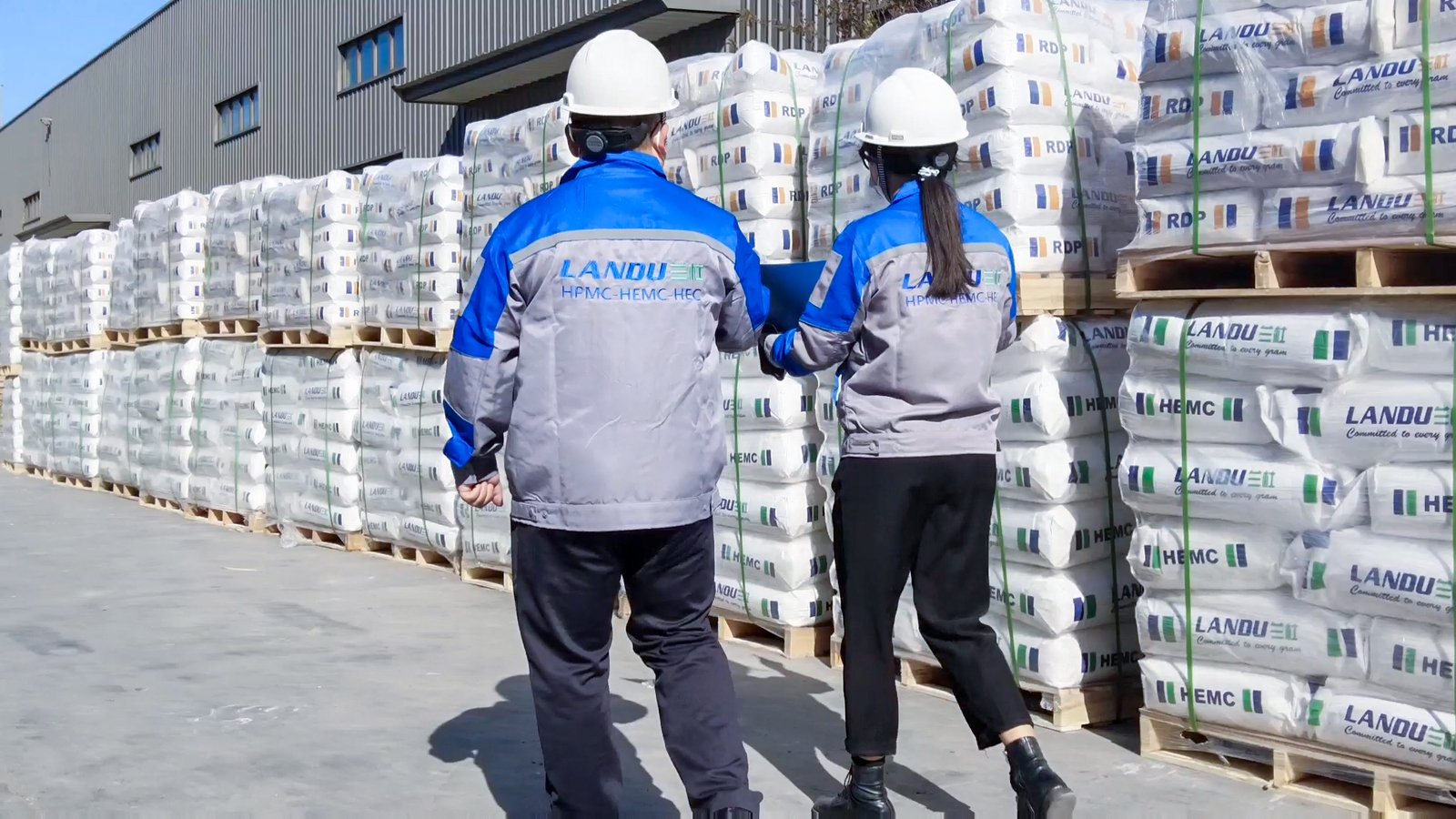
Application details help narrow the trial
Share a concise technical brief when requesting candidate grades or samples.
- Putty type: interior, cement-based skim coat or exterior
- Binder and filler type; approximate application thickness
- Actual substrate, absorbency and surface preparation
- Current HPMC and RDP grade codes and addition levels
- Water-to-dry-mix ratio and mixing procedure
- Working-time, adhesion, sanding and surface targets
- Observed failure mode and conditioning/test method
- Latest TDS, samples, batch consistency and delivery needs
Frequently asked questions
Can RDP replace HPMC in wall putty?
No. In mineral dry-mix putty, RDP is primarily a polymer modifier for adhesion/cohesion and other cured properties, whereas HPMC plays a major role in water retention and fresh rheology. Their functions overlap in some areas but are not interchangeable.
Will more HPMC improve adhesion?
Not necessarily. HPMC can support binder hydration by managing water loss, but direct tensile adhesion depends on the complete binder/polymer system, substrate and curing. Excessive thickening or water demand may adversely affect other requirements.
Does RDP prevent all wall putty cracks?
No. Certain polymer grades can improve deformability and resistance to some cracking mechanisms, but cracking may arise from shrinkage, thickness, substrate movement, curing or an unsuitable base formulation.
How do I compare rigid, semi-flexible and flexible RDP grades?
Use the intended adhesion, sanding/hardness and deformability requirements to choose a small shortlist. Treat category labels as a screening starting point, and confirm the current Tg or film-forming data and actual hardened-putty results.
Are the same additives suitable for interior and exterior putty?
Not automatically. Binder chemistry, weather exposure, substrate movement, moisture performance and expected durability can differ substantially. Exterior use requires additional system-level evaluation.
Which HPMC and RDP grades should be tested first?
Use a current product baseline and shortlist only a few supplier-listed grades for the main problem. For example, compare HPMC candidates while holding RDP fixed, then compare RDP candidates with HPMC fixed. Confirm exact commercial codes and TDS before ordering samples.
Why use four mixes instead of changing both additives at once?
Changing HPMC and RDP simultaneously makes it difficult to attribute improvements or deterioration to one variable. A four-mix reference-and-candidate matrix can help distinguish separate grade effects from a combined response. Use the same formulation and repeat the tests using the agreed method.
Evaluate LANDERCOLL® HPMC and ACCURATE™ RDP for Your Wall Putty
Tell LANDU your binder system, substrate, current HPMC/RDP grades and the specific performance you want to improve. Ask for current TDS and suitable candidate samples to run the controlled evaluation described above. LANDU supplies functional additives; final wall putty formulation performance must be validated by the manufacturer.