There was a time when almost every tile was fixed with cement mortar. For standard ceramic tiles in dry indoor areas, that approach was usually enough.
The industry looks very different today.
Porcelain tiles are larger, denser and far less absorbent than older ceramic materials. Heated screeds have become common in residential projects. Renovation work often means tiling over existing surfaces instead of starting from bare concrete.
Under these conditions, traditional mortar starts to become unpredictable.
Many installers have seen the same situation on site: the tiles look fine during installation, but several weeks later hollow spots begin to appear, edges loosen, or wall tiles start slipping before curing is complete. The problem is not always workmanship. In many cases, the material itself is no longer suitable for modern installation conditions.
That is one of the main reasons why polymer-modified tile adhesive has gradually replaced traditional cement mortar across much of the European market.
Traditional cement mortar worked reasonably well with older ceramic tiles because those tiles absorbed water more easily. The mortar could mechanically lock into the surface during curing.
Porcelain changed that.
Low-absorption tiles leave very little margin for poor wetting or moisture loss. Once tile sizes increase, the weight and internal stress on the adhesive layer increase as well. What worked for small ceramic wall tiles twenty years ago does not always work for a 1200 × 600 mm porcelain tile installed on a heated substrate.
This becomes more noticeable in:
Standard cement mortar is simply too rigid for some of these applications. Most contractors who regularly work with porcelain tiles have learned that sooner or later.
A modern tile adhesive is not just cement with “better bonding”.
The formulation is designed to stay workable for longer, hold moisture more consistently and maintain adhesion even when site conditions are less than ideal.
That matters more than many people expect.
Anyone who has installed tiles in warm or windy conditions knows how quickly the surface can dry out. Once the adhesive starts skinning over, bonding reliability drops immediately, especially with low-absorption porcelain.
This is where cellulose ether becomes important in dry mix formulations.
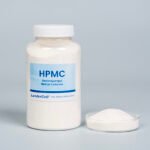
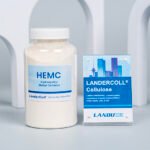
HPMC and HEMC are mainly used to improve water retention and working stability. A properly balanced formulation gives installers more usable open time and better wetting performance during application.
In practice, that usually means fewer hollow areas, easier tile adjustment and more consistent installation quality on site.
Related reading:
• Tile Adhesive Additives
• HPMC for Tile Adhesive
• Improve Tile Adhesive Open Time
One of the biggest differences between cement mortar and modern tile adhesive is flexibility after curing.
Traditional mortar performs well under compression, but it tolerates movement poorly. That becomes a problem once temperature changes, substrate movement or vibration enter the picture.
Underfloor heating is a good example.
The substrate expands and contracts repeatedly during service life. Without polymer modification, rigid mortar layers can gradually lose adhesion or develop cracking over time.
Large porcelain slabs create a similar challenge. The larger the tile, the less forgiving the system becomes.
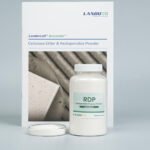
This is why redispersible polymer powder (RDP) is now widely used in tile adhesive production.
RDP improves flexibility and helps the adhesive layer maintain bonding performance under more demanding conditions. It also improves adhesion strength and crack resistance, particularly on difficult substrates or exterior applications.
For many manufacturers, polymer modification is no longer considered a premium upgrade. It has become part of standard formulation design for modern tile adhesive systems.
Further reading:
• RDP for Dry Mix Mortar
• Rigid RDP
Traditional cement mortar is normally applied in relatively thick layers, which increases material consumption and makes installation more dependent on worker technique.
Tile adhesive changed that approach completely.
Modern thin-bed systems allow installers to work with thinner application layers while achieving higher bonding performance at the same time. The installation process becomes cleaner, faster and easier to control, especially on large floor areas.
For contractors, the advantages are practical rather than theoretical:
less slipping on walls, better tile alignment, lower material usage and fewer call-backs caused by debonding problems later on.
That is one reason thin-bed tile adhesive systems became widely adopted across Europe long before they became standard in some developing markets.
In the past, some manufacturers tried to improve tile adhesive simply by increasing cement content.
That approach usually creates new problems instead of solving old ones.
A stable formulation depends on balance: water retention, workability, open time, anti-slip performance and flexibility all influence each other. Even small adjustments in cellulose ether viscosity or polymer dosage can noticeably change site performance.
This is why additive selection has become a central part of modern dry mix mortar production.
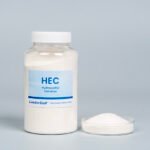
At LANDU, we work with dry mix mortar manufacturers developing tile adhesive, EIFS and cement-based dry mix systems for different climates, raw materials and construction requirements.
Our product range includes:
These additives are commonly used in both standard and high-performance tile adhesive formulations for porcelain tile installation and other demanding applications.
Traditional cement mortar still exists in some low-cost or low-demand applications. It has not disappeared completely.
But installation standards have changed.
Modern construction projects demand longer open time, stronger bonding reliability and better compatibility with porcelain tiles, heated substrates and exterior conditions. Under those requirements, polymer-modified tile adhesive simply performs more consistently.
For manufacturers, contractors and distributors, the discussion today is no longer just about fixing tiles in place. The focus has shifted toward installation reliability, long-term durability and reducing problems before they appear on site.